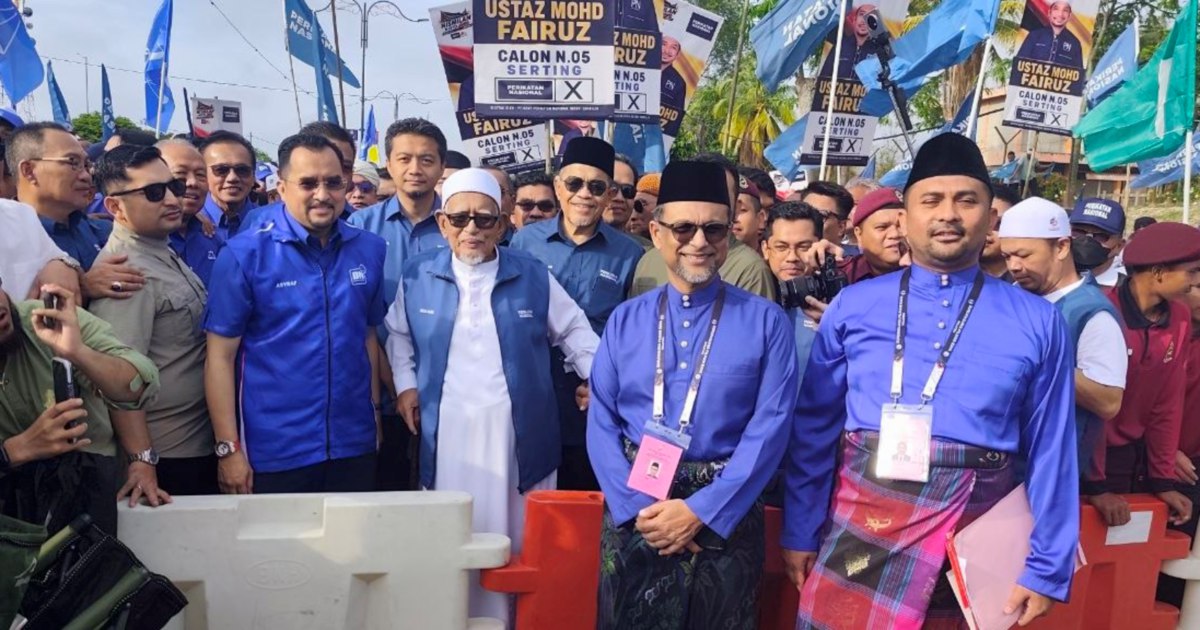
Perikatan Nasional will throw its weight behind Barisan Nasional's campaign machinery during the forthcoming Negri Sembilan state election, Pas president Tan Sri Abdul Hadi Awang announced while addressing party supporters in Jempol. The commitment underscores the continued working relationship between the two political coalitions despite their separate trajectories in Malaysia's rapidly shifting political landscape.
The pledge of campaign assistance comes at a critical juncture as state-level elections have become increasingly significant in shaping Malaysia's broader political direction. Negri Sembilan, a state that has alternated control between major coalitions in recent electoral cycles, represents valuable political territory where ground support and coordinated messaging can meaningfully influence voter behaviour. Both PN and BN have invested considerable resources in understanding the state's demographic shifts and localised concerns.
For Barisan Nasional, the commitment from PN signals a recognition that broader political unity at the state level remains strategically valuable. The traditional coalition has been working to stabilise its position across multiple states while managing internal party dynamics and dealing with the challenge of regaining voter trust following previous electoral setbacks. Having PN's mobilisation network available during the Negri Sembilan campaign provides additional ground strength, particularly in rural constituencies where coalition machinery has historically proven effective.
Pas, as the largest party within Perikatan Nasional, wields considerable organisational capacity derived from its extensive network of Islamic organisations and community groups. The party's willingness to commit resources toward supporting a Barisan campaign demonstrates the pragmatic approach that has come to characterise federal-level coalition politics since the 2023 general election. Rather than viewing state contests purely through a competitive lens, the coalition approach recognises mutual benefit in collaborative campaigning.
The Negri Sembilan election itself carries implications extending beyond the state's borders. A strong showing by either coalition would likely strengthen its negotiating position in federal dealings and influence other state governments' calculations about political alignment. The state's proximity to the federal territory and its integrated role in the Klang Valley's broader economic sphere means that electoral outcomes here often resonate throughout Malaysia's political establishment.
Background context reveals that Perikatan Nasional has been navigating a complex position since its formal government role expanded following the 2023 general election. The coalition has sought to balance its own electoral aspirations with participation in federal governance structures. Campaign collaborations at the state level offer opportunities to demonstrate coalition cohesion while maintaining separate party identities—a delicate equilibrium that Malaysia's fractious political system demands.
Barisan Nasional has similarly faced the challenge of rebuilding its electoral machinery after setbacks that significantly reduced its parliamentary representation. The coalition's strategy involves securing strong performances in strategic states to establish a foundation for future general election campaigns. Negri Sembilan's incumbent administration and political composition make it a natural focus for such reconstruction efforts. The announcement from Hadi Awang validates BN's efforts to cultivate relationships that transcend simple electoral competition.
Observers of Malaysian politics note that such cross-coalition support arrangements have become increasingly common at the state level, even as parties maintain their distinct identities and policy positions. This pragmatic approach reflects the reality that Malaysia's federal system requires elected parties to work together across multiple governance levels. The Negri Sembilan campaign will likely showcase whether such cooperation translates into effective political messaging and voter mobilisation on the ground.
The timing of this announcement also reflects campaign season dynamics, where public declarations of support serve both substantive and symbolic purposes. For Pas, demonstrating its capacity to deliver external political support enhances its standing within PN. For BN, receiving visible commitments from coalition partners strengthens its narrative about broad-based support. For voters, such announcements provide windows into how different political forces prioritise particular contests and constituencies.
Looking forward, the success or failure of this collaborative campaign will likely influence how future state elections are contested. If the combined PN-BN ground presence proves effective in mobilising voters and translating support into electoral gains, both coalitions may expand such arrangements in other states. Conversely, limited electoral dividends might prompt reassessment of where resources are best deployed. The Negri Sembilan election will thus serve as a testing ground for coalition politics at the state level during this particular phase of Malaysian political development.
For Malaysian political stakeholders, the decision by Perikatan Nasional to support Barisan Nasional represents another chapter in the nation's ongoing recalibration of coalition politics. Rather than the winner-takes-all mentality that characterised earlier electoral periods, today's political environment demands more flexible arrangements that accommodate multiple parties' interests while maintaining broader strategic objectives. The Negri Sembilan campaign will demonstrate whether such flexibility produces sustainable political arrangements or merely temporary expedients.

