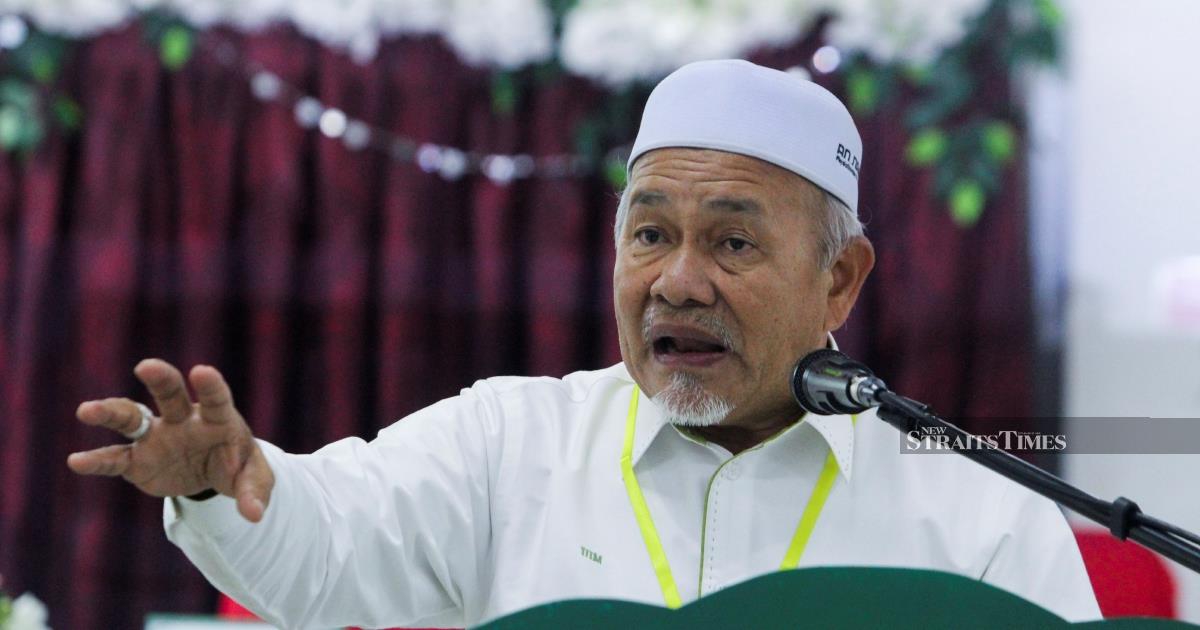
The campaign machinery of Perikatan Nasional and Barisan Nasional is functioning without significant friction in Negri Sembilan, according to Datuk Seri Tuan Ibrahim Tuan Man, the deputy president of PAS. Speaking in Seremban, the senior politician highlighted that the coordination mechanisms between the two coalitions have maintained positive momentum at the grassroots level, a notable achievement given the complexity of managing multiple parties across different electoral machinery.
The smooth operation of campaign structures in Negri Sembilan reflects months of groundwork that preceded the official campaign period. Both coalitions have invested considerable effort in establishing clear communication channels and delineating responsibilities among their respective member parties. This coordination extends beyond the state capital to encompass smaller towns and villages, where local party leaders have been tasked with mobilising voter support according to an agreed campaign calendar.
Tuan Ibrahim's statement carries particular significance given PAS's dual role within the broader Malaysian political landscape. As a component of Perikatan Nasional whilst maintaining relations with Barisan Nasional members, the Islamist party occupies a unique position that requires careful navigation of political sensitivities. The assertion that grassroots coordination remains positive suggests that party workers at the local level have successfully managed the complexity of this arrangement without allowing internal tensions to interfere with campaign activities.
Negri Sembilan has emerged as a strategically important state in recent electoral cycles. The state's diverse demographic composition and relatively compact geography make it particularly responsive to ground-level campaign efforts. Both PN and BN recognise that victory in Negri Sembilan depends significantly on the effectiveness of their on-the-ground operatives, from neighbourhood coordinators to community representatives who interact directly with voters.
The emphasis on smooth machinery cooperation underscores the importance of technical and logistical coordination in contemporary Malaysian politics. Campaign machinery encompasses voter registration drives, community engagement events, public rally organisation, social media coordination, and election day volunteer deployment. When multiple parties operate within the same framework, overlapping responsibilities and resource allocation can become flashpoints for friction.
For Malaysian and Southeast Asian observers, this development illustrates how pragmatic political alliances function at the operational level. Despite ideological differences and historical rivalries between PN and BN, their campaign machineries in Negri Sembilan have apparently transcended partisan considerations to focus on delivering electoral results. This pragmatism reflects the broader evolution of Malaysian coalition politics, where electoral mathematics often require parties to work across traditional divides.
The grassroots dimension that Tuan Ibrahim emphasises is particularly revealing. Political machinery is ultimately only as effective as its frontline workers, the party members and volunteers who interact with constituents. A smooth grassroots operation indicates that local party leaders have either been carefully selected to avoid conflicts or have shown sufficient political maturity to prioritise electoral objectives over intra-coalition grievances. This development is especially noteworthy in constituencies where PN and BN fielded competing candidates in previous elections.
The campaign coordination process in Negri Sembilan likely involved detailed negotiations regarding candidate selection, campaign venue bookings, media coverage division, and voter contact strategies. The absence of reported tensions suggests these negotiations largely concluded to the satisfaction of participating parties. However, the statement itself may serve as subtle reassurance to internal stakeholders who harbour concerns about the PN-BN arrangement, particularly amongst PAS members with historical animosity towards certain BN components.
Context for Malaysian political analysts reveals that successful campaign machinery coordination depends on several factors beyond formal agreements. Trust between party leadership, clarity regarding electoral incentives, and sufficient distinction between target constituencies all contribute to smooth operations. In Negri Sembilan, where PN and BN have delineated their respective spheres of influence, campaign machinery duplication appears minimal. The absence of significant machinery conflicts frees both coalitions to direct resources toward persuading undecided voters rather than managing internal disputes.
The timing of such public reassurance is noteworthy, coinciding with the official campaign period when media coverage intensifies and public expectations for campaign performance peak. Tuan Ibrahim's comments serve multiple audiences simultaneously, reassuring party grassroots that cooperation remains manageable, signalling to voters that the campaign operates professionally, and maintaining coalition cohesion during periods when tensions might otherwise surface.
Looking forward, the maintenance of smooth campaign machinery coordination in Negri Sembilan establishes a template that PN and BN may seek to replicate in other states, particularly those where the coalitions maintain collaborative electoral arrangements. The state serves as a testing ground for demonstrating whether pragmatic political cooperation can function effectively at the grassroots level without compromising individual parties' brand identities or member satisfaction. Success here would validate the broader coalition strategy that both organisations have adopted for this electoral cycle.

