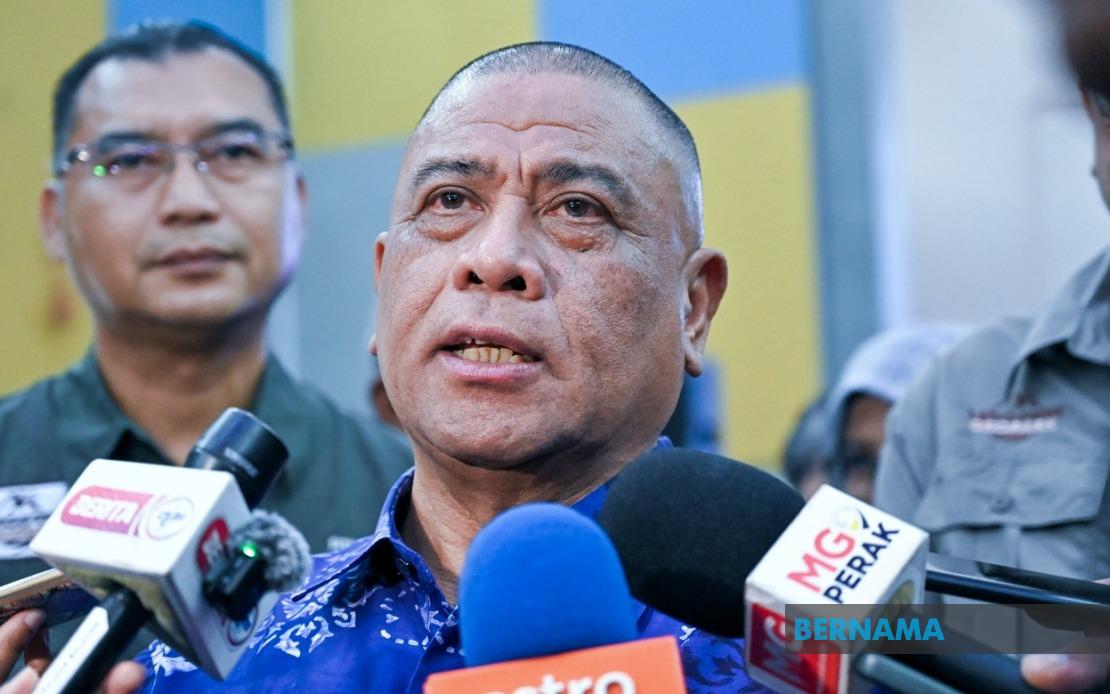
The Perak state government has moved to reassure residents that the proliferation of heterodox Islamic teachings remains manageable, even as these doctrines increasingly exploit digital communication channels to expand their reach. Menteri Besar Datuk Seri Saarani Mohamad delivered this assessment while emphasizing that his administration maintains constant vigilance through established institutional mechanisms, particularly via the State Security Committee which he personally oversees. The statement reflects growing official concern about evolving tactics employed by groups promoting non-mainstream interpretations of Islam, a challenge that has become increasingly sophisticated in the digital age.
The Perak state government's oversight framework operates through multiple layers of coordination and intelligence gathering. The State Security Committee, chaired by the Menteri Besar himself, works in tandem with the Perak Islamic Religious Department and the Perak Mufti Department to track emerging threats and developments. This multi-agency approach represents a recognition that addressing religious deviation requires sustained coordination rather than ad-hoc responses. Significantly, Sultan Nazrin Shah, the constitutional head of Islam in Perak, receives regular updates on these matters, ensuring that the royal household remains informed of the state's religious landscape and the challenges authorities face in preserving doctrinal orthodoxy.
Recent briefings to the Sultan underscore the seriousness with which state leadership treats this issue. Deputy Mufti Datuk Zamri Hashim and Perak Islamic Religious Department Director Datuk Harith Fadzilah Abdul Halim personally updated His Royal Highness on the scope and nature of deviant teachings circulating within the state. Such direct communication between operational religious authorities and the Sultan indicates that this matter transcends routine administrative concerns and carries constitutional and religious significance within Perak's governance structure. The involvement of these senior religious officials demonstrates that tackling heterodoxy requires expertise and authority concentrated at the highest levels of the state's Islamic institutional hierarchy.
The investigative framework that addresses public concerns follows established protocols designed to ensure due process and accuracy. Citizens or residents who identify teachings or practices they believe contradict Islamic principles can lodge complaints with either the Perak Islamic Religious Department or the Mufti's office. These agencies then conduct formal investigations adhering to recognized procedures before moving toward enforcement actions. This methodology reflects an attempt to balance vigilance against doctrinal deviation with fairness in establishing that genuine violations have occurred, rather than relying on unsubstantiated allegations or hasty conclusions.
At the federal level, the government has acknowledged that the challenge of combating deviant teachings extends well beyond any single state's jurisdiction. Minister in the Prime Minister's Department (Religious Affairs) Senator Datuk Zulkifli Hasan articulated a whole-of-government strategy involving the Department of Islamic Development Malaysia in coordination with State Islamic Religious Departments nationwide. This federal-state cooperation model recognizes that religious heterodoxy does not respect administrative boundaries, requiring coherent national strategy alongside localized enforcement. The government emphasizes consistency and firmness in its approach, signaling that authorities view this matter with appropriate gravity.
The tactical challenge confronting Malaysian religious authorities has fundamentally transformed in recent years. Historically, groups promoting deviant teachings conducted their activities through clandestine physical gatherings, making detection and intervention more straightforward. Modern manifestations of this problem have migrated substantially to digital platforms and encrypted messaging applications, creating detection difficulties and jurisdictional ambiguities. Groups promoting alternative interpretations of Islam have become increasingly sophisticated in their disguise, operating under seemingly benign institutional facades such as self-improvement programmes, charitable organizations, alternative medicine practitioners, and informal religious instruction circles. This camouflage strategy exploits the legitimate space occupied by grassroots Islamic learning and community service, making it considerably harder for authorities to distinguish genuine heterodoxy from conventional religious expression.
The digital dimension of this problem presents enforcement challenges that existing regulatory frameworks struggle to address effectively. Social media platforms and encrypted messaging applications operate across borders with minimal oversight capacity, enabling groups to reach audiences far beyond the geographic jurisdiction of any single state or even national authority. Content posted on these platforms can reach Malaysian Muslims while originating from foreign servers or foreign-based operators, creating legal and practical complications for enforcement action. The borderless nature of digital communication means that addressing deviant teachings increasingly requires international cooperation and coordination, a dimension that Malaysian authorities have acknowledged but which remains underdeveloped in terms of concrete implementation.
For Malaysian readers and Southeast Asian observers, Perak's situation reflects broader challenges confronting the region's Islamic religious establishments. As digital literacy spreads and internet connectivity increases across Malaysian society, religious institutions face mounting pressure to maintain doctrinal coherence while contending with competing interpretations available to virtually anyone with online access. The challenge is not merely about enforcement action against identifiable groups but about maintaining religious consensus in an information environment where alternative perspectives proliferate. The Perak government's emphasis on monitoring and control suggests a defensive posture, seeking to contain what authorities perceive as threats to religious orthodoxy.
The involvement of state authorities in regulating Islamic religious doctrine raises questions about the appropriate boundaries of state action in matters of faith that merit consideration by both policymakers and civil society. While protecting vulnerable populations from manipulative religious groups represents a legitimate government function, maintaining constant surveillance of religious teachings and beliefs touches upon fundamental questions of religious freedom and conscience. The framework described by Perak authorities, while appearing comprehensive and well-coordinated, operates largely opaquely to public scrutiny, raising questions about accountability and the transparency of investigative processes. Malaysian civil society organizations have periodically raised concerns about how authorities distinguish between genuine heterodoxy requiring intervention and legitimate diversity of Islamic interpretation deserving protection.
Looking forward, the Perak government's stated confidence in managing the deviant teachings challenge requires sustained demonstration through concrete outcomes rather than assurances alone. The proliferation of digital communication channels and the increasing sophistication of groups operating under misleading institutional guises suggest that authorities face a genuine and ongoing challenge. Success in this domain likely requires not only enforcement action but also proactive religious education that inoculates Muslim communities against heterodox teachings through persuasive presentation of mainstream Islamic scholarship and theology. The government's current messaging emphasizes control and monitoring, but the long-term effectiveness of addressing religious deviation may depend more on the persuasive appeal of orthodox Islam than on enforcement mechanisms alone.

