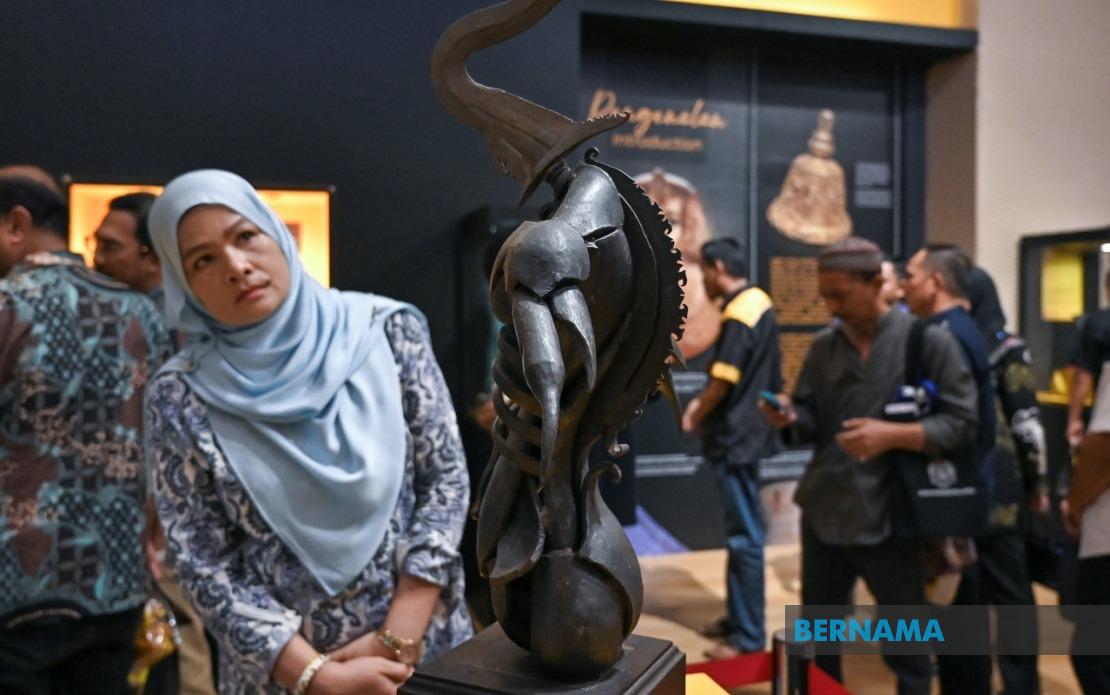
Taiping's Perak Museum has opened an ambitious exhibition dedicated to the artistic, historical and spiritual dimensions of Malay metalwork, bringing together 140 carefully curated pieces that span centuries of craftsmanship and cultural expression. Titled 'Magic and Metal: Spirit, Power and Art', the display runs from June 1 through December 31 and represents the first comprehensive gathering of the museum's early metal-based collections alongside borrowed treasures from regional collectors and institutions. The exhibition reflects a growing recognition across Malaysia's cultural institutions that metalwork deserves serious scholarly attention as a window into understanding Malay spiritual beliefs, social hierarchies and aesthetic values.
Museum director Mohd Nasrulamiazam Mohd Nasir positioned the exhibition as a turning point in how the Perak Museum presents its heritage. Rather than simply displaying objects chronologically or by type, curators have organised the collection around three thematic pillars—spirit, power and art—that illuminate how metal functioned across Malay societies as far more than utilitarian material. This conceptual framework acknowledges that for centuries, metalworkers in the Malay world understood their craft as infused with mystical properties and symbolic meaning. The choice to highlight these three dimensions simultaneously suggests a curatorial vision that resists Western museum conventions treating decorative arts separately from cultural or spiritual contexts.
The depth of this exhibition owes much to institutional partnerships that extended its reach beyond Perak Museum's own vaults. Collaboration with Raja Syahriman Raja Aziddin brought sculpture collections, while Yayasan Al-Amin contributed silver ornaments, and private collector Nor Azahar Ibrahim permitted display of significant Malay weaponry. Such partnerships have become increasingly important for Malaysian museums navigating constraints on acquisition budgets and storage space. These arrangements also reflect a maturation of museum practice in which private collectors and foundations are recognised as stewards of national heritage, legitimising their role in public education while creating pathways for eventual institutional acquisition.
Among the exhibition's centrepiece items is a 19th-century Malay traditional weapon featuring an ornate snail-shell hilt that once belonged to Sultan Abdullah Muhammad Shah II, the 26th Sultan of Perak. The inclusion of royal weaponry underscores how metalworking served as a marker of royal authority and prestige. An 18th-century suit of Bugis warrior armour demonstrates the sophistication of Southeast Asian metallurgical knowledge, while a decorated spoon and fork set that belonged to Raja Laut Ibni Sultan Muhammad Shah, son of Selangor's third Sultan, reveals how metal craftsmanship extended into domestic contexts and court life. These pieces collectively suggest a continuum of metalwork across military, ceremonial and intimate spheres of Malay court society.
The exhibition's timing reflects broader institutional efforts by Malaysia's Department of Museums to reposition museums as essential sites for heritage preservation and scholarly research. Datuk Kamarul Baharin A. Kasim, the department's director-general, officiated the opening, signalling official commitment to strengthening museum collections and visitor engagement. This institutional priority comes amid growing global competition for cultural attention and tourism revenue, where museums compete not only with entertainment venues but with digital platforms offering instant access to cultural content. By investing in thematic exhibitions that tell coherent stories about Malay civilisation, the Perak Museum positions itself as offering experiential knowledge unavailable through screens.
Projected visitor targets illustrate the ambition behind this exhibition. Museum leadership set a goal of 100,000 visitors across the six-month run, with nearly 20,000 already recorded in the initial weeks following the June opening. Should the museum achieve this target, it would represent a significant success for regional heritage institutions and validate the curatorial decision to emphasise thematic conceptualisation over conventional displays. For Malaysian museums competing for domestic and international tourism, such metrics matter considerably in justifying operational budgets and securing future funding for acquisitions and conservation work.
The exhibition arrives at a moment when Malaysian cultural institutions increasingly recognise metalwork's importance to understanding Malay intellectual and spiritual history. Too often, Western-influenced art history relegated decorative metalwork to secondary status compared to fine arts or monumental architecture. Yet Malay metalworkers operated within sophisticated cosmological systems where the material itself—its malleability, strength, reflectivity and permanence—embodied philosophical concepts. By foregrounding spirit, power and art as interpretive lenses, this exhibition challenges viewers to recognise that Malay makers approached metal with theoretical depth comparable to any artistic tradition.
For visitors and scholars across Southeast Asia, the exhibition offers rare opportunity to examine authenticated pieces representing centuries of metalworking development. Many Malay metal artefacts remain scattered across private collections or poorly catalogued in regional museums, making comprehensive exhibitions uncommon. The Perak Museum's effort to document and display this material serves preservation functions beyond the exhibition's run, as catalogue research contributes to broader regional knowledge about metalworking techniques, artistic influences and trade networks that shaped these objects. Such scholarly work gradually builds the evidentiary base necessary for understanding how Malay metalworkers engaged with influences from Javanese, Chinese, Indian and Islamic traditions while developing distinctive local expressions.
The exhibition's significance extends beyond immediate cultural tourism benefits. By showcasing Malay metalwork as worthy of serious institutional and scholarly attention, the Perak Museum contributes to broader cultural validation and pride in regional heritage. For Malaysian communities, particularly younger generations increasingly disconnected from traditional craftsmanship, such exhibitions provide tangible connections to ancestral knowledge and aesthetic achievement. They suggest that Malay civilisation produced objects and ideas of enduring beauty and intellectual sophistication—a counterweight to historical narratives emphasising only colonial-era or contemporary Malaysia.

