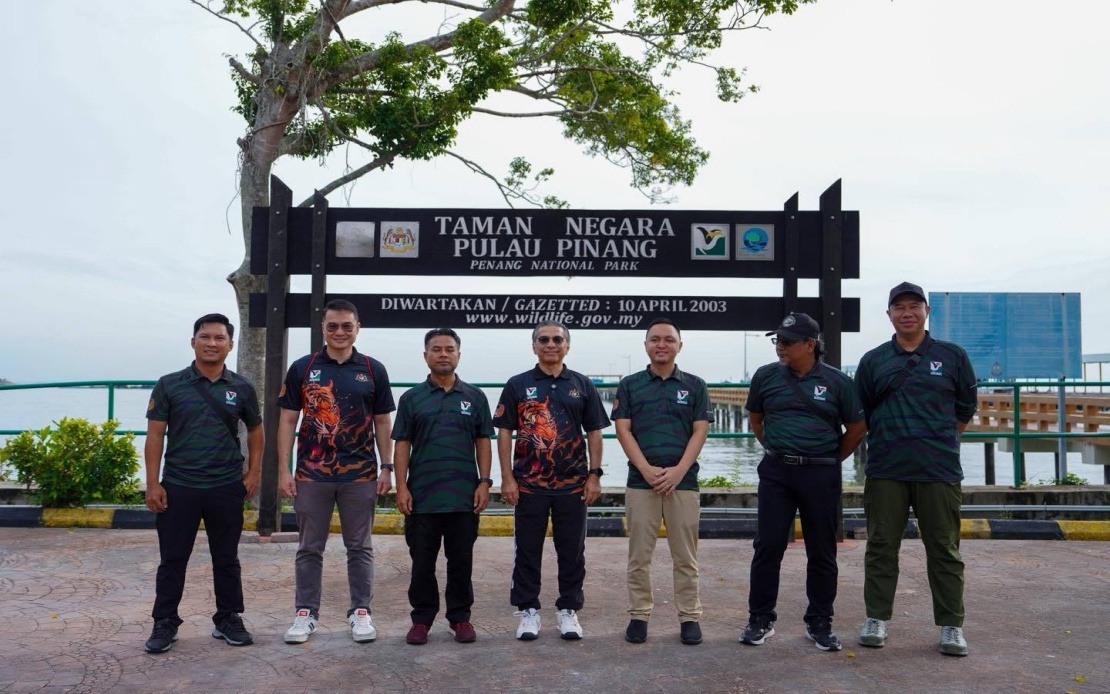
Penang's biological treasure trove faces a critical crossroads where preservation alone no longer suffices; the state's ecosystems now require active partnership between government agencies and local communities to ensure long-term survival. During a recent inspection of Penang National Park in Teluk Bahang, Deputy Minister Syed Ibrahim Syed Noh articulated a vision where nature protection transcends the traditional model of cordoned-off reserves, instead opening doors for residents and visitors to become stewards of the environment. The park's sprawling landscape encompasses diverse habitats—from dense forests to pristine beaches, wildlife sanctuaries, and the scientifically significant Meromictic Lake—all interconnected in an intricate web that sustains the region's biodiversity.
The philosophy underpinning this conservation approach represents a fundamental shift in how Malaysia manages its protected areas. Rather than treating natural sites as museum pieces to be viewed from a distance, the Ministry of Natural Resources and Environmental Sustainability envisions spaces where people develop genuine emotional connections to the environments they inhabit. This strategy recognizes that passive protection, however well-intentioned, often struggles when communities feel disconnected from the conservation process. By inviting public participation and creating pathways for direct engagement, the ministry aims to cultivate a generation of environmental advocates who understand firsthand why preserving biodiversity matters not just for today's enjoyment but as an inheritance for descendants.
Penang National Park's Turtle Conservation Centre exemplifies this integrated approach. Managed by the Department of Fisheries Malaysia, the facility focuses on protecting vulnerable species including Green Turtles and Olive Ridley Turtles, while simultaneously educating visitors about the challenges these creatures face in their natural habitats. Rather than existing in isolation, the centre operates as a portal through which members of the public can witness conservation work in action, observe scientific efforts to safeguard nesting beaches, and understand the broader ecological systems that support marine life. This visibility transforms abstract conservation concepts into tangible realities that resonate with both children and adults.
Educational initiatives at facilities like Entopia Penang further strengthen this community-centred conservation model by providing interactive experiences where learning transcends classroom walls. The deputy minister emphasized that such hands-on approaches prove especially vital for younger generations, who will ultimately determine whether these ecosystems flourish or decline. When people, particularly the young, engage directly with biodiversity through guided experiences and educational programming, they develop the knowledge and emotional investment necessary to support conservation decisions throughout their lives. This intergenerational approach acknowledges that biodiversity protection represents a multi-decade commitment requiring sustained public support.
The Meromictic Lake, a distinctive feature where freshwater and saltwater layers remain separate due to density differences, serves as a microcosm of Penang National Park's ecological complexity. This natural phenomenon illustrates how diverse habitat types coexist within confined spaces and how disrupting one component risks destabilizing the entire system. For visitors and community members learning about the lake's unique characteristics, it becomes a powerful teaching tool demonstrating the fragility and interconnectedness of natural systems. Understanding such specifics helps justify the rigorous protection standards applied to protected areas and strengthens the case for conservation funding and policy support.
Ecotourism emerges as a crucial bridge between conservation imperatives and community economic interests. When managed responsibly, ecotourism generates revenue that can fund conservation work while providing livelihoods for local guides, hospitality workers, and vendors. Simultaneously, visitor expenditure demonstrates to government and private sector stakeholders that healthy ecosystems possess measurable economic value. For Southeast Asian nations where resource constraints often limit conservation budgets, ecotourism revenue can prove decisive in sustaining long-term protection efforts. However, this approach requires careful calibration; excessive visitor numbers or inadequate site management can degrade the very ecosystems tourism aims to showcase.
Penang's position as a major tourist destination both amplifies and complicates these conservation challenges. The state attracts substantial visitor flows due to its beaches, historical sites, and increasingly, its natural attractions. Managing this influx while protecting sensitive ecosystems demands sophisticated planning and enforcement. The deputy minister's visit underscores the state government's commitment to addressing these tensions through evidence-based management informed by visits to active conservation sites and consultations with specialized agencies like PERHILITAN (the Penang Department of Wildlife and National Parks). Such oversight ensures that development decisions incorporate environmental considerations rather than treating conservation as an afterthought.
The framing of conservation as a government responsibility requiring community participation rather than expert-driven bureaucratic control marks an important evolution in Malaysia's environmental governance. This approach acknowledges that sustainable management depends ultimately on millions of individual decisions made by citizens in their daily lives—whether to support environmental policies, how to interact with natural areas, whether to report illegal activity, and what behaviors to model for their children. Government agencies and protected area managers can establish frameworks and enforce regulations, but lasting change emerges when communities internalize conservation values as part of their identity.
For Malaysia more broadly, Penang National Park serves as a testing ground for conservation models that other states might emulate. As pressures on natural resources intensify across Southeast Asia due to population growth, urbanization, and development demands, replicable models for balancing protection with community benefit become increasingly valuable. Penang's efforts to integrate education, ecotourism, and participatory conservation offer lessons applicable to protected areas throughout the region confronting similar challenges of maintaining biodiversity amid competing economic pressures.
The deputy minister's statement emphasizing that "natural treasures we preserve today are not merely for our enjoyment" reflects recognition that conservation transcends parochial interests. The forests, beaches, and waters of Penang National Park generate ecosystem services—from carbon sequestration to fish stock maintenance—that benefit far more than just local residents. They provide flood regulation, water filtration, and climate regulation services whose value extends throughout Penang and beyond. Framing conservation in these terms helps justify protection measures that might otherwise appear to constrain economic opportunities.
Looking forward, Penang's conservation trajectory depends on sustained commitment from multiple stakeholders. Government agencies must maintain adequate funding and enforcement capacity. Communities must continue embracing roles as conservation partners rather than viewing protected areas as constraints on their interests. Ecotourism operators must resist pressure to maximize visitor numbers at the expense of environmental quality. Scientists and educators must continue documenting the park's ecological characteristics and communicating findings to policymakers and the public. When these elements align, protected areas like Penang National Park can flourish while contributing measurably to their surrounding communities' wellbeing.

