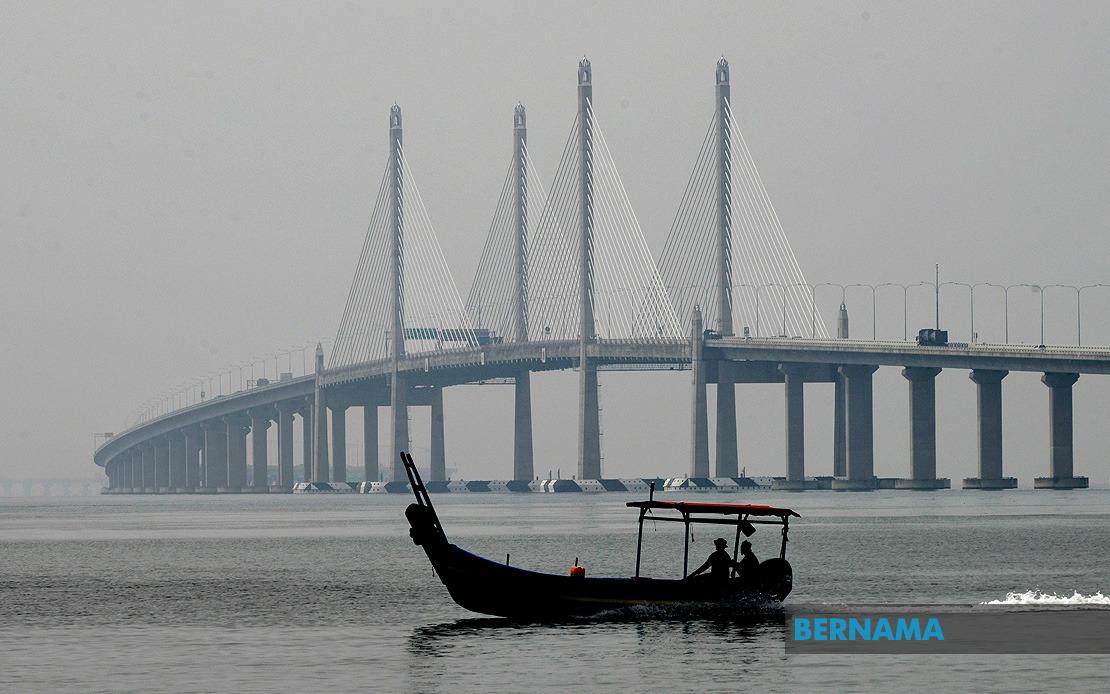
Penang's state government plans to convene consultations with key stakeholders in the coming week to determine how best to manage the implementation of fishing restrictions beneath the Penang Bridge and the Sultan Abdul Halim Mu'adzam Shah Bridge, according to Datuk Rashidi Zinol, chairman of the Penang Rural Development, Agro-technology and Food Security and Entrepreneurship Committee.
The formal discussions will attempt to reconcile competing interests: the enforcement of security measures that designate these areas as National Key Points under the Protected Areas and Protected Places Act 1959 (Act 298), and the economic hardship experienced by the maritime community that depends on these waters for income. Rashidi acknowledged that the restrictions, though implemented for legitimate safety and regulatory purposes, have triggered significant disruption across multiple economic sectors centred on fishing and waterborne tourism.
The catalyst for this policy review came directly from boat operators themselves, who raised their grievances during recent engagements with Rashidi. Both fishing vessel operators and those running tourist boat services presented evidence that the bans have substantially curtailed their commercial activities, leading to diminished service demand and reduced revenues. These frontline workers articulated concerns that without access to traditional fishing grounds beneath the bridges, their business models have become untenable.
The economic ripple effects extend well beyond the captains and crew of individual vessels. Rashidi identified a complex downstream impact affecting the entire supply chain that sustains the maritime industry in Penang. Fishing equipment suppliers, ice distributors, food vendors, and numerous small businesses that service boat operators have all experienced collateral damage from the restrictions. This ecosystem of interdependent enterprises represents a significant source of employment and livelihood security for working-class Penangites, particularly in coastal and riverside communities where alternative income sources remain limited.
Understanding the breadth of this challenge requires recognising the structural position of Penang's maritime sector within the state's broader economy. Fishing remains a culturally and economically significant activity for many communities, particularly in rural areas where modernisation has been uneven and formal employment opportunities scarce. Tourist boat operators similarly fill an important niche in Penang's tourism economy, offering authentic experiences that differentiate the state from competitors and generating income that filters through local hospitality networks.
The designation of both bridges as National Key Points reflects legitimate national security imperatives. These structures represent critical infrastructure that connects Penang to the Malaysian peninsula and facilitates the movement of hundreds of thousands of commuters and goods vehicles daily. The security classifications that have resulted in the fishing bans presumably address vulnerabilities identified through national security assessments. Consequently, any resolution cannot simply abandon protective measures, but must instead seek configurations that satisfy defensive requirements while accommodating legitimate economic activity.
Rashidi's framing of next week's discussions as seeking a "balanced approach" signals an acknowledgment that both concerns possess validity and merit serious consideration. This represents a more nuanced position than simply enforcing restrictions regardless of consequences, yet it also avoids suggesting that security protocols should be compromised. The challenge lies in identifying operational adjustments, modified enforcement mechanisms, or alternative arrangements that might preserve the protective intent while reducing economic harm.
Potential solutions might include designated fishing zones or designated time windows when limited fishing activity could resume under supervision, temporary permits for specific operators with established track records, or compensation programmes for affected workers during the transition period. Such measures would require coordination among multiple agencies including the Maritime Authorities, local government bodies, and perhaps the Royal Malaysian Navy or relevant security agencies. The complexity of interagency cooperation within Malaysia's federal system means that even identifying a workable compromise will demand sustained political will and bureaucratic flexibility.
For Malaysian policymakers, this situation illustrates a recurring tension: security imperatives and economic development often exist in uncomfortable proximity, and resolving such conflicts requires mechanisms for genuine stakeholder engagement rather than top-down implementation divorced from ground realities. The affected communities in Penang represent voices that must be heard, and their specific knowledge of local conditions and feasible alternatives should inform whatever solutions emerge from these discussions.
The outcome of Penang's consultative process will likely influence how similar restrictions are implemented or modified elsewhere in Malaysia, particularly around other designated protected sites. If authorities can demonstrate that security and sustainable livelihoods need not be mutually exclusive, the precedent could encourage more thoughtful policy design in future infrastructure security arrangements. Conversely, if the process fails to produce tangible relief for affected operators, it may undermine public confidence in government responsiveness to economic hardship caused by state decisions.
The coming week's discussions will therefore represent more than a routine administrative adjustment. They will test whether Malaysian governance structures can simultaneously honour both security obligations and the welfare of citizens whose livelihoods depend on contested spaces. For Penang's maritime communities, the stakes are profoundly practical: whether their profession remains viable in their own homeland.

