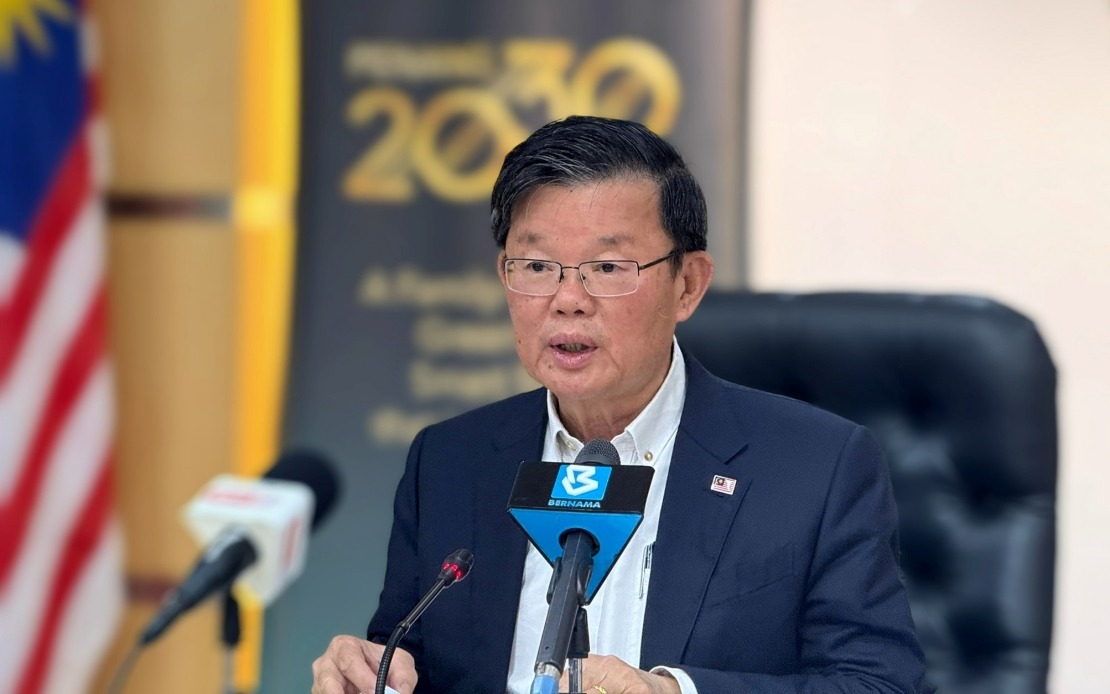
Penang's state government has contracted PricewaterhouseCoopers Advisory Services Sdn Bhd to craft the strategic foundations for an ambitious new international financial centre, signalling the state's determination to position itself as a regional financial hub beyond its traditional manufacturing base. Chief Minister Chow Kon Yeow announced that the PIFC Special Task Force Committee endorsed PwC's consultancy role, with formal appointment issued on June 15 and a 20-week delivery window for completing three critical documents that will guide the initiative forward.
The assignment encompasses the preparation of a comprehensive White Paper, Strategic Blueprint and detailed Action Plan—documents designed to establish the institutional, regulatory and operational framework necessary for launching the Penang International Financial Centre. These deliverables will address fundamental questions about governance structures, physical and digital infrastructure requirements, fiscal incentive mechanisms and the sequenced rollout of the financial centre across multiple phases, providing both the conceptual architecture and practical implementation roadmap that policymakers require.
According to Chow, PwC presented preliminary progress findings to the committee during its July 17 session, revealing that the proposed centre would anchor itself to Penang's existing competitive advantages in the global electrical and electronics supply chain. Rather than attempting to create financial services capacity in isolation, the consultancy recognises that the PIFC's viability depends on integrating with the state's established industrial ecosystem and the sophisticated logistics, technical expertise and international business networks that support it.
The initiative opens pathways for Penang to cultivate innovation across adjacent sectors that naturally complement electronics manufacturing—including fintech solutions tailored to supply chain financing, venture capital for technology startups, and specialised financial instruments for the engineering and industrial services segments. This sectoral specificity distinguishes Penang's approach from generic financial centre aspirations that lack grounding in actual economic activity, positioning the state to attract legitimate financial flows rather than purely speculative capital.
PwC's mandate extends beyond technical documentation to encompass broad stakeholder engagement designed to build consensus and surface practical constraints. The consultant has been instructed to systematically consult strategic partners, domestic and international industry participants, financial regulators, academic institutions and other relevant stakeholders to ensure that the resulting proposals reflect real-world operational feasibility and integrate seamlessly with Malaysia's broader technology ecosystem development strategy. This consultative approach should help identify potential obstacles before they impede implementation.
Chow expressed confidence that the PIFC initiative would catalyse development of a technology-driven financial ecosystem capable of enhancing competitive positioning across the Northern Region while simultaneously driving economic expansion within Penang itself. The underlying logic assumes that attracting international financial firms and fostering associated professional services will generate high-value employment, attract human capital, and create multiplier effects throughout the broader economy—benefits that extend beyond the financial sector itself to encompass supporting industries and services.
The state government previously flagged expectations that the White Paper would be finalised by late July or early August, underscoring the accelerated timeline for moving from concept to foundational strategy. That ambitious schedule reflects political commitment at the highest levels and suggests this initiative carries significant priority within the state administration's development agenda. The document is expected to furnish policymakers with sufficient clarity to begin subsequent implementation phases and secure necessary approvals from relevant federal authorities.
For Malaysia's broader financial development trajectory, Penang's effort represents a complementary initiative to existing financial centre ambitions centred on Kuala Lumpur and Labuan. Rather than directly competing for global capital markets functions, Penang's proposed centre targets specialised financial services aligned with industrial capabilities, potentially creating a more diversified national financial landscape. This regional distribution of financial functions could enhance systemic resilience and ensure that different growth nodes benefit from financial sector development.
The engagement of PwC—a firm with extensive experience in financial centre development across multiple Asian jurisdictions—brings international best practice knowledge and comparative insights into structural and regulatory frameworks that have succeeded or faltered elsewhere in the region. Such expertise becomes particularly valuable when Penang must navigate the complex intersection of state-level autonomy and federal financial sector oversight, ensuring that proposed structures comply with Bank Negara Malaysia's regulatory expectations while maximising the flexibility available to state governments under Malaysia's constitutional framework.
Sustaining momentum on this initiative requires that PwC's deliverables prove compelling to potential anchor institutions and professional firms that would need to establish operations in Penang. The strategic blueprint must credibly address concerns about market depth, talent availability, regulatory certainty and operational efficiency—factors that firms evaluate when considering relocation or expansion decisions. Success depends on producing documents that convince sceptical international financial professionals that Penang offers tangible advantages over established alternatives.

