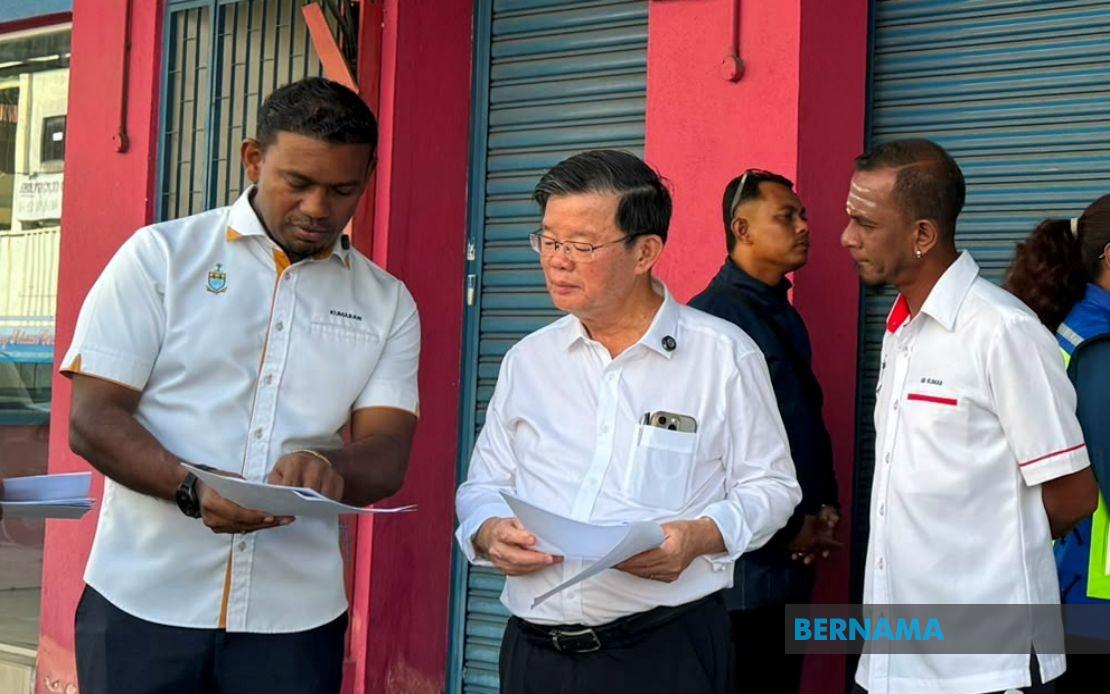
Penang's state government has rejected repeated calls to defer the new water tariff structure that took effect on July 1, with Chief Minister Chow Kon Yeow confirming the decision is final and will not be reconsidered. Speaking in Butterworth, Chow explained that the state had already granted consumers nearly a year of grace by delaying the tariff from its originally scheduled August 2024 implementation date, pushing it back to July this year to ease the transition.
The rationale underpinning this stance centres on the financial pressures facing Penang Water Supply Corporation (PBAPP), which must fund an ambitious infrastructure modernisation agenda that demands nearly RM2 billion in capital expenditure. This funding gap extends beyond domestic projects, as the corporation also requires substantial investment to support water supply initiatives originating from Perak. Without the additional revenue stream, Chow indicated, these critical expansion and reinforcement works cannot proceed on schedule, ultimately jeopardising the state's long-term water security.
The new tariff structure will inject approximately RM20 million annually into PBAPP's coffers, a sum the corporation and state authorities argue is indispensable for maintaining and improving service delivery across Penang. This revenue increment becomes particularly significant when considered against the backdrop of national regulatory frameworks. The tariff-setting mechanism itself is determined by the Federal Government through the National Water Services Commission (SPAN), which establishes uniform pricing principles applied across all Malaysian states. Under this system, water operators are entitled to seek tariff reviews every three years, taking into account their operational expenses and capital development requirements.
Chow emphasised a crucial equity component embedded within Penang's pricing structure that often goes unrecognised in public discourse. Domestic consumers, who constitute the largest user group in any urban water system, continue to pay rates substantially below the actual production cost of water. The true expense of supplying water to households has surpassed RM1 per cubic metre, yet domestic tariffs stand at approximately 65 sen per unit—a deliberate gap maintained through cross-subsidisation from commercial and industrial users. This mechanism ensures affordability for ordinary households while non-domestic sectors absorb the differential, effectively subsidising residential water consumption.
The practical impact of the tariff adjustment remains modest for the vast majority of Penang households. According to PBAPP Chief Executive Officer Datuk K. Pathmanathan, roughly 82 per cent of residential customers—those consuming 35 cubic metres or less monthly—will experience a maximum daily increase of RM0.08, translating to roughly RM2.55 additional cost per month. For context, this represents a fractional percentage increase on typical household budgets, particularly when weighed against the infrastructure improvements it funds. Commercial users face steeper nominal increases of RM2.59 daily or RM77.70 monthly for those consuming 500 cubic metres, though their higher consumption means they continue supporting the cross-subsidy arrangement benefiting residential customers.
The revenue generated from this tariff revision will specifically fund initiatives outlined under the Water Contingency Plan 2030 (WCP 2030), a comprehensive strategy designed to safeguard Penang's water availability against future demand pressures and potential supply disruptions. Among the major projects contingent on this funding are construction of new water treatment facilities at Mengkuang Dam and Sungai Perai, essential upgrades and land acquisition work at the Sungai Dua Water Treatment Plant, and property procurement for the planned Sungai Muda facility. Additionally, the Macallum-Bukit Dumbar pipeline expansion—critical infrastructure for distributing water across growing residential and commercial areas—depends on capital injected through tariff revenue.
Opposition to the tariff came from Bagan Member of Parliament Lim Guan Eng, who publicly appealed through social media for the state government to consider postponing the 20 sen per cubic metre increase for twelve months. Guan Eng's intervention reflects broader public concern about cost-of-living pressures, a sentiment that resonates across Malaysian urban centres where households face compounding expenses. However, Chow's position suggests the state administration believes further delay would undermine the financial viability of long-term water security initiatives, potentially creating more acute problems later.
From a regional perspective, Penang's experience illustrates the tension between short-term affordability concerns and long-term infrastructure sustainability facing water authorities throughout Southeast Asia. As urbanisation accelerates and industrial demand intensifies, water treatment and distribution systems require continuous investment in renewal and expansion. Postponing cost recovery mechanisms merely defers these expenses, often resulting in more substantial tariff shocks when implementation eventually occurs. The Penang approach of phased delay followed by firm commitment reflects pragmatic governance that balances immediate public sentiment with prudent resource stewardship.
The tariff structure also demonstrates how regulatory frameworks like SPAN's national guidelines attempt to standardise approaches while permitting state-level flexibility in implementation timing. This federalised system acknowledges that water authorities operate within specific geographical and demographic contexts while ensuring pricing mechanisms remain transparent and cost-reflective. Penang's decision to implement despite opposition suggests confidence that the communications strategy emphasising infrastructure necessity and residential affordability will ultimately gain public acceptance, even among initial critics.

