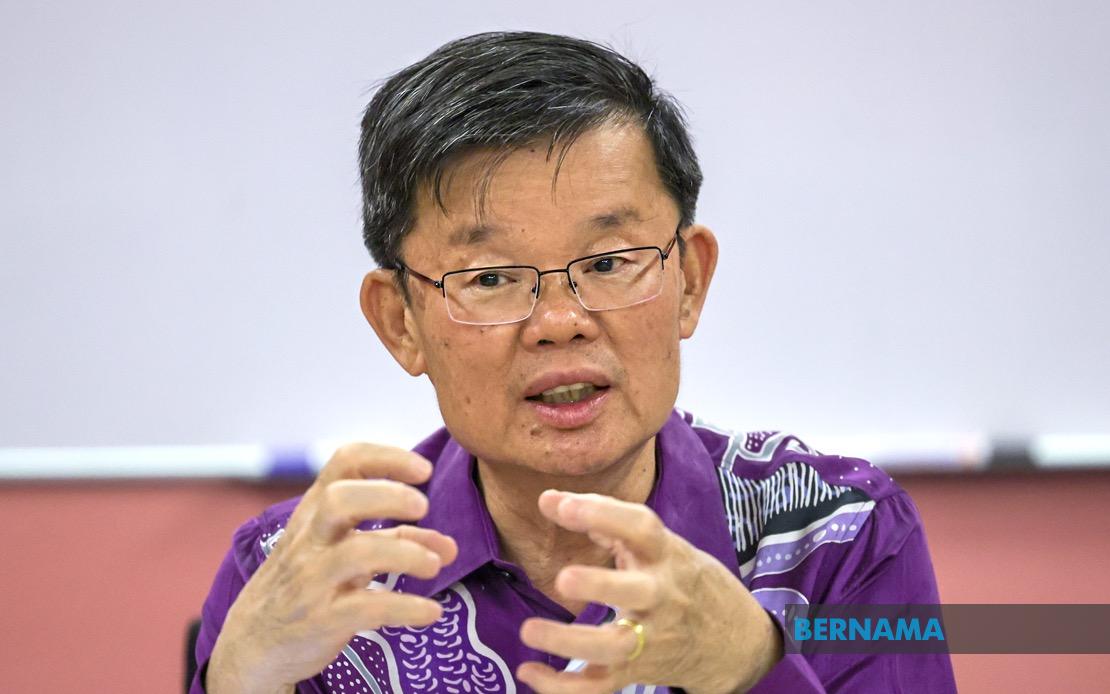
Chief Minister Chow Kon Yeow announced on Thursday that Penang's Pakatan Harapan would keep the state's lone Barisan Nasional executive councillor on its administrative team until the next general election, reinforcing the electoral alliance forged during the 2023 state polls. The decision emerged from a meeting of the Penang PH leadership in George Town, where coalition members reaffirmed their commitment to the power-sharing arrangement that has defined governance in the state for the past year.
The BN representative maintaining a position within the Penang administration is Datuk Rashidi Zinol, who chairs the State Rural Development, Agrotechnology and Food Security Committee. His continued presence in the executive council reflects the pragmatic compromise that both coalitions reached after the 2023 election delivered a hung parliament scenario in Penang, forcing the rival groupings to negotiate a governing arrangement. This retention strategy marks a significant statement about political stability in one of Malaysia's most politically volatile states.
Chow characterised the decision as rooted in strategic thinking rather than mere expedience. He explained that the Penang PH leadership believes sufficient opportunity exists to deepen collaboration between coalition partners while simultaneously advancing the reform objectives that have become central to Pakatan Harapan's political identity and messaging. The statement suggests a calculated assessment that maintaining internal unity and demonstrating governmental competence takes precedence over maximising short-term factional advantages as the nation approaches its next nationwide election cycle.
The announcement carries particular significance given recent electoral developments elsewhere in the country. Penang PH has undertaken careful analysis of results from the Johor and Negeri Sembilan state elections, drawing lessons about voter behaviour and coalition dynamics that appear to have informed this decision. Rather than viewing the BN presence as a liability, the Penang coalition leadership seems to have concluded that the stability and legitimacy provided by a unity arrangement outweigh the symbolic cost of sharing executive positions with a rival political bloc.
Looking ahead to the anticipated 16th general election, Chow indicated that Penang PH intends to subject every state constituency to granular evaluation using multiple analytical frameworks. This methodical approach reflects hard-won experience from previous electoral cycles and suggests the coalition is preparing meticulously for what figures to be a fiercely competitive nationwide campaign. The leadership's willingness to examine vulnerabilities rather than assume incumbent advantages demonstrates a more realistic assessment of political dynamics in contemporary Malaysia.
The coalition has identified several strategic priorities to strengthen its competitive position in the coming election campaign. Enhanced deployment of digital platforms features prominently in these plans, recognising that online spaces have become decisive battlegrounds for political persuasion. Equally important is targeted engagement with the Undi18 voter cohort—young electors voting for the first time—whose political preferences remain fluid and whose collective voting power could swing marginal constituencies in decisive directions.
Chow and his colleagues are simultaneously conscious that historical grievances and performance records count for far less in electoral contests than the often-ephemeral realm of public perception and sentiment. He acknowledged that voter attitudes can shift with remarkable velocity, sometimes bearing little correlation to objective improvements in governance or economic conditions. This awareness appears to have prompted the coalition's decision to acknowledge its own weaknesses proactively rather than adopting a purely triumphalist tone about incumbent achievements.
The Penang administration points to tangible accomplishments in economic expansion, investment attraction, employment generation, and targeted policy implementation as foundations for voter confidence. Yet the leadership seems acutely alert to the reality that such achievements, however genuine, provide no guarantee of electoral success if the coalition fails to maintain effective communication strategies and sustained grassroots engagement. This tension between objective performance and subjective perception frames much of contemporary Malaysian politics.
The 2023 configuration that produced the current arrangement saw Pakatan Harapan dominating the state election decisively. The Democratic Action Party secured all 19 of its contested seats, PKR captured seven, and Amanah won one, granting the coalition 27 of 40 state seats independently. Barisan Nasional's two seats proved mathematically decisive in establishing the Unity Government framework, as no single coalition achieved the outright majority required for unilateral control. This mathematical reality has substantially shaped the tenor of subsequent governing arrangements.
Retaining the BN executive councillor until the next general election also serves as a practical signal that the Penang coalition remains committed to stable, competent administration rather than engaging in the factional gamesmanship that has occasionally compromised governance in other states. By demonstrating that coalition partners can work collaboratively toward shared policy objectives, the Penang arrangement potentially provides a model for post-election negotiations should the next general election produce another fragmented parliament.
For Malaysia's broader political landscape, the Penang decision illustrates how coalition politics have become embedded within the nation's electoral system. Few state administrations now operate under single-party control, and the negotiation of power-sharing arrangements has become a routine feature of contemporary Malaysian governance. The Penang PH's choice to maintain this arrangement through the next election cycle suggests confidence in its capacity to manage shared authority whilst retaining electoral competitiveness.
The coalition's emphasis on reform and strengthening cooperation indicates recognition that voters increasingly evaluate parties not merely on partisan rhetoric but on demonstrated capacity to deliver good governance and tangible improvements in living standards. By maintaining the unity arrangement and framing it as a vehicle for accelerating reform initiatives, Penang PH appears to be constructing a governing narrative that distinguishes between electoral competition and administrative effectiveness. Whether this approach ultimately resonates with voters will become evident when the 16th general election is called.

