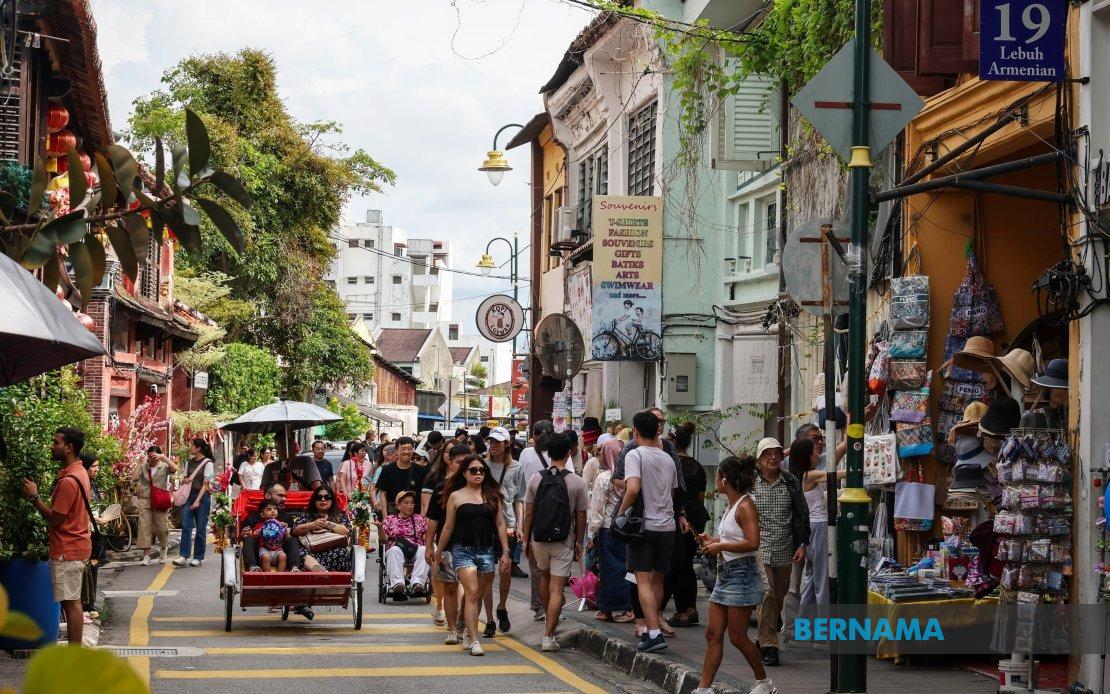
Penang's state government will undertake a systematic evaluation of structural integrity across all heritage properties in the state after debris from a century-old shophouse on Armenian Street in George Town fell onto the street yesterday, leaving two Sri Lankan visitors with injuries requiring hospitalisation. The incident has prompted urgent action from state authorities, who recognise the tension between preserving the architectural heritage that underpins George Town's UNESCO World Heritage status and maintaining public safety in an increasingly crowded tourist precinct.
State Local Government and Town and Country Planning Committee chairman Jason H'ng Mooi Lye announced that the assessment would be conducted in collaboration with the National Heritage Department, which will appoint an independent engineering firm to systematically examine heritage structures across Penang and flag those presenting safety risks. This marks a significant shift in approach, moving from reactive repairs to proactive identification of vulnerable buildings before further incidents occur. The comprehensive nature of the initiative reflects growing concern about the condition of many heritage properties that have been subjected to decades of tropical weathering, pest damage, and structural stress.
Following completion of the engineering study, the Penang Island City Council is expected to issue formal notices to building owners identified as requiring restoration work, creating a framework for mandatory repairs rather than relying on voluntary conservation efforts. This regulatory approach acknowledges that while many heritage property owners have limited financial resources, public safety cannot remain subordinate to heritage preservation concerns. The move also signals recognition that Penang's reputation as a world-class heritage destination depends on visitors feeling secure when exploring the state's treasured historic neighbourhoods.
The incident involved two tourists from Sri Lanka, identified as Mohamad Ammtar, aged 66, and Fatimah, aged 55, who were struck by a wooden beam and concrete debris that suddenly detached from the building's structure. Both individuals received immediate medical attention at the scene before being transported to Penang Hospital for comprehensive treatment. While the male victim was discharged after completing his assessment and initial care, the female tourist required ongoing medical management and was scheduled for computerised tomography scanning to evaluate the full extent of her injuries, indicating the severity of the incident.
Preliminary structural investigations have determined that termite damage was the primary cause of the collapse, a finding that underscores a widespread vulnerability affecting many heritage buildings throughout Southeast Asia's tropical urban centres. Termites systematically compromise wooden structural elements, often causing damage that remains invisible until catastrophic failure occurs without warning. This particular case highlights how heritage buildings in regions with high humidity, rainfall, and warm temperatures face unique preservation challenges that differ substantially from heritage conservation issues in temperate climates, requiring tailored engineering approaches and more frequent structural monitoring.
H'ng emphasised that heritage preservation in Penang cannot proceed without simultaneously ensuring visitor and resident safety, reflecting a fundamental principle that conservation efforts must balance historical authenticity with contemporary standards for structural security. The challenge lies in determining how restoration work can occur while maintaining the original architectural character that makes George Town distinctive. Many heritage buildings feature materials and construction techniques that are inherently vulnerable to modern threats, particularly pests and weather, creating situations where pure restoration to original specifications may not provide adequate safety margins.
The official position articulated by state leadership acknowledges that while conservation orthodoxy typically prioritises retention of original materials and construction methods, practical safety considerations sometimes necessitate substituting more durable alternatives, particularly for load-bearing wooden elements that have been compromised. This represents a pragmatic evolution in heritage preservation philosophy, moving beyond rigid authenticity requirements toward solutions that permit buildings to continue serving their communities without posing hazards. Contemporary materials can often be installed in ways that remain visually consistent with heritage aesthetic standards while substantially improving structural resilience.
State Tourism and Creative Economy Committee chairman Wong Hon Wai indicated that George Town World Heritage Incorporated and the Penang Island City Council had jointly issued guidance to heritage building proprietors regarding the safety vulnerabilities highlighted by the Armenian Street incident. These advisories serve both as immediate warnings and as documentation of government concern, potentially motivating owners to undertake preventive assessments and maintenance even before the comprehensive engineering study identifies specific problem buildings. The advisory process creates accountability mechanisms and demonstrates to the international heritage community that Penang takes these matters seriously.
The timing of this initiative carries significance beyond Penang's borders, as Southeast Asian heritage cities including Hoi An in Vietnam, Luang Prabang in Laos, and other UNESCO-designated areas face identical challenges managing aging building stock in tropical environments. Penang's structured approach to combining heritage protection with safety requirements may establish a model that other regional destinations can adapt to their circumstances. The willingness to invest in systematic engineering assessment rather than responding purely to crises reflects maturing governance around heritage management in the region.
Beyond the immediate safety concerns, this incident raises questions about tourism management in increasingly congested heritage precincts where foot traffic has grown substantially since George Town's World Heritage designation in 2008. Heightened visitor numbers place greater stress on aging infrastructure, necessitating more robust maintenance regimes and structural monitoring. The balance between welcoming international tourists and protecting both visitors and the physical fabric of historic areas will require ongoing attention from Penang authorities, tourism operators, and heritage conservation specialists working collaboratively to ensure that economic benefits from heritage tourism do not come at the cost of cultural assets or visitor safety.

