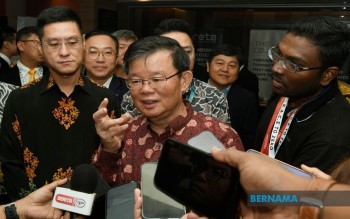
Penang is accelerating its transition towards a cleaner manufacturing economy, with strong early uptake of a newly launched financing mechanism designed to help businesses adopt environmentally sustainable practices. The Penang Climate Mitigation Fund, unveiled under the Penang Green Industry Programme in partnership with Alliance Bank, has already attracted applications from 25 companies, with five currently progressing through the assessment phase. Chief Minister Chow Kon Yeow revealed the encouraging response while addressing delegates at the R.A.C.E To Zero conference in George Town, signalling that manufacturers are increasingly recognising the commercial imperative of transitioning to cleaner operations.
The fund itself represents a modest but meaningful commitment to green industrial transformation. Operating with an initial capital pool of RM20 million—comprising RM5 million in state government contributions and RM15 million from Alliance Bank—the initiative carries potential for expansion to RM100 million pending further commitments. This structure reflects a growing recognition that public-private partnerships are essential to unlocking the capital required for large-scale sustainability transitions in manufacturing-heavy regions.
Eligible businesses, specifically small and medium enterprises and mid-tier companies, can access preferential financing arrangements reaching RM500,000. Critically, these loans come bundled with complementary support services that extend beyond mere capital provision. Applicants gain access to tailored sustainability assessments, expert advisory services and targeted grants, effectively creating an ecosystem that addresses not just financial barriers but also the technical knowledge gap that often prevents smaller manufacturers from successfully implementing environmental improvements.
Chow's framing of sustainability as a competitive necessity rather than purely an environmental obligation reveals a strategic shift in how Penang is positioning itself within regional and global manufacturing networks. The state's electrical and electronics sector exported RM436.9 billion in goods last year, representing approximately 68 per cent of Malaysia's total E&E exports—a concentration that both underscores Penang's manufacturing dominance and its vulnerability to supply chain pressures. Increasingly, multinational corporations are imposing carbon reduction targets throughout their supplier networks, meaning that Penang-based manufacturers can no longer view sustainability compliance as optional. Global buyers are now routinely asking about the renewable energy sources powering production facilities, making energy decarbonisation a direct factor in contract negotiations and supplier selection.
The competitive dynamics extend beyond environmental credentials. While companies traditionally evaluate location decisions based on conventional factors—workforce availability, infrastructure quality, logistics efficiency and operational costs—a new assessment layer has emerged. The ability to source renewable electricity and achieve lower Scope 2 emissions (indirect emissions from purchased energy) has become a genuine differentiator, particularly for multinational corporations operating under board-mandated sustainability commitments. For Penang's manufacturers, this transformation creates both urgency and opportunity: those capable of demonstrating green credentials gain competitive advantage in attracting or retaining high-value customers.
Penang's broader energy policy framework provides the structural scaffolding for this industrial transition. The Penang Energy Framework, launched in November 2024, establishes concrete targets: reducing energy intensity by 25 per cent and increasing renewable energy's share of the state's overall energy mix to at least 10 per cent by 2030. These objectives acknowledge geographic constraints that define Penang's development profile. As a densely populated, land-scarce region, large-scale wind or solar farms are impractical, necessitating more creative solutions. Rooftop solar installations emerge as the most pragmatic pathway, and new building regulations reflect this reality by requiring that commercial and industrial structures dedicate at least 75 per cent of roof area to solar panels, or alternatively meet renewable energy sourcing targets aligned with their specific TNB tariff categories.
Beyond rooftop installations, Penang is exploring supplementary renewable energy avenues. The state water utility, Penang Water Supply Corporation, is investigating floating solar technology on its reservoir systems—a dual-use approach that generates clean electricity while minimising land consumption. Silicon Island, a major new industrial development, is integrating renewable generation throughout its infrastructure, including a dedicated Green Tech Park powered by solar capacity. These initiatives demonstrate how energy transition can be embedded into industrial development planning rather than retrofitted afterwards, typically a more cost-effective and efficient approach.
Energy efficiency represents the complementary pillar of Penang's decarbonisation strategy. The state is introducing standardised energy intensity metrics that enable manufacturers to measure, benchmark and progressively improve their consumption patterns. Government facilities—both state-level offices and local authority properties—are undergoing systematic renewable energy and efficiency assessments. For new government and local authority buildings, renewable sources must supply at least five per cent of total energy consumption, while existing facilities are being encouraged to target similar benchmarks. This approach ensures that the state itself demonstrates commitment to principles it is asking private manufacturers to adopt.
Penang's policy alignment with federal objectives amplifies the significance of these initiatives. The National Energy Efficiency Action Plan 2.0 targets an 11.6 per cent reduction in national energy demand by 2035, creating a framework within which state-level ambitions operate. Coordinated action between federal and state governments, moving in parallel directions towards decarbonisation, efficiency and competitive positioning, creates policy coherence that increases implementation probability and impact. Penang's choice to coordinate with these federal benchmarks rather than pursuing autonomous state targets reflects pragmatic recognition that isolated regional efforts face structural limitations.
The emerging picture is one of an industrial state deliberately repositioning itself within evolving global supply chains. Penang recognises that manufacturing competitiveness increasingly depends on demonstrating environmental responsibility, not as moral obligation but as commercial necessity. The Climate Mitigation Fund represents the financial activation of this strategy—providing concrete capital and technical support to enable manufacturers to execute sustainability transitions that align with both supplier expectations and regulatory requirements. Early application numbers suggest the business community recognises the same imperative, positioning Penang's industrial base to compete effectively as global supply chains increasingly factor environmental performance into location and supplier decisions.

