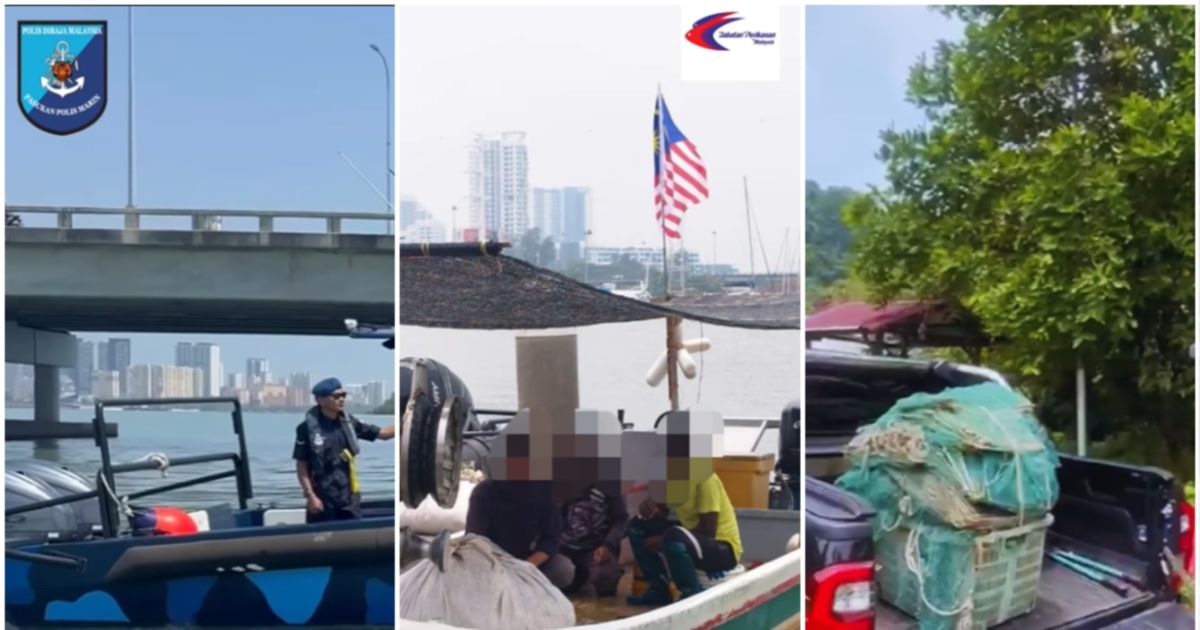
A coordinated crackdown on illegal fishing activities in Penang waters has resulted in the detention of three men and the confiscation of vessels and equipment with an estimated combined value of RM75,360, according to enforcement authorities conducting the operation yesterday. The action underscores the intensifying efforts by regional maritime agencies to combat unlicensed and potentially destructive fishing practices in Malaysian territorial waters, an issue that has drawn heightened official attention over recent years as authorities seek to protect marine ecosystems and regulate the commercial fishing industry more rigorously.
The enforcement operation, executed as a joint effort between multiple agencies, took place in the waters surrounding Penang and represents part of a broader strategy to detect and deter non-compliant fishing operations that operate without proper documentation or regulatory approval. The three detained individuals are now assisting authorities with investigations into the circumstances surrounding their maritime activities. Authorities have not yet disclosed their identities or specific details regarding their operations at this preliminary stage of the investigation.
The seized assets comprise both the fishing vessel itself and the accompanying equipment and gear discovered onboard, with the combined valuation reaching RM75,360. This scale of confiscation reflects the significant investment that can be involved in illegal fishing operations, which often utilise reasonably sophisticated equipment to maximise catches while evading detection by maritime enforcement vessels. The confiscation of such assets serves both as a deterrent against non-compliance and as a financial penalty that encourages operators to maintain proper licensing and adherence to fishing regulations.
Penang's position as a major maritime hub along the Strait of Malacca makes it a focal point for fishing enforcement activities. The state's waters have historically witnessed both licensed commercial fishing operations and irregular activities that circumvent established regulatory frameworks. The region's strategic location and proximity to busy shipping lanes create a complex enforcement environment where authorities must balance legitimate maritime commerce with the need to prevent unregulated resource extraction and potential violations of international maritime conventions.
Illegal or unlicensed fishing represents a persistent challenge across Southeast Asia, threatening both fish stocks and the livelihoods of legitimate fishing communities. When unregulated vessels operate without adhering to catch limits, species protections, or habitat preservation measures, they undermine the sustainability of marine resources that entire communities depend upon. Malaysia, as a signatory to various international maritime agreements and as a country with substantial fishing interests, has committed to strengthening enforcement mechanisms to address this problem comprehensively.
The deployment of joint enforcement operations—involving coordination between different government agencies—reflects a recognition that combating maritime violations requires resources pooled across multiple departments and jurisdictions. Such operations demand sophisticated coordination, intelligence sharing, and the ability to deploy enforcement vessels capable of responding rapidly to suspected violations in open waters. The logistical complexity involved in monitoring vast maritime areas makes every successful operation an important demonstration of enforcement capacity.
For Malaysian fishermen operating within legitimate parameters, the continued enforcement against illegal competitors provides reassurance that authorities are working to preserve market conditions and protect marine resources that form the foundation of their industry. Legitimate fishing operations incur costs associated with licensing, compliance reporting, and adherence to sustainability measures—burdens that create competitive disadvantages when compared to unlicensed operators who avoid such expenses. Regular enforcement actions help level the competitive landscape by removing non-compliant vessels from the water.
The investigation into the detained individuals will likely examine whether the fishing operation was deliberately circumventing regulations or whether violations occurred due to insufficient awareness of current requirements. Authorities will also seek to determine the intended market for any catch, whether equipment was previously stolen or illegally imported, and whether the vessel's documentation was forged or intentionally absent. These investigative threads often reveal broader networks of illegal maritime activity that extend beyond individual operators.
The case highlights the ongoing tension between Malaysia's maritime economic interests and the need to maintain sustainable management of shared marine resources. As fishing pressure on Southeast Asian waters continues to increase—driven by growing demand for seafood and limited alternative livelihood options in coastal communities—the regulatory environment will likely become increasingly stringent. Authorities are expected to continue intensifying enforcement activities, particularly targeting operations that use prohibited equipment or fishing methods known to cause disproportionate environmental damage.
For Penang's maritime authorities and the broader network of enforcement bodies coordinating across Malaysian waters, this operation demonstrates that surveillance capabilities are sufficient to detect suspicious vessel activity despite the vast area requiring monitoring. The regularity of such seizures—though each individual case may appear modest in the context of broader fishing activity—collectively sends a message that non-compliance carries material consequences. As enforcement technology improves and information-sharing protocols become more sophisticated, the likelihood of detection for illegal operators continues to rise, potentially encouraging greater voluntary compliance with existing maritime and fisheries regulations.

