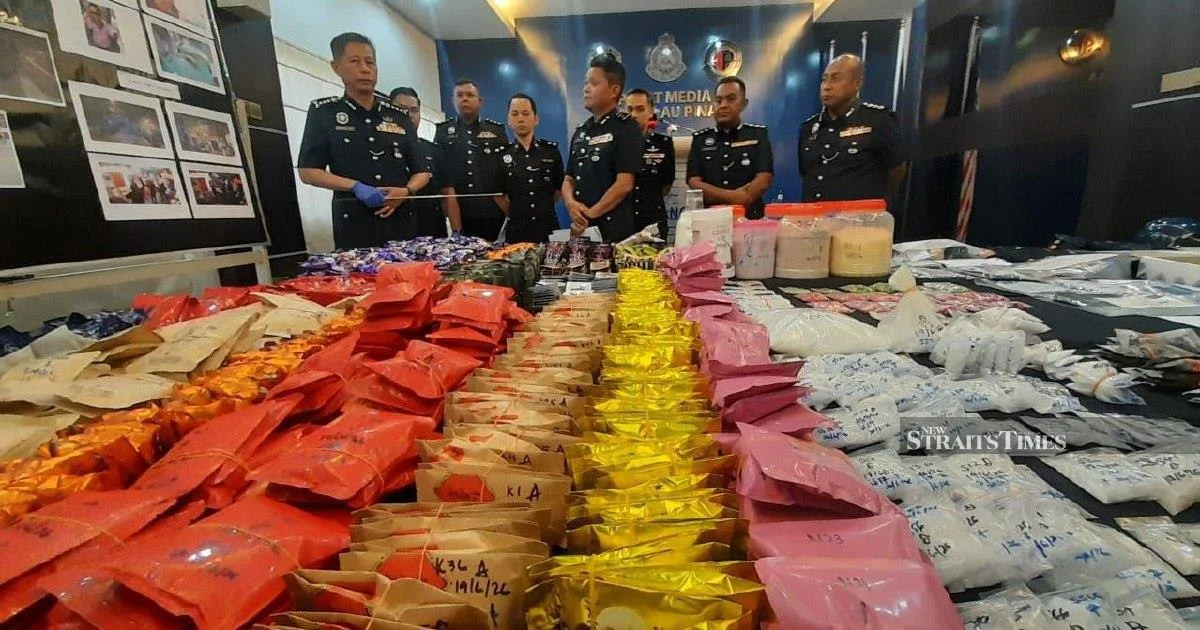
A coordinated law enforcement operation in Penang has culminated in the takedown of what authorities describe as a substantial drug-processing enterprise. Police arrested a romantic couple and confiscated a significant cache of controlled substances valued at RM9.7 million after conducting raids on a residential unit within a condominium development in Butterworth, a municipality within the Seberang Perai district.
The operation represents a notable success in the Royal Malaysia Police's continuing effort to combat organised drug trafficking in the northern corridor. The scale of the seizure underscores the sophisticated nature of narcotics distribution networks that operate within residential properties across the Klang Valley and surrounding regions, where high-rise apartment complexes provide relative anonymity to criminal enterprises. The location in Butterworth is particularly significant given its proximity to major transportation arteries and its historical importance as a transit point for smuggled goods moving between Thailand and the southern Malaysian states.
Investigators uncovered evidence that the condominium unit had been converted into a functional drug-manufacturing facility, equipped with processing equipment and chemicals used in the refinement of illicit substances. The operational structure suggests a level of planning and capital investment typical of mid-tier trafficking syndicates that typically operate across state boundaries. Such setups demand substantial financial outlay, secure supply chains for precursor chemicals, and established distribution networks—infrastructure that typically takes months or years to establish and operationalise.
The arrest of both individuals opens avenues for investigators to pursue higher-level associates within the supply chain. In Malaysia's drug trafficking hierarchy, couples operating manufacturing facilities often occupy intermediate positions, answerable to regional coordinators while managing the practical logistics of production and local distribution. The intelligence gathered during interrogation will likely point authorities toward upstream suppliers of raw materials and downstream retail distributors operating in residential neighbourhoods across Penang and Selangor.
Malaysian drug enforcement agencies have increasingly focused resources on indoor cultivation and manufacturing operations, recognising that such facilities represent higher-value targets than street-level possession cases. The RM9.7 million valuation reflects the wholesale rather than retail pricing of the seized materials, indicating that authorities successfully intercepted supplies destined for distribution to secondary markets across the region. This interception prevents the further fragmentation and sale of these substances through neighbourhood networks and entertainment venues.
The Butterworth location places this operation within Seberang Perai, which has emerged as a focal point for transnational drug trafficking activity. Its geographic position—accessible from both Penang Island via the Sultan Halim Muadzam Shah Bridge and from Kedah via the North-South Expressway—provides logistical advantages for traffickers. The municipality's rapid urbanisation and relative anonymity within residential developments create environments conducive to covert operations, a pattern that law enforcement agencies throughout Southeast Asia have documented extensively.
Police methodologies in identifying this operation likely involved intelligence gathering from community reports, financial surveillance of suspicious transactions, or information derived from previous arrests within connected networks. The advance planning required to execute simultaneous raids on a residential property, secure evidence before destruction, and apprehend suspects reflects the professionalism and coordination increasingly demonstrated by federal and state narcotics task forces. Such operations typically involve coordination between the Narcotics Crime Investigation Division and state police contingents.
The couple's role within the broader criminal ecosystem warrants scrutiny by intelligence analysts mapping trafficking networks across Malaysia. Romantic partnerships operating in drug manufacturing typically develop over extended periods, suggesting they may have prior arrest records or connections to trafficking families. Their cooperation with investigators could yield insights into procurement methods for precursor chemicals—a critical vulnerability in global drug supply chains that authorities in Malaysia, Thailand, and Australia have prioritised for disruption.
This seizure contributes to Malaysia's broader anti-narcotics statistics, though it represents merely one operation within a far larger landscape. Annual drug-related arrests in Malaysia consistently exceed fifty thousand cases, with heroin and methamphetamine remaining the dominant substances driving enforcement activity. Manufacturing operations specifically targeting methamphetamine production have proliferated, reflecting the high profitability and lower seizure risk compared to heroin trafficking, which remains dependent on poppy cultivation in the Golden Triangle region.
The economic dimensions of this case warrant attention. The RM9.7 million seizure represents significant capital denial to criminal organisations, funds that would have financed additional manufacturing capacity, expanded distribution networks, and corrupting payments to facilitators. Each major seizure creates operational disruptions rippling through established supply networks, forcing restructuring and alternative routing arrangements that temporarily destabilise trafficking patterns.
For Malaysian residents, particularly those in urban residential areas, this operation underscores the reality that sophisticated drug manufacturing may occur in proximity to legitimate residential populations. Community vigilance regarding unusual vehicle movement, foul odours, or suspicious activity patterns remains essential for early detection. Police have consistently appealed to residents to report suspected drug laboratories, offering channels for anonymous reporting that reduce identification risks for informants.
The case also highlights ongoing challenges within Malaysia's criminal justice system regarding asset seizure and forfeiture procedures. While narcotics seizures attract high-profile attention, tracing and freezing the financial assets of trafficking organisations remains complicated by layering techniques and international money movement. Future investigations should examine banking transactions, property holdings, and vehicle ownership associated with the arrested individuals, as such assets often reveal organisational scope and financing sources.
As law enforcement agencies progress with prosecutions, the evidence gathered will contribute to evolving understanding of manufacturing methodologies, supply chain vulnerabilities, and distribution strategies. The conviction of trafficking network participants, whether manufacturers, transporters, or retailers, represents incremental progress in disrupting criminal enterprises that generate substantial suffering through addiction, overdose, and societal degradation across Southeast Asia.