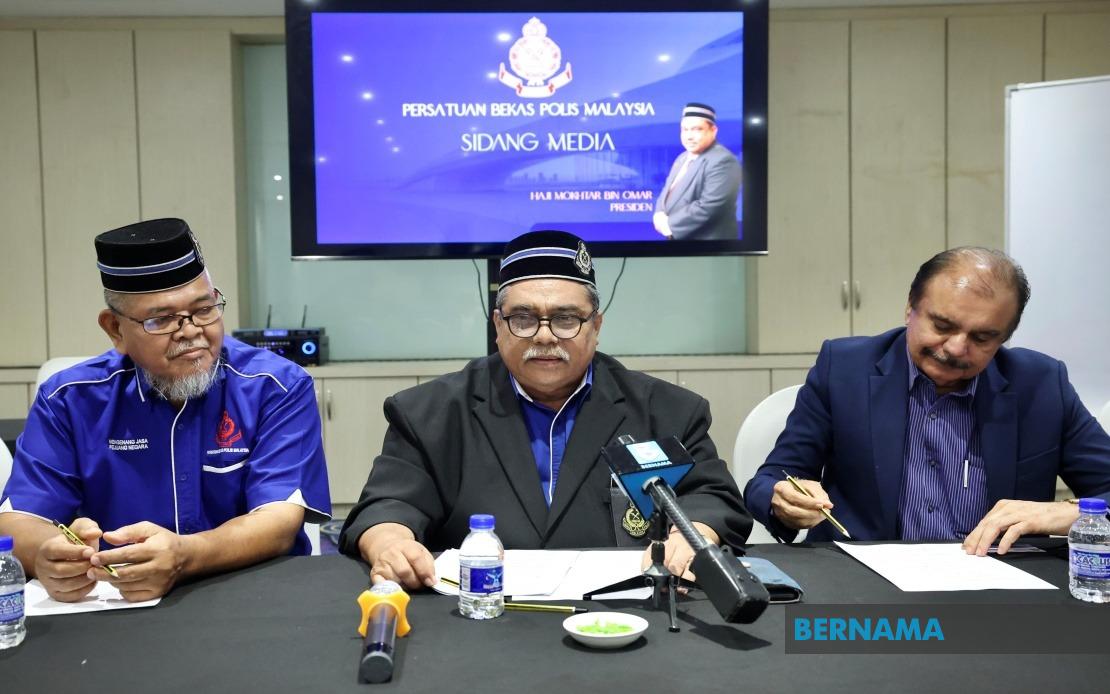
The Malaysian Ex-Police Association (PBPM) has made an urgent appeal to the federal government for the introduction of a monthly cost-of-living allowance targeting non-pensionable former police personnel, framing the request as recognition for their role in protecting the nation during a critical period in Malaysian history. The association's leadership argues that this vulnerable segment of retired officers, who sacrificed their careers without securing formal pension entitlements, now faces acute financial strain as inflation erodes their purchasing power and existing welfare provisions prove inadequate.
According to PBPM president Mokhtar Omar, institutional records spanning since 1972 reveal that approximately 40,000 of the association's 86,000 registered members fall into the non-pensionable category. This cohort encompasses individuals with diverse service backgrounds, including those who served in the Special Squad, the Home Guard, and as contract inspectors during the Emergency period—a crucial phase in Malaysia's post-independence security consolidation. The sheer scale of this group underscores a systemic gap in Malaysia's welfare framework for security personnel, one that has accumulated over decades as successive administrations overlooked or deprioritised this segment of veterans.
The financial circumstances confronting these former officers have deteriorated markedly in recent years. Mokhtar emphasised during his public statement that many members are now grappling with mounting economic pressure following the cessation of their regular employment income. The broader context of Malaysia's inflationary environment, where household expenditures on essentials such as food, utilities, and healthcare have surged, has compounded their vulnerability. For individuals without pension safety nets, the loss of employment income represents a catastrophic economic transition that leaves them dependent on diminishing personal savings or informal family support structures.
The PBPM has articulated a concrete proposal to address this crisis, recommending a monthly special allowance ranging between RM300 and RM500 for eligible recipients. While seemingly modest in isolation, such sums would provide meaningful relief in the context of basic living expenses for pensionless retirees, potentially bridging the gap between subsistence and dignified living standards. The association frames this request not as charity but as a moral obligation stemming from these individuals' contributions to national security during a formative and perilous period in Malaysian governance. By invoking the Emergency era—a time when these officers faced genuine security threats—the PBPM situates its appeal within a narrative of state accountability and reciprocal duty.
Beyond the immediate allowance proposal, the PBPM has simultaneously called for a comprehensive overhaul of the Police Heritage Trust Fund (TAWP), Malaysia's existing welfare instrument for retired law enforcement personnel. The association seeks not merely increased disbursement rates but an expansion of the fund's conceptual scope to encompass educational assistance, healthcare coverage, and emergency relief provisions during natural disasters or unexpected crises. This multidimensional approach recognises that poverty among the elderly extends beyond income insufficiency to encompass vulnerabilities across health, family support, and unexpected shocks—dimensions inadequately addressed by cash transfers alone.
The welfare gap affecting non-pensionable former police officers reflects broader structural tensions within Malaysia's civil service retirement architecture. While established officers typically qualify for pensions through formal employment contracts, those engaged on temporary, contract, or irregular terms historically lacked such protections. This bifurcation created a two-tiered system where service quality and risk exposure bore no correlation with retirement security. As Malaysia aspires to become a high-income nation and develops more comprehensive social protection frameworks, the inconsistency of leaving thousands of former security personnel in precarity becomes increasingly anomalous and difficult to justify administratively.
Complementing its advocacy efforts, the PBPM has announced plans to organise a major fundraising dinner scheduled for October, targeting the collection of RM1 million from corporate sponsors, multinational enterprises, private sector organisations, and philanthropically-minded individuals. This initiative reveals the association's recognition that government support, while essential and overdue, may not materialise swiftly enough to address immediate hardship. The fundraising exercise simultaneously serves as a public relations mechanism, elevating awareness of the non-pensionable cohort's situation and potentially building broader societal pressure for official intervention.
The earmarked proceeds from the October fundraiser will be channelled toward provision of practical welfare items addressing the daily needs of vulnerable members. Medical equipment, mobility aids such as wheelchairs, nutritional supplements, hearing assistive devices, and other essential commodities represent the immediate relief priorities. This goods-based approach recognises that some necessities—particularly health-related items—carry high out-of-pocket costs that can rapidly deplete limited savings among the elderly poor. By securing donations of such items, the PBPM effectively extends the purchasing power of its resources.
For Malaysian policymakers, the PBPM's appeal presents both a humanitarian imperative and a governance question. The estimated 40,000 non-pensionable personnel represent a finite, demographically ageing population—meaning that the long-term fiscal burden of establishing a monthly allowance regime would diminish over time as cohort attrition occurs. Unlike open-ended welfare programmes serving growing populations, supporting this specific historical cohort represents a contained, time-limited commitment. The cost-benefit calculus, when contextualised within Malaysia's overall budget framework and defence ministry allocations, renders the proposal financially manageable while yielding significant humanitarian outcomes.
The wider Southeast Asian context amplifies the policy significance of Malaysia's response. Several regional neighbours have grappled with similar challenges regarding non-pensionable security personnel, and Malaysia's approach may establish precedent or framework lessons applicable across the region. The treatment of former security force members has occasionally generated diplomatic sensitivities and domestic political friction in neighbouring states. Malaysia's potential resolution of its non-pensionable police cohort through dignified, structured assistance rather than ad-hoc or negligent approaches would reflect positively on its governance standards and commitment to veteran welfare.
Moving forward, the success of PBPM's campaign will likely depend on sustained advocacy, strategic media engagement, and broader civil society mobilisation around the non-pensionable personnel issue. Government responsiveness to such campaigns typically accelerates when sustained public attention, cross-party political interest, and institutional pressure converge. The October fundraiser will simultaneously demonstrate grassroots commitment while creating a narrative hook for renewed parliamentary or ministerial engagement with the proposal during subsequent budget cycles.

