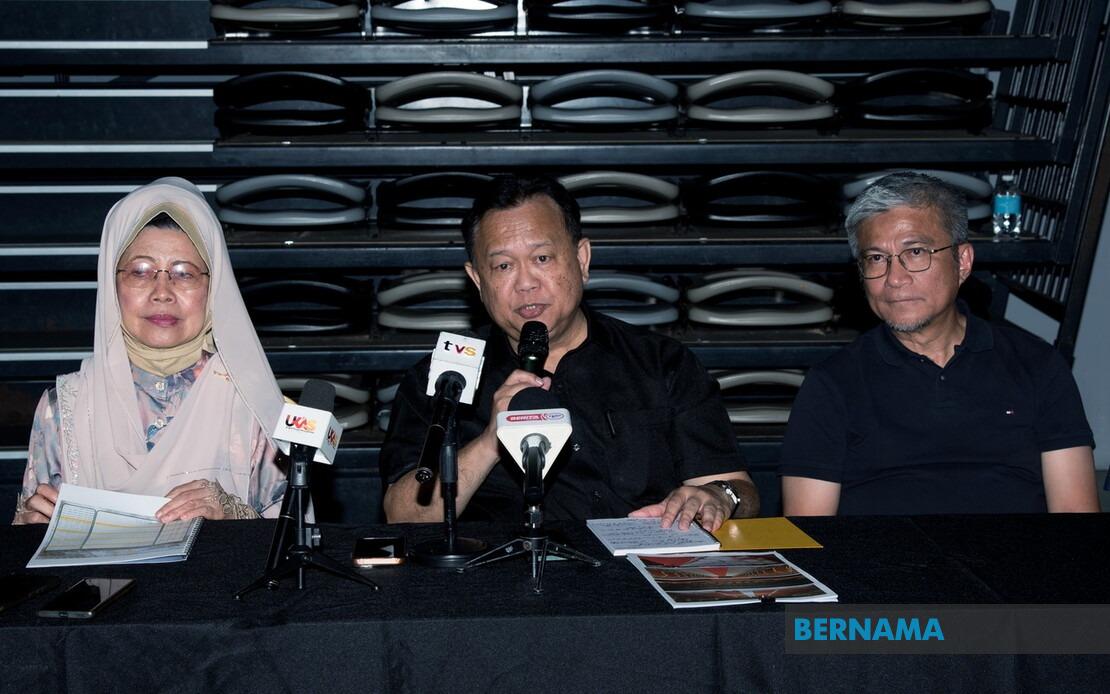
The Parti Pesaka Bumiputera Bersatu Sarawak (PBB) is preparing to host a major gathering of party members at the Sibu Indoor Stadium on July 26, with projections indicating attendance exceeding 3,000 delegates representing 24 branches across the central zone. This convention marks the opening salvo in a series of regional assemblies planned throughout the year, with the southern, Betong, and northern zones scheduled to conduct their own sessions in subsequent months.
According to Datuk Seri Alexander Nanta Linggi, who holds the position of secretary-general within the party structure, the central zone's timing as the inaugural special convention reflects organisational sequencing rather than hierarchical importance. The decision to begin with Sibu underscores the strategic significance of the central region within PBB's political architecture. An organising committee convened recently to refine logistics and operational procedures, aiming to ensure the event proceeds without administrative friction.
The gathering will function beyond ceremonial purposes, incorporating substantive policy discussions and party business. A significant component involves presentations addressing the Malaysia Agreement 1963 (MA63), a constitutional cornerstone that has shaped Sarawak's relationship with the federal system since independence. This agreement grants Sarawak considerable autonomy in specific policy domains, and periodic examination of its implementation remains pertinent to state political discourse.
Complementary presentations will examine the Post COVID-19 Development Strategy 2030 (PCDS 2030), reflecting the party's intention to canvas recovery trajectories and medium-term developmental objectives. Delegates will also encounter discussions on various political matters relevant to contemporary governance and electoral considerations. The breadth of agenda items suggests the convention extends beyond routine party rituals to encompass substantive policy evaluation and strategic planning.
Sarawak Premier Tan Sri Abang Johari Tun Openg, who simultaneously serves as PBB president, will preside over the opening ceremony and address assembled delegates. His dual authority—commanding both executive state power and party leadership—positions his remarks as particularly consequential, potentially signalling the party's policy direction and priorities for the coming period. The premier's presence underscores the convention's significance within PBB's hierarchy and Sarawak's broader political ecosystem.
For Malaysian observers, PBB's regional conventions warrant attention as indicators of broader political sentiment within Sarawak, which consistently delivers substantial parliamentary representation to national coalitions. The party's internal deliberations and strategic adjustments often presage shifts in Sarawak's relationship with federal partners. The timing of these conventions in 2026 positions them as preliminary exercises preceding the next general election cycle, creating venues for grassroots mobilisation and ideological reinforcement.
The logistics of assembling 3,000 delegates across multiple days reflects PBB's considerable organisational capacity and its entrenchment within Sarawak's administrative structure. The central zone's composition makes it a representative microcosm of broader party demographics and geographic distribution. Studying these conventions provides insights into party cohesion, factional dynamics, and the resonance of leadership messaging among grassroots members.
From a Southeast Asian political perspective, Sarawak's internal party mechanisms merit examination given the state's distinctive constitutional position and its role as a swing component in federal coalition mathematics. The PBB, as Sarawak's traditional ruling party across multiple decades, maintains institutional knowledge and electoral machinery that national coalitions depend upon. The substantive agenda items—MA63 and post-pandemic development strategies—reflect genuine policy concerns that animate Sarawak political debate.
The emphasis on MA63 presentations carries particular weight, as ongoing discussions regarding this agreement's interpretation and implementation periodically surface in interstate relations. Sarawak maintains constitutionally differentiated arrangements compared to peninsular states, creating distinctive governance parameters. PBB's attention to MA63 suggests the party remains attentive to constitutional guarantees undergirding state autonomy, positioning this emphasis as both ideological and pragmatic.
The Post COVID-19 Development Strategy framework reflects Sarawak's post-pandemic recovery priorities, including economic diversification, infrastructure development, and labour market adjustments. Presentations addressing this framework will likely highlight state government initiatives in digital transformation, renewable energy, agriculture, and manufacturing—sectors critical to Sarawak's developmental trajectory. These discussions influence resource allocation and sectoral emphasis over the medium term.
The convention's political dimensions extend beyond formal party proceedings to encompass informal networking and factional positioning among delegates. These gatherings frequently serve as venues where ambitious figures cultivate support and establish visibility within party hierarchies. The attendance of senior federal and state figures alongside grassroots members creates environments where informal bargains, alliances, and understandings crystallise.
As regional powers increasingly scrutinise Malaysia's internal political dynamics, events such as PBB's central zone convention merit observation. Sarawak's stability and its ruling party's cohesion directly influence Malaysia's political equilibrium and coalition stability at the national level. The convention thus represents not merely a party gathering but a significant moment in the calculus of Malaysian federalism and coalition management.

