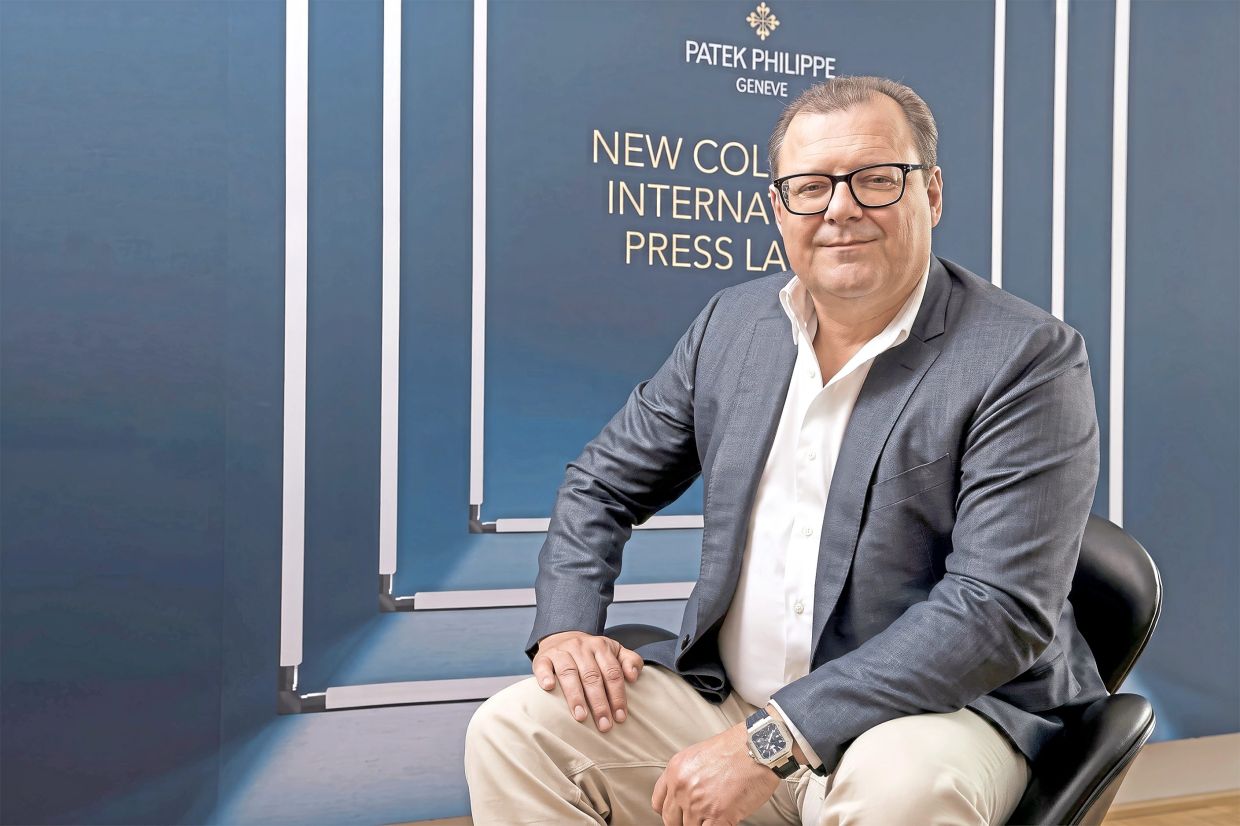
Thierry Stern does not present himself as a typical fourth-generation custodian of one of the world's most celebrated watchmaking institutions. When the 55-year-old president of Patek Philippe speaks, he channels the zeal of someone genuinely captivated by horology rather than merely steward of a corporate legacy. This distinction, he argues, is not incidental but essential to his role and the brand's continued success in a hypercompetitive luxury market.
During a recent interview at Watches and Wonders 2026 in Geneva, Stern articulated his philosophy with striking clarity: a leader in watchmaking must harbour authentic affection for the craft itself. Intelligence and business acumen, he contends, remain insufficient without this foundational enthusiasm. The luxury watch market demands something far more intangible. Consumers who spend enormous sums and endure years-long waiting lists possess deep knowledge themselves. They recognise immediately whether those representing a brand genuinely appreciate what they are selling or merely perform the role. This intuition separates successful stewardship from hollow caretaking. For Stern, passion functions as both prerequisite and accountability mechanism within the Patek Philippe ecosystem.
This philosophy takes particular resonance as Patek Philippe commemorates the fiftieth anniversary of its most iconic creation, the Nautilus. When Gerald Genta's revolutionary design debuted in 1976, featuring its distinctive porthole-inspired case and integrated bracelet, the watchmaking establishment erupted in controversy. Traditionalists condemned the piece as aggressively contemporary, too industrial for a manufacture steeped in classical heritage, fundamentally at odds with Patek Philippe's refined aesthetic. Stern recalls the upheaval with evident amusement. He was merely six years old when the watch scandalized the industry; those who lodged the most vehement protests have long since departed the scene. The Nautilus, meanwhile, has ascended to mythical status, commanding auction prices that perplex even seasoned collectors and generating waiting lists extending years into the future.
To commemorate this milestone, Patek Philippe has introduced three limited-edition Nautilus variants, including references in white gold and platinum, alongside a playful desk clock interpretation of the watch. The announcement initially surprised observers who anticipated Stern would showcase a complex mechanical innovation—a tourbillon or comparable showpiece—as previous major anniversaries had done. Instead, the president deliberately embraced restraint. He recognised that escalating technical complexity could compromise the very essence that defines the Nautilus: its identity as a straightforward, elegant hour-and-minute watch. This decision reflects a matured understanding that heritage sometimes demands preservation rather than constant reinvention.
The anniversary models themselves demonstrate this philosophy through their engineering. Ultra-thin cases measuring just 6.9 millimetres house the historic micro-rotor Calibre 240, the movement that has powered Patek Philippe's modern classics. The bracelet and case geometry required years of refinement to achieve the optimal balance between ergonomic comfort and aesthetic coherence. This investment of time and labour in seemingly minor details distinguishes Patek Philippe's approach from competitors pursuing pure innovation. Every element serves the larger vision rather than generating novelty for its own sake.
Stern's commitment to thoughtful stewardship reflects lessons imparted by his father Philippe Stern, who led the manufacture through critical decades of its modern history. The younger Stern spent formative years travelling alongside his father, observing how successful leadership required genuine engagement with retailers, watchmakers, and end consumers rather than reliance on institutional tradition alone. Philippe Stern's central directive—listen extensively and travel persistently to understand the genuine needs of customers and partners—fundamentally shaped his son's subsequent approach. This emphasis on active listening rather than top-down dictate distinguishes the Stern family's stewardship from more autocratic luxury conglomerates.
Yet Stern recognises equally that Patek Philippe cannot remain static in a market characterised by continuous evolution. One of five dominant Swiss luxury watch manufacturers alongside Rolex, Cartier, Audemars Piguet, and Omega, Patek Philippe occupies a position both privileged and precarious. Maintaining that status demands calculated risk-taking. Stern articulates this tension explicitly: without embracing strategic innovation, the manufacture cannot sustain its market position or cultural relevance across successive generations. Stagnation masquerading as tradition represents an existential threat as severe as reckless experimentation.
His approach to measured risk-taking is exemplified by the Aquanaut, introduced in the late 1990s as a intentionally younger, sportier counterpoint to the Nautilus. Rather than cannibalising the flagship's market position, the Aquanaut expanded Patek Philippe's addressable audience while maintaining the manufacture's core identity. The watch succeeded precisely because it emerged from genuine product philosophy rather than reactive panic. Stern and his team identified a genuine gap in the market—discerning collectors seeking Patek Philippe credentials combined with sportier aesthetic sensibilities—and developed a solution that honoured both considerations.
This philosophy extends throughout Stern's tenure as he navigates increasingly complex dynamics within the luxury watch sector. The emergence of independent watchmakers, technological disruption threatening mechanical supremacy, and economic uncertainty affecting ultra-high-net-worth consumers all demand sophisticated responses. Yet Stern remains convinced that authenticity and passion provide the most durable competitive advantages. Unlike financial engineering or aggressive marketing campaigns, these qualities prove difficult to counterfeit and impossible to manufacture artificially. They emerge only from genuine commitment to the craft itself and to the collectors who sustain it.
As Patek Philippe moves forward through its sixth decade as an independent manufacture, Stern's emphasis on passion as a fundamental leadership requirement offers perspective increasingly valuable across global business. In an era of relentless disruption and quarterly earnings expectations, he champions a longer temporal horizon. The measure of his stewardship will not emerge next quarter or even next year but across decades, as successive generations either develop genuine passion for the watches Patek Philippe produces or observe the brand decline into nostalgic irrelevance. That outcome ultimately rests not on technical specifications or marketing budgets but on whether those stewarding the manufacture maintain the authentic enthusiasm that sparked its original innovations.

