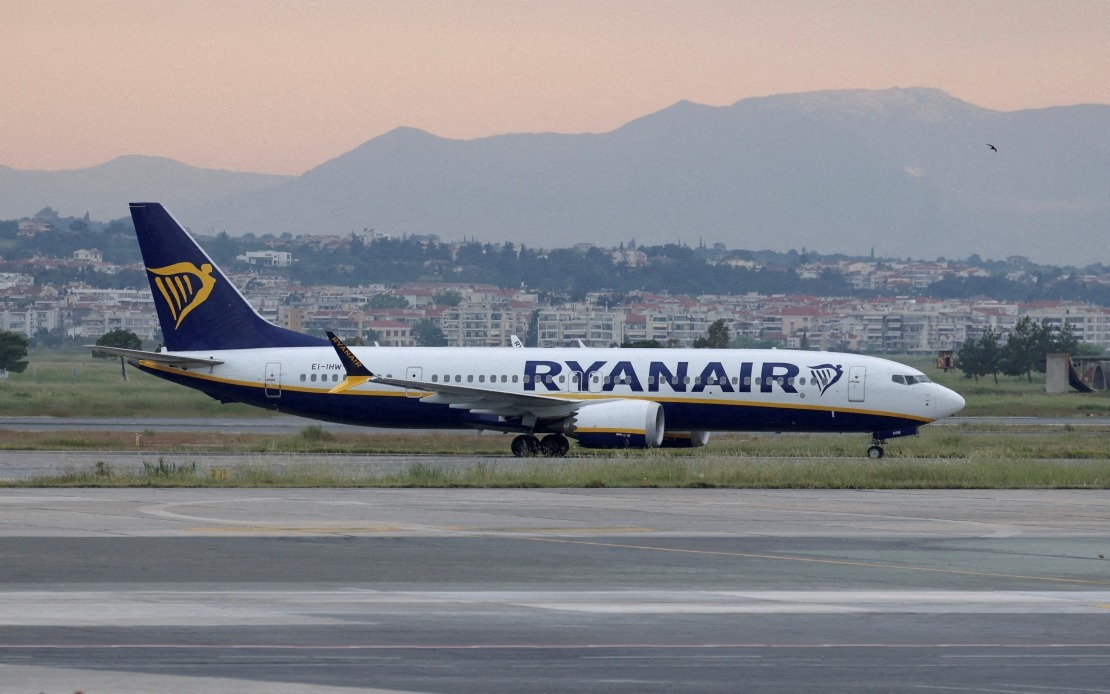
A Ryanair flight operating between Thessaloniki in Greece and Memmingen in southern Germany experienced a terrifying mid-air emergency on Friday when a window panel suddenly fractured, sending the aircraft into a state of chaos before the captain ordered an immediate return to the departure airport. The dramatic incident unfolded shortly after the aircraft became airborne, when passengers heard an unexpectedly loud bang emanating from the fuselage, followed seconds later by the unmistakable sound and sight of glass shattering in one of the cabin windows.
Eyewitness accounts paint a harrowing picture of the moments that followed the window failure. Passengers seated near the breach described seeing a fellow traveller's head and shoulders protrude from the damaged opening, the aerodynamic forces of flight at altitude threatening to pull him completely from the aircraft. The rapid decompression event triggered immediate panic throughout the cabin, with oxygen masks automatically descending from overhead compartments as the aircraft's safety systems activated. Screams from frightened passengers filled the cabin as the situation unfolded, though quick-thinking travellers nearby managed to physically restrain the endangered passenger and pull him back to safety inside the aircraft.
The captain's response to the emergency was swift and professional. Recognizing the severity of the structural failure and the potential danger posed by continued flight, the pilot immediately aborted the scheduled routing and initiated a direct return to Thessaloniki Airport, the flight's point of origin. The return journey covered the short distance back to the Greek airport in approximately twenty minutes, during which cabin crew worked to stabilize the injured passenger and reassure other traumatized travellers on board.
The passenger most severely affected by the incident was identified as a Serbian national who sustained injuries from his contact with the shattered window. Emergency medical personnel met the aircraft upon landing and transported him directly to a hospital facility in Thessaloniki for comprehensive medical evaluation and treatment. The extent of his injuries has not been publicly disclosed, though the fact that other passengers were able to prevent him from being completely ejected from the aircraft likely prevented a fatality.
Neither Ryanair nor relevant Greek aviation authorities had released formal statements regarding the incident at the time of reporting. However, Greek broadcaster ERT confirmed that a formal investigation into the window failure was initiated immediately following the emergency landing. Such investigations typically examine the structural integrity of the aircraft component, manufacturing records, maintenance history, and any external factors that may have contributed to the sudden fracture.
The incident raises important questions about cabin window integrity and safety standards across commercial aviation. Modern aircraft windows are engineered with multiple layers and undergo rigorous testing and inspection protocols. Window failures, while rare in commercial aviation, do occur and are typically attributed to manufacturing defects, maintenance issues, cumulative stress from pressurization cycles, or undetected damage from ground operations. The investigation will scrutinize whether this particular window showed any prior signs of weakness that maintenance teams may have missed.
For Malaysian aviation professionals and safety-conscious travellers, this incident serves as a sobering reminder of the complex engineering that keeps aircraft safe at altitude. The automatic deployment of oxygen masks and the structural integrity of the fuselage are designed specifically to handle emergency scenarios such as sudden window failures. That other passengers were able to prevent a catastrophic outcome demonstrates both the physical resilience of modern aircraft design and the value of rapid passenger response during emergencies.
Ryanair operates one of Europe's largest low-cost airline networks and carries millions of passengers annually across the continent. Window incidents on commercial aircraft are statistically extremely uncommon, reflecting decades of rigorous aviation safety standards. However, each incident, regardless of how rarely it occurs, triggers comprehensive investigation and potential operational adjustments across the industry. Any findings from this investigation will likely be shared with other operators through aviation regulatory channels to ensure industry-wide awareness of similar risks.
The psychological impact on passengers aboard the flight should not be underestimated. Commercial air travel represents one of the safest transportation modes available, yet incidents such as this window failure can shake public confidence, particularly among nervous flyers. Airlines and aviation authorities typically invest in transparent communication following such events to help passengers understand what happened, why safety systems functioned as designed, and what preventative measures will be implemented going forward.
As the investigation progresses, authorities will examine maintenance records for the affected aircraft, review manufacturing documentation for the failed window, and conduct structural analysis to determine the precise cause of failure. The findings will inform whether this represents an isolated anomaly or a systemic issue affecting a batch of aircraft or components. For the regional aviation sector, including carriers serving Malaysian routes, the investigation outcomes may have implications for inspection protocols and maintenance standards applied across comparable aircraft types.

