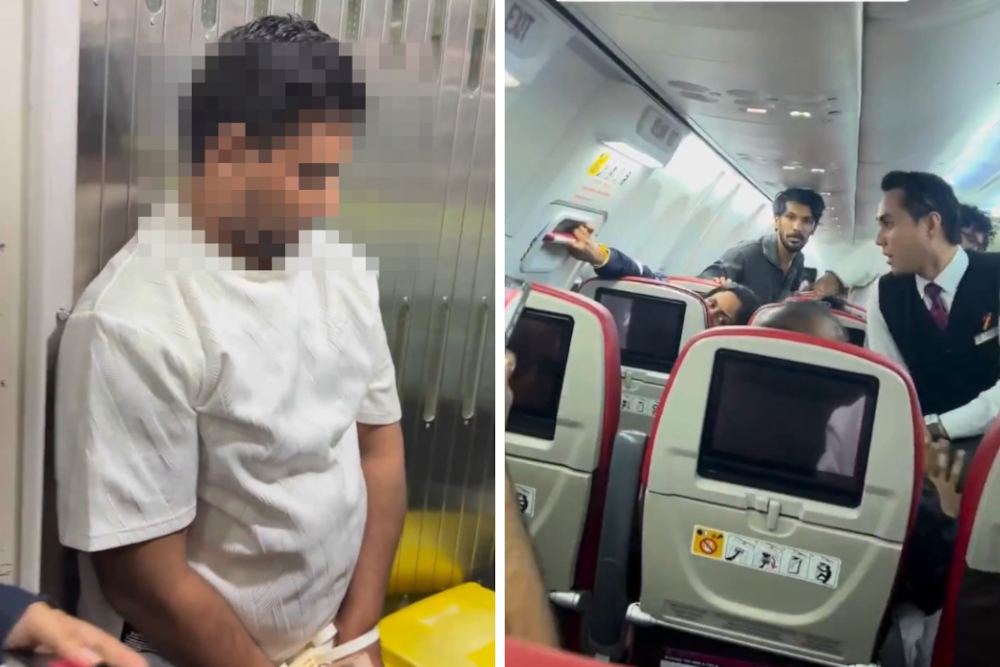
A male passenger aboard a Batik Air flight was taken into custody after allegedly attempting to breach an emergency exit door while the aircraft was at cruising altitude between Malaysia and India. The incident highlights growing security concerns surrounding in-flight passenger behaviour and the strict protocols aviation authorities maintain to prevent potentially catastrophic breaches of aircraft integrity during flight operations.
The arrest underscores the seriousness with which Malaysian aviation authorities treat any attempts to compromise aircraft safety systems. Emergency exit doors on commercial aircraft are specifically engineered to remain sealed at altitude due to the pressurised cabin environment, making any attempt to open them during flight an extremely dangerous act that could endanger the lives of hundreds of passengers and crew members on board. The incident occurred at an altitude of 9,144 metres, well into the cruise phase of the flight when safety risks would be substantially elevated.
Mattersuch as this have become increasingly prominent in global aviation discourse following a series of high-profile in-flight incidents involving disruptive passengers. Airlines operating in Southeast Asia, a region serving as a crucial hub for international travel connecting South Asia, East Asia, and beyond, must constantly balance passenger comfort with rigorous security protocols. Batik Air, a budget carrier based in Malaysia with significant operations throughout the region, operates numerous flights on the Malaysia-India route, which remains one of Southeast Asia's busiest air corridors.
The investigation into the specific motivations behind the attempted breach remains ongoing, as authorities seek to understand whether the passenger's actions resulted from a medical emergency, mental health crisis, intoxication, or deliberate intent to cause harm. Each scenario carries different implications for how airlines and ground personnel should respond to similar incidents in future. Mental health crises constitute a significant proportion of in-flight disturbances globally, highlighting the need for better training protocols and mental health resources within the aviation sector.
Aviation security in Malaysia operates under a multi-layered framework involving airport screening, airline protocols, and coordination with international aviation safety standards established by the International Civil Aviation Organization. The incident demonstrates that despite these systems, determined individuals can still attempt dangerous actions once aboard aircraft. The rapid response by flight crew in preventing the door from being opened reflects the extensive training that airline personnel receive in handling emergency situations and passenger disturbances.
The psychological pressure on flight crews managing such incidents should not be underestimated. Personnel working on commercial flights must balance de-escalation techniques with firm enforcement of safety regulations, all while maintaining the wellbeing of hundreds of other passengers who may become frightened or distressed by the situation. The professionalism demonstrated in this case prevented what could have been a tragedy involving rapid decompression and loss of life at high altitude.
Legal consequences for attempted breaches of aircraft safety systems are severe across most jurisdictions, including Malaysia, where aviation regulations impose substantial penalties for endangering flight safety. Prosecution typically involves charges that carry imprisonment sentences and substantial fines, reflecting the severity with which aviation authorities worldwide treat such offences. These legal frameworks exist to create powerful deterrents against individuals considering similar actions.
The incident has broader implications for passenger behaviour management within Southeast Asian aviation. Budget carriers like Batik Air operate with tighter margins than full-service airlines, potentially limiting their resources for additional security personnel or enhanced in-flight monitoring systems. This economic reality places greater responsibility on flight crew training and passenger screening procedures to identify potentially problematic passengers before departure. Ground staff and airline personnel play a critical frontline role in preventing such incidents through careful observation during boarding and the early flight phase.
Regional cooperation on aviation security matters has become increasingly important as Southeast Asia's air traffic continues expanding. Sharing of information about disruptive passengers, enhanced training standards, and coordinated responses to security threats strengthens the overall safety infrastructure benefiting all airlines and passengers using the region's airspace. The Malaysia-India route specifically connects two countries with significant bilateral aviation traffic and cooperation frameworks that facilitate information sharing on security matters.
The incident also raises questions about the adequacy of current passenger screening and behaviour monitoring systems. While it is impossible to eliminate all risk from commercial aviation, continuous improvement in identifying passengers who may pose safety risks during flight could help prevent similar incidents. This might involve enhanced psychological screening, improved monitoring of passenger behaviour patterns, or better integration of data systems between airlines and authorities regarding previously disruptive passengers.
Industry observers expect the investigation findings will be shared with other regional carriers as part of standard aviation safety practices. When serious incidents occur, the International Civil Aviation Organization and national aviation authorities typically issue safety recommendations and advisory notices ensuring the aviation community learns from each incident. These lessons, accumulated over decades, have made commercial aviation statistically the safest form of long-distance transportation globally.
The arrest and ongoing investigation represent a reminder that aviation security remains a shared responsibility involving passengers, airline staff, airport authorities, and law enforcement agencies. Vigilance from fellow passengers, combined with professional airline crew responses and robust legal frameworks, creates the layered security approach that has proven effective in preventing tragic outcomes. As Southeast Asian aviation continues growing in response to regional economic development, maintaining this commitment to safety remains paramount for the industry's continued success.

