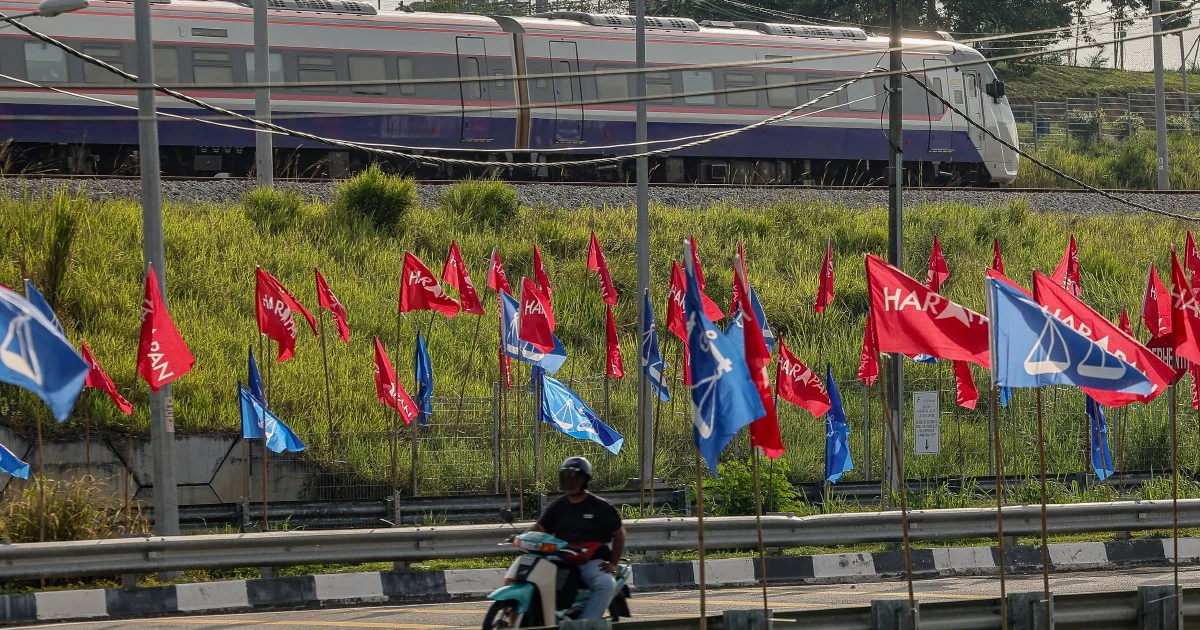
The youth wing of Pas has moved to clarify its controversial positioning regarding electoral cooperation with Barisan Nasional, framing the arrangement as a calculated effort to prevent Pakatan Harapan from gaining ground in constituencies deemed strategically important. Speaking from Johor Baru, party representatives emphasised that the decision to throw support behind BN contenders in select seats does not represent a fundamental realignment of the Islamic party's political stance, but rather reflects tactical pragmatism in constituencies where their own Perikatan Nasional coalition partner is fielding no candidates.
This strategic calculation reveals the complex interplay between Malaysia's competing political blocs as they position themselves ahead of anticipated electoral contests. The willingness of Pas Youth to engage in ticket-splitting arrangements underscores the fractured nature of Malaysian politics, where traditional alliance boundaries have become increasingly fluid. For much of the past decade, Pas has oscillated between alliance partners, from its controversial move toward PH during the 2018 election cycle to its subsequent pivot toward PN following the 2020 political upheaval. Each shift has been accompanied by similar justifications rooted in localized strategic advantage.
The implications of this latest positioning extend beyond the immediate mechanics of vote distribution. By endorsing BN in certain constituencies, Pas Youth appears to be acknowledging the reality that its PN partner lacks sufficient organisational capacity or electoral viability to contest comprehensively across the country. This admission carries consequences for how the Islamic party's grassroots membership views the coalition's long-term prospects. Within PN, such arrangements risk creating perceptions that the alliance is fragmenting, with each component party prioritising short-term electoral gains over consolidated collective strength.
For Malaysian voters, particularly those in constituencies affected by such arrangements, the strategic calculations underlying candidate endorsements have become increasingly opaque. Conventional party loyalty no longer guarantees consistent positioning on the ground. Voters may find themselves receiving contradictory signals from different wings of the same party, as happened here with Pas Youth's clarification seeming to address internal party concerns about the appearance of abandoning PN commitments. This voter confusion extends the broader erosion of party cohesion that has characterised Malaysian politics since 2018.
The BN dimension of this equation warrants particular attention. Barisan Nasional has been undergoing its own internal reconstruction following the traumatic 2018 election outcome and subsequent loss of federal power. The acceptance of external support from Pas Youth in specific constituencies could be viewed as either a pragmatic acknowledgment of the need for broad anti-PH coalitions or alternatively as a sign that BN's organic strength remains insufficient to secure seats without external assistance. For a coalition that once dominated Malaysian politics through overwhelming majority control, reliance on tactical support from other blocs represents a significant diminishment of former dominance.
Pakatan Harapan, positioned as the target of this anti-PH strategy, remains the only major coalition that has explicitly committed to maintaining alliance discipline across all constituencies where it contests. Yet PH's own cohesion faces persistent challenges, with component parties occasionally pursuing separate interests in specific seats. The convergence of Pas Youth and BN against PH suggests that opposition to the governing coalition remains a stronger binding force than positive programmatic alignment among potential alternative government arrangements. This negative cohesion—unity built primarily on opposition rather than shared vision—raises questions about governmental sustainability should any anti-PH coalition secure electoral victory.
The regional context within Johor, where this clarification was issued, carries particular significance. The state represents a crucial electoral battleground where PN previously dominated before recent political volatility. Johor's diverse demographic composition and competitive electoral dynamics mean that seat-by-seat coalition calculations can significantly influence state and national outcomes. The Pas Youth statement from this location signals that internal negotiation over electoral positioning in Johor remains active and contested.
Historical precedent suggests that such tactical arrangements frequently prove unstable. Previous episodes of cross-coalition cooperation in Malaysian politics have often unraveled once immediate electoral contests concluded, with former allies reverting to antagonistic positioning. The durability of Pas Youth's commitment to supporting BN candidates will depend substantially on whether such support translates into electoral success. Failed strategies typically prompt rapid reassessment and repositioning among Malaysian political actors.
The generational dimension evident in Pas Youth's statement also merits consideration. Youth wings often pursue more flexible political positioning than their parent party structures, potentially exploring coalition arrangements that senior leadership finds problematic. Whether Pas Youth's openness to backing BN reflects genuine grassroots sentiment or represents entrepreneurial positioning by ambitious young cadres remains unclear. This internal party dynamic could influence how Pas's broader institutional structure interprets and implements such tactical decisions.
Moving forward, the sustainability of this anti-PH coalition dynamic will depend on several interconnected factors. The relative electoral performance of PN across contested constituencies will indicate whether the coalition structure remains viable for major contests. Simultaneously, the degree to which BN can capitalise on Pas Youth support to reclaim lost electoral ground will influence whether such arrangements appear retrospectively as pivotal or peripheral to ultimate outcomes. Malaysian voters observing these complex negotiations face the practical challenge of understanding what these strategic calculations ultimately mean for governance, policy direction, and their own political representation in constituencies affected by these arrangements.

