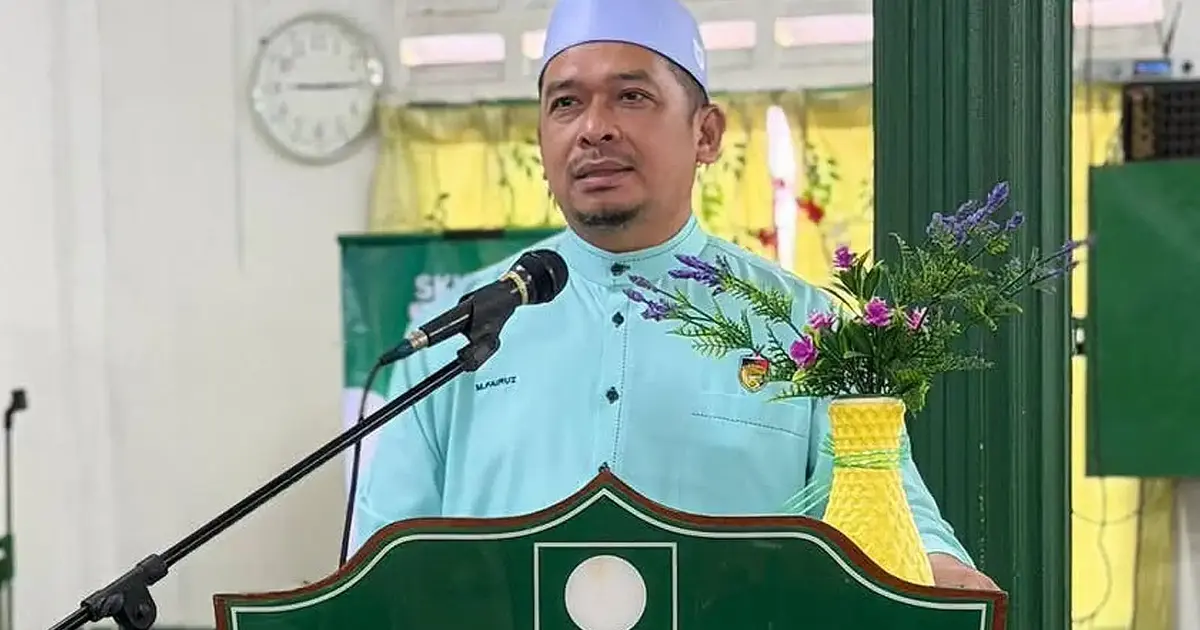
PAS has set its sights on wresting traditionally Chinese-held Democratic Action Party seats in Negeri Sembilan, with the Islamic party's state leadership identifying mixed constituencies as key battlegrounds for the forthcoming state elections. Fairuz Isa, who heads PAS in the state, revealed that the party intends to contest in areas where Malay representation reaches approximately 40% of the voter base—a demographic threshold that party strategists believe offers realistic winning opportunities against DAP's established voter networks.
The tactical shift signals PAS's intent to diversify its electoral footprint beyond its traditional strongholds, which have historically concentrated in predominantly Malay and Muslim regions. By targeting constituencies with substantial but not overwhelming Malay populations, PAS appears to be calculating that increased Malay voter turnout, combined with strategic messaging around Islamic governance and community welfare, could displace DAP incumbents who have long commanded support across mixed-race voter groups. This represents a recalibration of PAS strategy from previous elections where the party focused primarily on securing safe Malay-Muslim seats.
Negeri Sembilan has long been a political battleground where no single coalition commands absolute dominance. The state legislature comprises representatives from various political blocs, and control has shifted depending on electoral outcomes and post-election alignments. DAP's presence in the state has grown significantly over the past two decades, establishing constituencies in urban and semi-urban areas where it has built multiracial coalitions. These bases have proven resilient, reflecting DAP's appeal to Chinese voters and growing support among younger, urban Malay voters who prioritise secular governance and economic opportunities over religious-based political messaging.
The mathematics behind PAS's targeting strategy reveals important assumptions about voter behaviour and demographic trends. A 40% Malay voter concentration typically occurs in mixed urban constituencies or suburban areas experiencing demographic transition. Such areas often feature both traditional Malay neighbourhoods and significant Chinese and Indian communities, creating complex electoral dynamics. PAS's belief that it can attract these Malay voters—historically split between various political parties—suggests confidence in its ground organisational capacity and the resonance of its messaging within these mixed communities.
For DAP, this represents a direct challenge to its electoral base. The party has invested considerable resources in cultivating support across racial lines, arguing that secular, representative governance benefits all communities regardless of background. DAP's parliamentary and state representatives in mixed constituencies have typically emphasised economic development, educational access, and anti-corruption credentials rather than communal or religious identity. A successful PAS incursion into these seats would test whether DAP's multiracial positioning remains sufficiently compelling, or whether heightened community consciousness around religious and cultural identity could erode its support.
Regional context matters considerably here. Across Southeast Asia, religious and community-based parties have demonstrated renewed electoral strength in recent years as globalisation and urbanisation have generated competing social responses. In Malaysia specifically, PAS has evolved from a peripheral player into a significant political force, particularly following the 2022 elections when it emerged as a dominant party within the federal government coalition. This enhanced national prominence and access to federal resources could translate into improved ground capacity in state-level contests like Negeri Sembilan.
The timing of this strategic announcement also carries implications for Malaysian coalition politics. As the country navigates post-2022 political realignments and coalition partnerships remain fluid, state elections serve as crucial barometers of voter sentiment and party organisational strength. A strong PAS performance in Negeri Sembilan would strengthen its negotiating position in future coalition arrangements, potentially shifting the balance between Islamist-oriented and secular-oriented political forces at both state and national levels.
For Malaysian voters in Negeri Sembilan, particularly those in mixed constituencies, this emerging contest presents clear ideological and governance choices. PAS campaigns typically emphasise Islamic principles, community cohesion through religious values, and governance frameworks reflecting Islamic jurisprudence. DAP counters with appeals to secular pluralism, meritocratic governance, and multiracial representation. These competing visions will likely intensify during the campaign period, with both parties seeking to mobilise their bases while persuading swing voters in demographically mixed areas.
The outcome of Negeri Sembilan's electoral contest could establish templates for political competition elsewhere in Malaysia. If PAS successfully converts Malay voters in mixed constituencies into electoral victories against DAP, other Islamic parties and movements might pursue similar strategies in their respective states. Conversely, if DAP holds firm by maintaining multiracial coalitions, it would validate arguments that Malaysian voters increasingly prioritise economic competence and representative governance over religious-based political identity. Either result will reverberate across the country's evolving political landscape and influence calculations for the next general election.