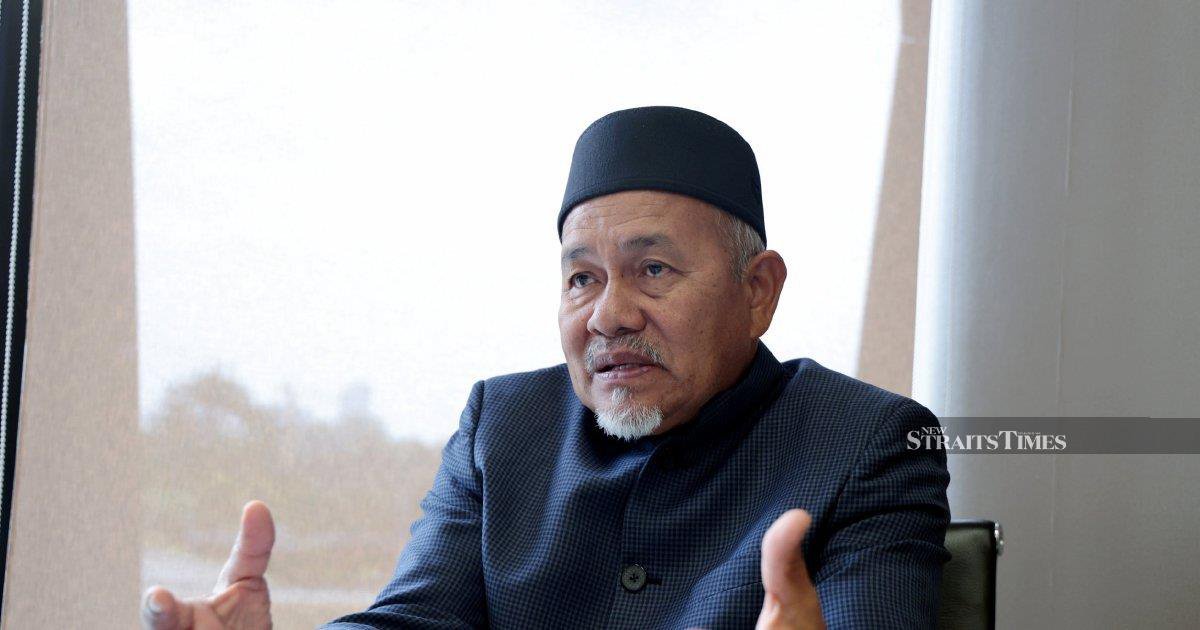
PAS, the country's largest Islamic party, has signalled a willingness to negotiate an extension of its coalition arrangement with Barisan Nasional beyond current state-level engagements, opening the door to discussions that could reshape Malaysia's political landscape. The party's receptiveness to talks suggests a pragmatic approach to exploring expanded political cooperation at both state and national levels, marking a potential shift in how the two blocs position themselves ahead of anticipated political realignments.
The Islamic party's position reflects the successful operational model that has emerged from recent state-level coordination between Perikatan Nasional and Barisan Nasional. This collaborative framework, which has been tested in electoral contests and governance arrangements, has demonstrated sufficient effectiveness to warrant broader consideration among party strategists. The willingness to examine how this arrangement might function in different political contexts indicates that both Pas leadership and their coalition partners view the current partnership as sufficiently robust to scale up from localized agreements.
Melaka represents a significant testing ground in this expanded framework, as the state's electoral dynamics and political composition offer insights into how a replicated model might perform in different demographic and social circumstances. The state's unique position in Malaysian politics, balanced between competing coalitions, makes it a logical focus for experimental cooperation arrangements. By examining Melaka's potential as a template, PAS and Barisan Nasional are essentially conducting preliminary assessments of scalability before committing to broader national strategies.
The implications for federal-level politics are substantial, as any formal expansion of PN-BN cooperation would represent a significant realignment in Parliament and could fundamentally alter the balance of power in Kuala Lumpur. Malaysian voters have grown accustomed to fluid coalition arrangements and shifting political alignments, yet a formalized national partnership between these two entities would constitute a structural change rather than a temporary accommodation. The party's openness signals that senior leadership sees potential benefits in such an arrangement despite the ideological and organizational differences that traditionally separate the Islamic party from Barisan Nasional's heterogeneous component parties.
The Negri Sembilan model that PAS references serves as the proof of concept for this expanded arrangement. The state's recent electoral contests have demonstrated that coordinated approaches between the two blocs can produce measurable political outcomes, while simultaneous governance appears feasible despite differing party platforms and constituencies. By highlighting this specific example, PAS leadership is essentially indicating that empirical results from that state provide sufficient justification for deeper discussions about replication elsewhere.
For Malaysian voters and political observers, this development carries implications that extend beyond simple coalition mathematics. It suggests a consolidation of political forces that may reshape the choices available to electorates in future contests, particularly in states where three-cornered fights have traditionally fragmented the opposition vote or divided the pro-establishment camp. The willingness to discuss national-level expansion indicates that party strategists on both sides have calculated potential advantages that outweigh costs of further institutionalizing their cooperation.
The timing of these signals is noteworthy, arriving at a moment when both Perikatan Nasional and Barisan Nasional face internal pressures and require clarity about their respective strategic directions. PAS's flexibility may represent an attempt to position the party as a pragmatic governing force rather than an ideologically rigid entity, particularly important as the party seeks to broaden its appeal beyond its core Islamic constituency and establish credentials as a responsible coalition partner capable of functioning at all governance levels.
For Southeast Asian observers monitoring Malaysia's political trajectory, this development reinforces patterns of elite-level negotiation and coalition building that characterise the region's competitive democracies. The region's political parties regularly forge temporary and permanent alliances based on calculations of electoral advantage and governance capability, and Malaysia's PN-BN discussions fit squarely within this pattern. Such arrangements often prove durable when they deliver tangible benefits to party machinery and constituent groups, though they remain vulnerable to rupture when circumstances change or competing interests emerge.
Regional analysts note that Malaysian political formations often influence broader Southeast Asian dynamics, particularly given Malaysia's role as an established democracy with substantial economic weight. The consolidation of cooperation frameworks between major coalitions could provide a stabilizing effect on governance continuity, though it simultaneously reduces political competition and may affect policy responsiveness to emerging voter preferences. This particular alignment between Perikatan Nasional and Barisan Nasional, should it expand to federal level, would represent the crystallization of shifting post-2022 dynamics into more institutionalized arrangements.
The ongoing discussions between PAS and Barisan Nasional reflect both parties' recognition that collaboration often produces superior outcomes to direct competition, particularly when electoral rules and constituency configurations create fragmentation risks. By exploring national-level expansion, both entities are essentially testing whether the benefits demonstrated at state level—including consolidated campaign resources, rationalized candidate deployment, and unified messaging on selected issues—justify the organizational complexity and political compromise required for national coordination.
Looking forward, the actual implementation of any expanded arrangement will depend on negotiations addressing specifics of seat allocation, policy coordination, and representation in coalition leadership structures. The parties' current openness to discussion provides no guarantees that concrete agreements will materialize, yet it signals serious intent to explore possibilities that were previously considered impractical or ideologically incompatible. For Malaysia's political ecosystem, this flexibility from PAS represents another shift in the ongoing recalibration of coalition architectures that have characterized Malaysian politics since the 2022 general election.

