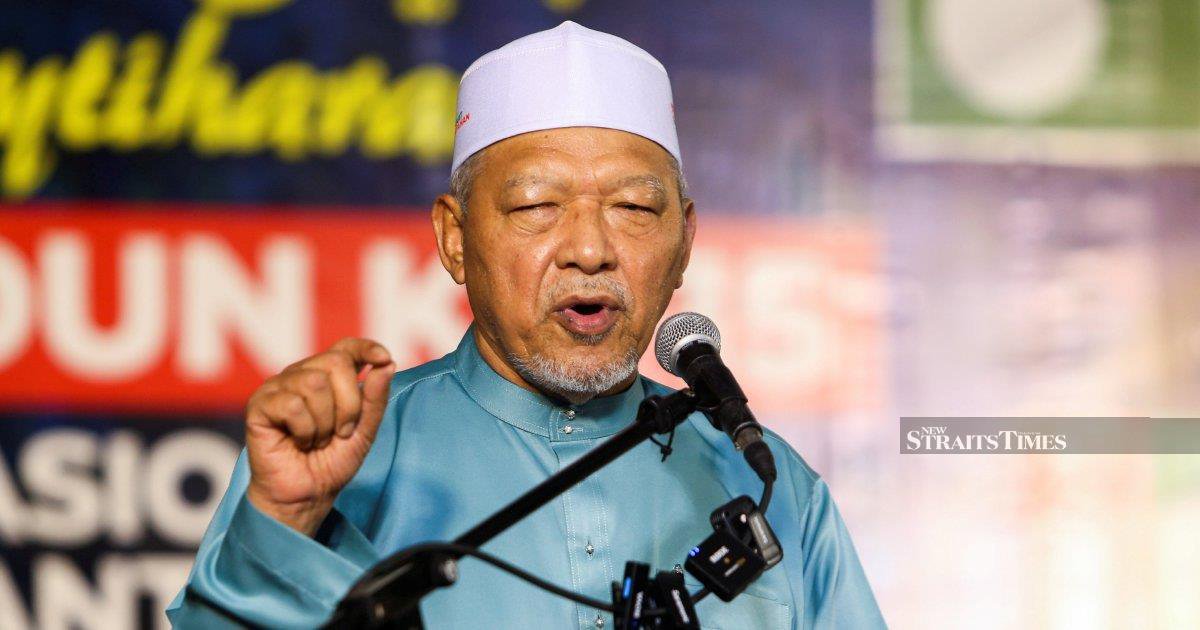
Tan Sri Abdul Hadi Awang, president of Pas, has thrown his weight behind a series of electoral understandings with Barisan Nasional spanning multiple state contests, including the forthcoming Johor and Negri Sembilan polls as well as the next general election cycle in Melaka. Speaking in Tumpat, Hadi framed the partnership arrangement as a strategic response to what he described as a formidable political danger requiring immediate coordinated action between the two coalitions.
The decision represents a significant political manoeuvre in Malaysian electoral dynamics, particularly given Pas's historical positioning and recent trajectory within the complex landscape of national coalition-building. The party leadership's embrace of formal cooperation mechanisms with BN reflects intensifying calculations around electoral competitiveness and the perceived stakes in upcoming contests across these strategically important states. Hadi's characterisation of the political environment as "dangerous" suggests the party views particular threats as sufficiently grave to warrant departing from previous organisational approaches or independence calculations.
Johor, as Malaysia's second-largest state by population and economic output, has long represented a crucial battleground for competing political forces. The state's electoral dynamics have historically shifted between different coalition arrangements, and any agreement between Pas and BN regarding representation and campaign coordination carries substantial implications for the broader peninsular political balance. Similarly, Negri Sembilan's electoral composition and demographic diversity make it a contested space where coalition strength often determines outcomes, while Melaka's status as a smaller but symbolically significant state frequently reflects broader peninsular trends.
The timing of these agreements occurs within a broader period of coalitional realignment across Malaysian politics. The previous decade witnessed significant fracturing of established political blocs, emergence of new alignment possibilities, and fluctuation in voter preferences across numerous constituencies. Hadi's decision to cement explicit working arrangements with BN suggests Pas's assessment that collaborative frameworks offer superior electoral prospects compared to fragmented or independent approaches, particularly in environments where vote-splitting might disadvantage Islamic-oriented parties seeking to maintain or expand parliamentary representation.
From a regional perspective, such arrangements merit attention as Malaysia remains a crucial democracy within Southeast Asia whose electoral outcomes influence broader geopolitical considerations. Political stability and predictable governance structures matter significantly to foreign investors, international partners, and neighbouring countries seeking reliable diplomatic engagement. The crystallisation of electoral pacts between major Malaysian political organisations therefore holds implications extending beyond domestic political competition into questions of administrative continuity and governance capacity.
The specific mention of Melaka's next general election rather than an imminent state poll suggests the agreements contemplate both the federal election cycle and coordinated state-level strategies. This temporal coordination indicates sophisticated political planning aimed at maximising leverage during multiple electoral contests, potentially creating compound effects where successful state-level performances during Johor and Negri Sembilan contests could generate momentum benefiting both Pas and BN in subsequent federal contests and Melaka's state elections.
Hadi's framing of electoral cooperation as a response to identifiable threats reveals important dimensions of contemporary Malaysian political discourse. The invocation of "dangerous" political situations as justification for coalition-building resonates with Malaysian voters concerned about governance, security, and institutional stability. This rhetorical positioning allows party leadership to present collaborative arrangements not as opportunistic political manoeuvring but as necessary defensive responses to genuine challenges requiring united action from ostensibly compatible political forces.
The practical implications of these understandings for Pas's grassroots organisation and membership warrant consideration. As a party with substantial organisational infrastructure and dedicated supporter bases across numerous constituencies, Pas's agreement to coordinate campaign strategies and potentially limit its own candidate nominations in specific constituencies involves tangible resource allocation decisions and membership management challenges. Party leaders must effectively communicate to supporters why such compromises serve broader strategic interests rather than simply reflecting weakness or capitulation.
BN's perspective on these arrangements also deserves examination within the context of its own internal dynamics and electoral recovery trajectory. The coalition has experienced significant setbacks in recent election cycles and has pursued various strategies for rebuilding electoral competitiveness. Formal agreements with Pas, which commands meaningful support within specific demographic segments and geographic regions, potentially broadens BN's appeal while also importing Pas's organisational strengths into constituencies where BN component parties have experienced declining performance.
The geographic concentration of these agreements—all involving peninsular states—reflects Malaysia's political geography where urban-rural divides, demographic composition, and established party loyalties create distinctive electoral environments requiring different strategic approaches. Johor represents the federation's industrial heartland with substantial urban working-class and middle-class populations; Negri Sembilan combines rural and suburban dynamics; Melaka remains relatively compact with specific demographic and economic characteristics. Tailoring coalition strategies to these distinctive contexts demonstrates political sophistication while also suggesting that any broader Pas-BN arrangements might prove more conditional than monolithic national alignments.
Hadi's statements regarding political threats and the necessity for coordinated responses will likely generate substantial interpretation and counter-interpretation from opposition quarters seeking to challenge both the diagnosis of political danger and the proposed solution through coalition coordination. The coming months will reveal whether these announced understandings translate into effective campaign coordination and electoral management, or whether they represent preliminary agreements requiring further negotiation and refinement as election dates approach and practical implementation challenges emerge.

