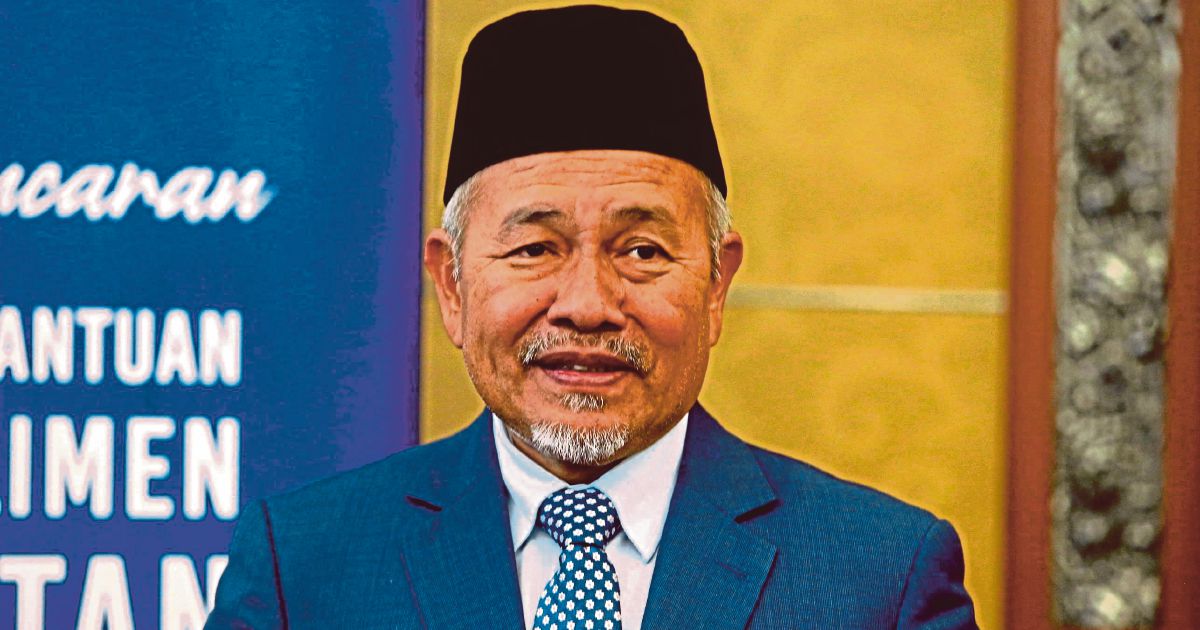
Datuk Seri Tuan Ibrahim Tuan Man, the deputy president of PAS, has publicly commended Umno for its decision to pull support from the Negri Sembilan state government, characterising the political manoeuvre as a demonstration of courage that fundamentally reshapes the electoral landscape in the state. Speaking in Seremban, Tuan Ibrahim framed the withdrawal not merely as a political calculation but as a bold step that could generate meaningful engagement from voters who may now feel genuinely represented through fresh choices at the ballot box.
The statement comes at a pivotal moment for Malaysian coalition politics, where the stability of state governments remains perpetually contingent on shifting party allegiances and parliamentary mathematics. Umno's decision to cease supporting the existing state administration represents precisely the type of realignment that has become increasingly common across Malaysian politics since the seismic changes of 2018 and beyond. By stepping back from its previous position, Umno has effectively triggered a political recalibration that PAS appears positioned to exploit.
Negri Sembilan has traditionally occupied an interesting space within Malaysia's political map, often serving as a barometer for broader coalitional shifts within the peninsular states. The state has experienced multiple transitions in government composition over recent years, with different parties and alliances alternately commanding the confidence of state assemblymen. Umno's withdrawal of support destabilises the current arrangement and creates an opening for alternative political formations to vie for legitimacy and voter approval.
For PAS specifically, Tuan Ibrahim's public appreciation of Umno's move suggests the party intends to position itself prominently within whatever political contests emerge in Negri Sembilan. The Islamic party has been steadily expanding its political footprint across various states, and a potential state election in Negri Sembilan would present another arena in which to consolidate and extend its parliamentary presence. The deputy president's comments reveal strategic calculation beneath the surface gratitude.
The implications of Umno's decision extend beyond simple parliamentary arithmetic. It signals potential fractures or divergences within what has been framed as broader Malay-Muslim coalition politics, suggesting that even ostensible allies retain independent strategic interests that may not always align perfectly. This complexity reflects the reality of Malaysian political coalitions, which often operate as loose assemblages of parties pursuing both collective and individual objectives simultaneously.
Voters in Negri Sembilan can anticipate intensified political activity as various parties mobilise to position themselves advantageously ahead of any elections. Campaign narratives will likely emphasise development achievements, administrative competence, and alignment with either peninsular or national political coalitions depending on each party's strategic positioning. The withdrawal of Umno's support has essentially reset the political calculation and handed momentum to parties like PAS that can credibly present themselves as alternatives.
From a broader Southeast Asian perspective, Malaysia's continued political fluidity demonstrates how coalition governments in democratic systems require constant management and renegotiation. Unlike Westminster systems with fixed election cycles, the prevalence of coalition politics and no-confidence mechanisms means governments operate under perpetual scrutiny. This keeps political actors responsive but also creates uncertainty that can frustrate long-term policymaking and development planning at the state level.
Tuan Ibrahim's comments also underscore PAS's broader strategy of positioning itself as a serious player within national and state governance frameworks. Rather than remaining confined to opposition or minority status, the party has systematically worked to expand its coalition partnerships and government participation. Negri Sembilan represents another potential opportunity for this expansion, and the party appears determined to capitalise on the political opening Umno's withdrawal has created.
The timing of Umno's decision warrants consideration, as political parties in Malaysia typically make major repositioning moves in response to perceived advantages or disadvantages in their electoral or coalition prospects. Whether Umno's move reflects internal party dynamics, calculations about future national coalitions, or genuine ideological divergence with governing partners remains an open question that political observers will scrutinise in coming weeks.
As Negri Sembilan moves toward whatever political transition awaits, both established and emerging political coalitions will test their respective organisational capabilities and messaging strategies. The state election, whenever it occurs, will provide voters with concrete choices about governance priorities and coalition alignment. Tuan Ibrahim's appreciation of Umno's boldness thus represents more than simple inter-party courtesy—it signals PAS's readiness to engage substantively in whatever electoral competition emerges from the current political uncertainty.

