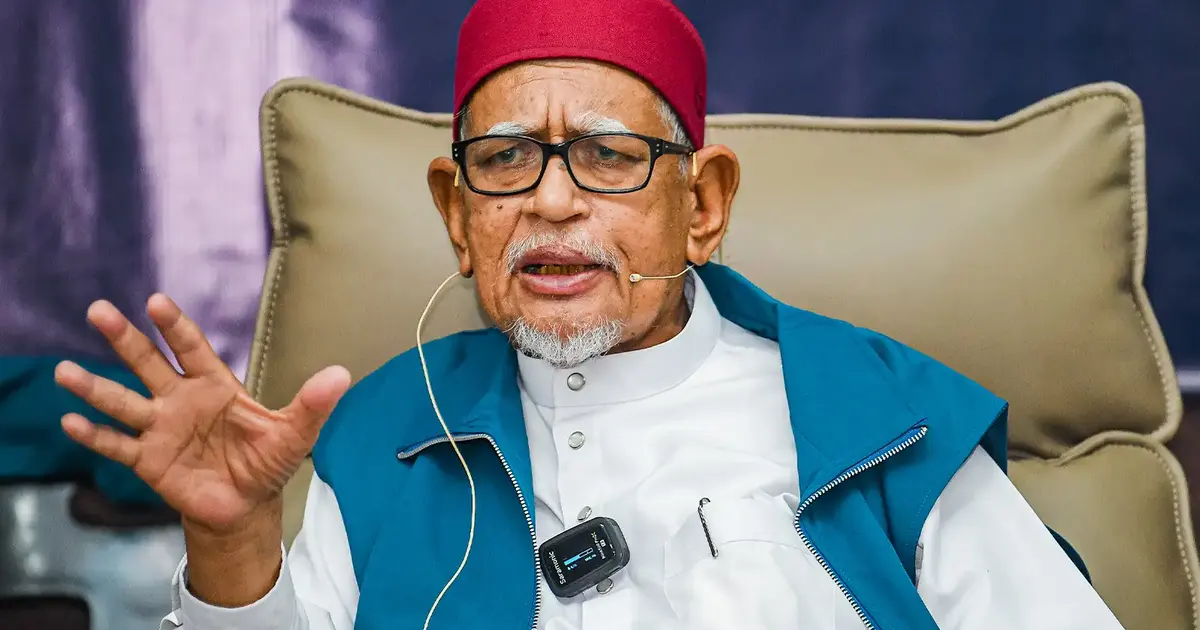
PAS President Hadi Awang has doubled down on his recent statements regarding DAP, rejecting pressure to retract his comments as the matter navigates the Malaysian legal system. Speaking at a time of heightened tension between the two opposition parties, Hadi has signalled his determination to defend his position should the matter proceed to the courts, displaying the kind of political resolve that has characterised his leadership of the Islamic party over decades.
At present, Hadi stressed that he remains in a preliminary phase of engagement with law enforcement authorities. He clarified that police have only summoned him to provide a formal statement, which is a routine investigative procedure and not yet indicative of charges being filed. This distinction carries legal weight in Malaysia's criminal justice system, where a police statement represents an initial fact-gathering stage that may or may not culminate in formal charges before a magistrate or higher court. The PAS leader's insistence on this point underscores his confidence that the statement itself does not constitute an admission of wrongdoing or validate any allegations against him.
The controversy surrounding Hadi's remarks reflects deeper rifts within Malaysia's fractured opposition landscape. The relationship between PAS and DAP has oscillated dramatically, from coalition partners in Pakatan Harapan during 2018-2020 to open antagonists in more recent political configurations. These comments thus carry significance beyond the immediate legal implications, as they reveal the extent to which consensus among opposition forces has eroded. For Malaysian voters and political observers, such divisions complicate efforts to build unified alternative governance structures, a challenge that has plagued the opposition since 2020.
Hadi's willingness to engage with the courts suggests confidence in his legal strategy and the strength of his defence. His statement that he will answer any charges in court represents a calculated political move, transforming what might otherwise appear as a defensive posture into a platform for public vindication. By emphasising his readiness to face judicial scrutiny, he frames the matter not as an infringement on his speech rights but as an opportunity to contest the allegations through legitimate channels. This framing is particularly important in Malaysia, where political leaders must balance freedom of expression protections with laws that criminalise certain categories of speech.
The timing of this controversy intersects with broader Malaysian political developments. The nation remains in the midst of coalition realignments and preparations for what may eventually be a general election. PAS's position as a kingmaker within Perikatan Nasional gives its leadership considerable political capital, and how Hadi navigates this legal challenge may influence the party's negotiating position in future political arrangements. His defiant stance could appeal to the party's base, which values strong leadership and resistance to perceived attacks from secular opposition parties like DAP.
For DAP and its supporters, Hadi's continued adherence to his remarks may be viewed as inflammatory and reinforcing the party's concerns about the direction of Malaysian pluralism. The Democratic Action Party has historically positioned itself as a defender of secular governance and multiethnic collaboration, positions that directly conflict with PAS's Islamist political philosophy. The persistence of these tensions highlights how Malaysia's multi-ethnic, multi-religious composition creates genuine ideological divides that cannot be easily reconciled through temporary political alliances.
The police investigation itself follows established protocols in Malaysia when public figures make statements that may breach communication laws or other relevant statutes. The law enforcement process is procedurally deliberate, moving from initial statements through possible charging to court proceedings, each stage offering opportunities for legal representation and challenge. Hadi's emphasis on being merely summoned rather than charged acknowledges this reality while also suggesting that the investigation remains incomplete and his position not yet formally adjudicated.
From a Southeast Asian perspective, Malaysia's handling of political speech cases attracts regional attention. The nation sits between democracies with stronger free expression protections and authoritarian systems with stricter controls, and how cases like Hadi's are resolved contributes to regional norms around political tolerance and judicial independence. International observers monitor such cases to assess whether Malaysia's courts operate fairly across party lines, a consideration that carries weight for foreign investors and international relations.
The road ahead remains uncertain for both Hadi and the broader opposition coalition. If charges are indeed filed, the court case could become a significant political event, drawing public attention and potentially becoming a rallying point for PAS supporters. Conversely, if the matter is resolved without prosecution, it could be interpreted as vindication of the PAS president's position. Either outcome will ripple through Malaysian politics, influencing party strategies and inter-coalition dynamics heading toward the next general election.

