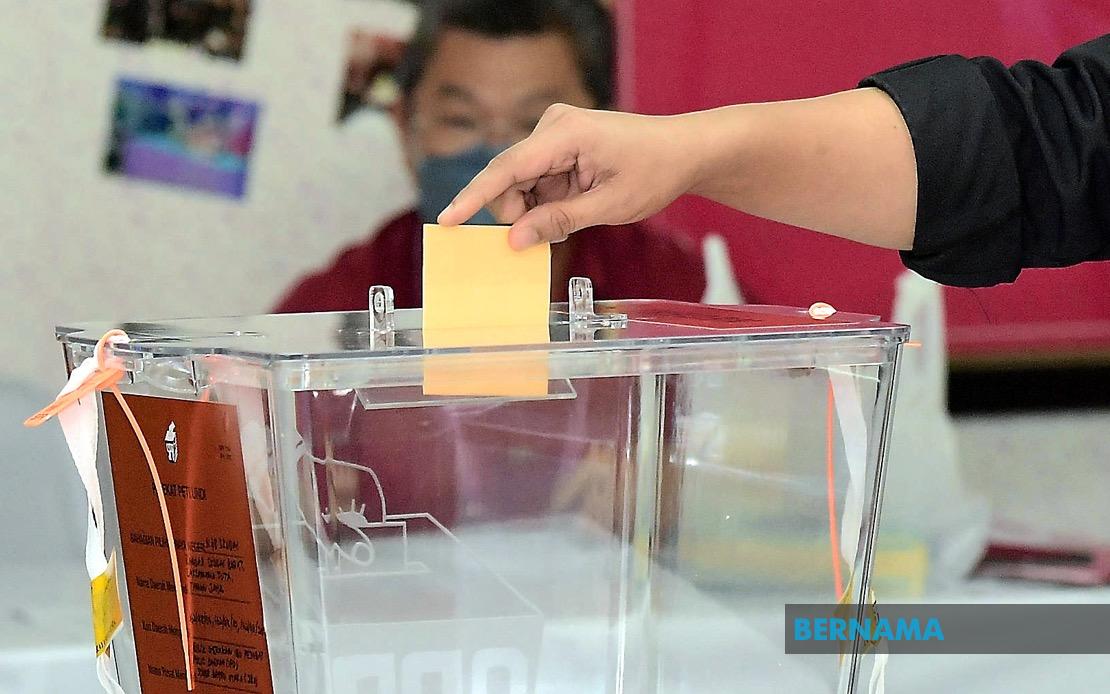
Johor's political landscape has crystallised following the 16th State Election, with the Barisan Nasional capturing sufficient parliamentary strength to govern, prompting measured responses from the opposition coalition. Johor PAS commissioner Datuk Dr Mahfodz Mohamed acknowledged the democratic will expressed by voters on polling day, affirming that the Islamic party respects the electorate's determination regarding the state's future direction and leadership structure. His statement underscores the importance of electoral legitimacy in Malaysia's federal system, where state-level contests serve as crucial barometers for broader political sentiment.
Menteri Besar Datuk Onn Hafiz Ghazi's Barisan Nasional achieved a decisive mandate by winning 29 of 56 contested seats, a result that provides the coalition with the parliamentary numbers necessary to construct a new state government without requiring external support. This outcome represents a substantial consolidation of the traditional ruling coalition's position in a state that has historically served as a bellwether for national political trends. The comfortable majority affords the incoming administration considerable latitude in pursuing its governance agenda without perpetual concern over legislative defections or parliamentary mathematics.
Dr Mahfodz's statement reflected Perikatan Nasional's broader posture following the election, emphasising the coalition's commitment to advancing Islamic principles and safeguarding communal interests ahead of the anticipated 16th General Election. His language carefully balanced acknowledging the result without dwelling on the loss, instead pivoting toward future electoral preparations at the federal level. This approach suggests that Perikatan Nasional views the Johor contest as a stepping stone rather than a definitive political statement, with campaign machinery already recalibrated toward the general election horizon.
Bersatu's response indicated a more introspective stance, with secretary-general Datuk Seri Mohamed Azmin Ali committing the party to a thorough examination of its electoral performance and strategic shortcomings. The party's intention to dissect voting patterns and campaign effectiveness reflects recognition that Johor presented a challenging environment, and that tactical adjustments may be necessary for improved results in future contests. Bersatu's relatively muted response, compared to Perikatan Nasional's broader framing, suggests the party may have underperformed internal expectations in certain constituencies.
Part Bersama Malaysia's experience proved markedly more difficult, with leader Datuk Seri Rafizi Ramli confirming that all 15 of the party's candidates forfeited their election deposits by failing to achieve the minimum vote threshold. This outcome reflects the substantial challenges faced by newly established political entities attempting to penetrate entrenched party structures and voter loyalties. For context, Bersama had only existed for 52 days at the time of the election, meaning the party was operating without established grassroots networks, institutional memory, or voter recognition that more established parties possess.
Rafizi's response demonstrated philosophical acceptance of the setback while positioning the early campaign experience as valuable organisational learning. His framing suggested that Bersama leadership views the Johor contest as part of a longer trajectory toward political relevance rather than a definitive verdict on the party's viability. This perspective aligns with how fledgling political movements often approach their initial electoral contests—as investments in brand-building and operational capacity rather than immediate victories. The complete loss of deposits, while financially burdensome, did provide the party with direct experience of voter engagement across 15 different constituencies.
The broader electoral landscape in Johor reveals significant fragmentation within the opposition space. When the counting concluded on polling day, Pakatan Harapan had managed to secure merely two seats despite entering as the primary anti-Barisan coalition. Meanwhile, Perikatan Nasional, Bersama, Muda (Malaysian United Democratic Alliance), Parti Orang Asli Malaysia, Parti Sosialis Malaysia and independent candidates registered no victories. This distribution underscores the difficulty opposition coalitions face in consolidating anti-government sentiment when multiple competing entities splinter the anti-establishment vote across numerous parties and candidates.
The Johor result carries particular significance for Malaysia's political trajectory given the state's historical importance in determining national trends. Johor's status as an economic powerhouse and demographic bellwether means that electoral outcomes here frequently presage or reinforce broader national movements. Barisan Nasional's comfortable securing of 29 seats therefore contributes to a narrative of coalition consolidation that extends beyond Johor itself, potentially influencing perceptions of the ruling coalition's strength heading into the general election contest.
For Malaysian political observers, the contrasting responses from different opposition actors reveal the varying strategic calculations influencing contemporary politics. Perikatan Nasional's emphasis on religious and communal issues suggests the coalition continues pursuing a platform centred on Islamic governance and Malay-Muslim interests, even as electoral results suggest such messaging may face headwinds in competitive electoral environments. Bersatu's emphasis on strategic review indicates recalibration of approach, while Bersama's framing of the contest as organisational investment suggests newer parties may adopt longer-term political horizons than traditional entities accustomed to immediate electoral competition.
The road toward the 16th General Election now appears clearer in terms of the relative positioning of Malaysia's major political forces. The Johor contest has served as a dress rehearsal revealing campaign effectiveness, voter sentiment, and organisational capacity across competing coalitions. How each party applies these Johor lessons will substantially shape the competitive dynamics of the broader general election campaign, with particular attention on whether opposition coalitions can consolidate fragmented anti-government sentiment into improved parliamentary representation.

