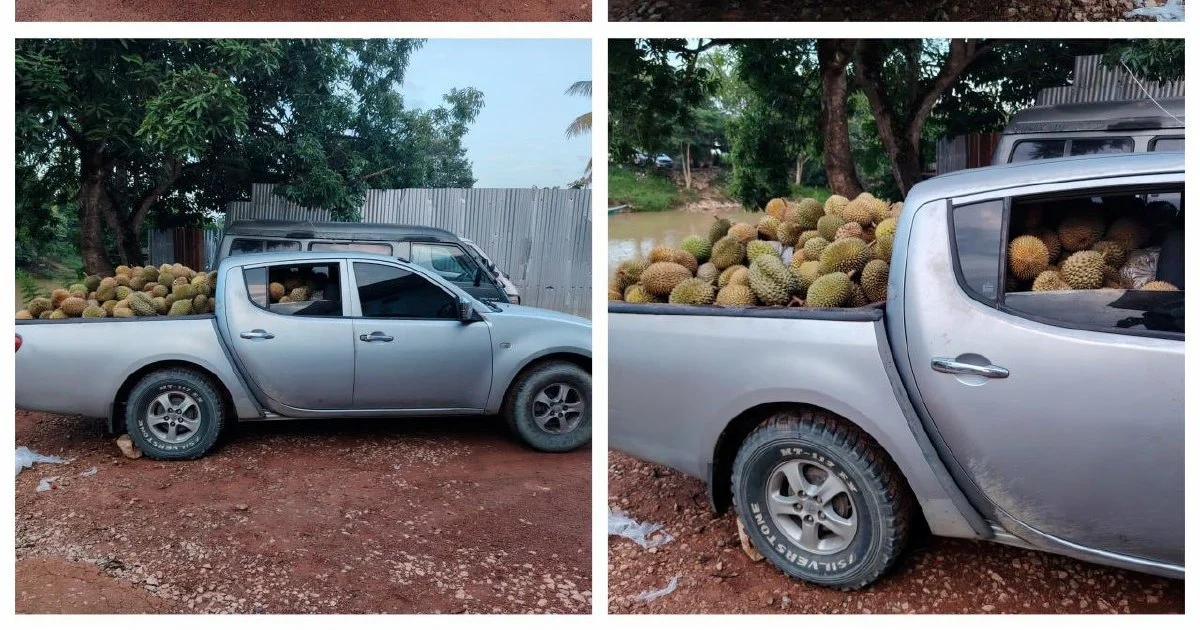
A 22-year-old part-time driver has been apprehended at Rantau Panjang after authorities discovered he was transporting 700kg of suspected smuggled durians. What appeared to be modest income from part-time work—between RM60 and RM70 per day—unravelled when enforcement officers conducted a check that uncovered the illegal cargo, raising fresh concerns about fruit smuggling networks operating along Malaysia's borders.
The incident highlights a troubling pattern in which young workers are drawn into cross-border smuggling operations through seemingly innocent employment offers. Such schemes typically exploit economic pressures and the promise of quick earnings, even when the sums involved are modest. Young men in border communities, particularly those seeking supplementary income, become vulnerable to recruitment by organised smuggling rings that use them as low-level operatives to move contraband through checkpoints. The RM60–70 daily wage, while meagre compared to the value of the cargo, is sufficient incentive for individuals with limited legitimate opportunities in economically marginalised areas.
Durian smuggling represents a significant problem across Southeast Asia's supply chains, extending beyond simple contraband movement. International price disparities create powerful incentives for illegal cross-border fruit trading, particularly given durian's premium market value and regional demand. Malaysia, as a major durian producer with access to superior varieties commanding higher prices in Singapore, Thailand, and other neighbouring markets, faces pressure from both supply-side operators seeking to avoid export duties and demand-side buyers seeking cheaper unregulated fruit. This economic reality sustains criminal networks that deliberately employ expendable workers to absorb legal risk.
Enforcement operations like the one at Rantau Panjang serve as crucial deterrents, yet they represent only isolated interventions within larger smuggling ecosystems. Border posts, particularly those handling high-volume traffic, operate under resource constraints that make comprehensive screening difficult. Sophisticated smuggling operations continuously adapt their methods—routing through secondary checkpoints, employing decoy vehicles, or timing movements to coincide with peak traffic periods. The quantity seized in this instance—700kg—suggests either a single substantial shipment or multiple accumulated loads, indicating the scope of trafficking attempts.
The arrest also underscores the asymmetrical consequences within smuggling hierarchies. The apprehended driver, occupying the lowest rung of the operation, faces criminal liability while those directing and profiting from the network remain insulated. Such individuals typically receive proportionately greater sentences relative to their actual role, whereas masterminds orchestrating regional smuggling operations often escape prosecution entirely. This structural imbalance raises questions about whether enforcement strategies effectively disrupt organised criminal operations or merely cycle through expendable operatives.
From a Malaysian policy perspective, the incident reflects ongoing challenges in managing agricultural trade within ASEAN frameworks. Legitimate cross-border agricultural commerce is economically vital for Malaysia, yet distinguishing legal flows from smuggled consignments requires sophisticated logistics intelligence and coordination between Malaysian authorities and neighbouring enforcement agencies. Durian is particularly sensitive because its cultivation represents significant agricultural investment and export revenue, making quality control and supply chain integrity commercially important beyond mere regulatory compliance.
The broader implications for Southeast Asian food security and trade are noteworthy. Unregulated fruit movement undermines quality standards, phytosanitary protocols, and official market data. When substantial quantities bypass standard inspection procedures, regulatory agencies lose visibility into disease prevalence, pesticide residues, and other safety metrics. Thailand and other importing nations rely on Malaysian quality certifications; unauthorised supplies circumvent these protections and potentially damage the reputation of legitimate Malaysian durian exports.
Economic desperation remains a primary driver of participation in smuggling activities among young workers. Unless regional economies generate sufficient legitimate employment, particularly in border communities where alternative income sources are scarce, vulnerable populations will continue recruitment into informal criminal networks. Development initiatives targeting education, skills training, and formal employment creation in Rantau Panjang and comparable localities could reduce the pool of potential recruits available to smuggling organisers.
The case also invites examination of how enforcement messaging shapes behaviour. Publicising arrests of low-level operatives, while necessary for transparency, must be balanced against communications emphasising consequences for organisers and financiers. If potential recruits perceive that principal decision-makers escape accountability, deterrent effects diminish. Malaysian authorities might consider strategic messaging that distinguishes between exploitation of vulnerable workers and calculated organised crime, potentially encouraging cooperation from operatives willing to provide intelligence against higher-level conspirators.
Moving forward, addressing durian smuggling requires integrated approaches beyond checkpoint enforcement. Supply-side interventions—such as streamlining legitimate export procedures to reduce incentives for unauthorised alternatives—warrant consideration alongside demand-side measures in importing nations. Bilateral and multilateral agreements enhancing cross-border enforcement coordination could improve interception rates. Within Malaysia, continued investment in border security technology, personnel training, and inter-agency collaboration remains essential for disrupting trafficking networks. The arrest at Rantau Panjang, while significant, illustrates the ongoing necessity for comprehensive, multi-level strategies to effectively combat agricultural smuggling.

