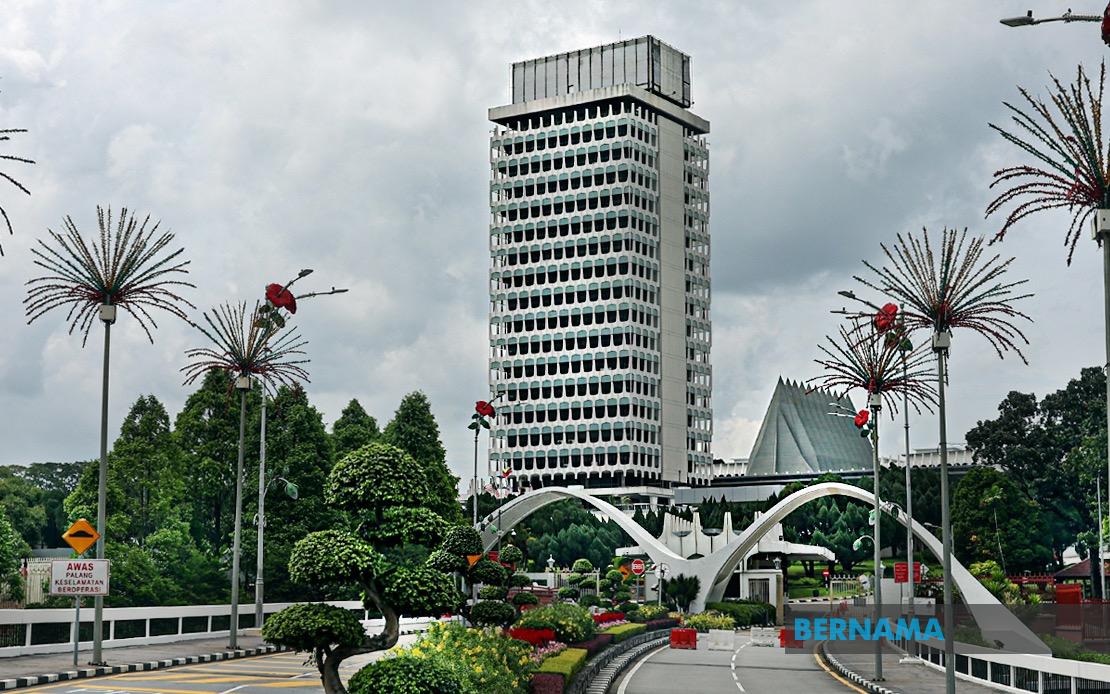
Parliament's third week of deliberations culminated in legislative action on competition law and substantive parliamentary debate spanning healthcare, food security, national defence and human rights, underscoring the broad agenda facing Malaysia's lawmakers as the mid-year recess approaches. The sitting, which concludes July 16, has established a pattern of concurrent legislative progress and scrutiny of government performance across multiple policy domains, reflecting the complex governance challenges facing the nation.
Two significant amendments to competition legislation received parliamentary passage during the week. The Competition (Amendment) Bill 2026 and its companion measure, the Competition Commission (Amendment) Bill 2026, represent the government's legislative response to evolving market dynamics in the digital economy. These reforms target anti-competitive behaviour with enhanced enforcement mechanisms, addressing concerns that existing frameworks had become insufficient to police modern digital marketplaces where traditional monopolistic practices acquire new dimensions. For Malaysian businesses operating in digital sectors, particularly small and medium enterprises competing against larger incumbents with technological advantages, these amendments signal tighter regulatory scrutiny and clearer rules governing unfair competitive conduct.
Food security emerged as another legislative priority when the Control of Padi and Rice (Amendment) Bill 2026 proceeded to first reading on Tuesday. The measure significantly strengthens penalties within Malaysia's rice production and distribution framework, with maximum fines reaching RM1 million—a substantial escalation designed to deter malpractice throughout the supply chain. Given Malaysia's strategic dependence on rice imports despite domestic cultivation, regulatory tightening of this sector reflects government determination to safeguard supply reliability and protect farmers from exploitation. The amendment's emphasis on penalties rather than merely technical adjustments suggests policymakers view the padi and rice industry as requiring stronger enforcement tools to combat existing irregularities.
Parliamentary attention turned specifically to human rights governance through extensive debate on the Human Rights Commission of Malaysia's 2024 Annual Report. Members raised varied recommendations during this session, signalling Parliament's role in holding the independent commission accountable while simultaneously reinforcing Malaysia's human rights mechanisms. This focus demonstrates Parliament's engagement with Malaysia's human rights agenda at a moment when international scrutiny of the country's civil liberties record has intensified, particularly surrounding media freedom and expression.
Prime Minister Datuk Seri Anwar Ibrahim used ministerial question time to address two substantial concerns: support for micro, small and medium enterprises and the controversial decline in Malaysia's World Press Freedom Index ranking. On the MSME sector, Anwar committed to improving access to financing through more efficient processing by financial institutions, acknowledging the sector's critical role in employment and economic diversification. This commitment reflects wider regional trends toward MSME development as governments across Southeast Asia recognize that small business vitality drives inclusive growth.
The press freedom question, however, proved more contentious and reveals a persistent tension between Malaysia's international image and government actions. International observers have noted Malaysia's ranking decline within the World Press Freedom Index, attributable partly to enforcement actions targeting specific media organisations. Anwar's response frames such actions as narrowly tailored rather than broadly suppressive, targeting content concerning religion, race and the royal institution alongside national security threats. This distinction—between enforcing specific legal boundaries and suppressing legitimate journalism—remains contested, with international press freedom advocates viewing these categories as potentially expansive.
An important procedural development emerged from the Prime Minister's remarks: complaints against journalists from recognised media organisations will now be referred to the Malaysian Media Council rather than automatically triggering enforcement investigations. This reform could substantially alter the practical relationship between government authority and media operations, potentially reducing chilling effects on journalism by inserting an industry self-regulatory body into complaint adjudication. For Malaysian journalists and newsrooms, the policy shift represents both an acknowledgment of previous concerns and an institutional mechanism intended to balance legitimate regulation with editorial independence.
Parliament received substantive reports from two special select committees addressing distinct but significant policy areas. The Health Committee's recommendations on organ donation and transplantation reflect Malaysia's efforts to improve donation rates and modernize transplant frameworks within a multi-faith, multi-ethnic society where cultural and religious considerations significantly influence participation. Simultaneously, the Committee on Women, Children and Community Development raised alarming data on abuse and violence trajectories since 2020, with recommendations addressing a six-year surge that spans the pandemic period and its aftermath—a critical moment for understanding how public health crises intersect with domestic security.
Defence and maritime security featured prominently as Parliament deliberated the selection of a missile system to replace the Naval Strike Missile installations aboard Malaysia's Littoral Combat Ships. This procurement decision carries strategic implications for Malaysia's maritime capabilities in the South China Sea and Indian Ocean, particularly as regional competition for naval dominance intensifies. The legislative debate around weapons systems reflects Parliament's expanded oversight of defence procurement, contrasting with earlier periods of limited scrutiny.
Healthcare modernization emerged as another focus, with parliamentary discussion centering on accelerating digitalisation within public healthcare facilities. This modernisation agenda carries substantial implications for service delivery across Malaysia's public hospital network, particularly in rural regions where digital capacity remains limited. Deputies also addressed vape product seizures involving suspected synthetic drugs, indicating Parliament's engagement with emerging public health threats beyond traditional tobacco and pharmaceutical domains.
Deputy Finance Minister Liew Chin Tong provided significant financial disclosure regarding 1Malaysia Development Berhad liabilities, revealing total government exposure of RM51.4 billion encompassing both settled and outstanding obligations. This figure, disclosed during parliamentary sitting, reinforces the substantial fiscal legacy of the 1MDB scandal and highlights ongoing budget constraints affecting social spending and development programs. The inclusion of this disclosure within parliamentary records reflects continuing transparency efforts, though the magnitude underscores Malaysia's substantial medium-term fiscal challenges.
Dewan Rakyat Speaker Tan Sri Dr Johari Abdul invoked a timely health reminder following a lawmaker's admission to the National Heart Institute, urging colleagues to prioritise preventive health screening. This intervention, while procedurally modest, carries symbolic weight in a parliament increasingly conscious of health risks affecting lawmakers and, by extension, governance continuity. As parliament enters its final week before July 16 adjournment, the accumulation of legislative progress and policy debates demonstrates sustained parliamentary engagement across Malaysia's complex governance agenda, though numerous contentious issues remain unresolved.

