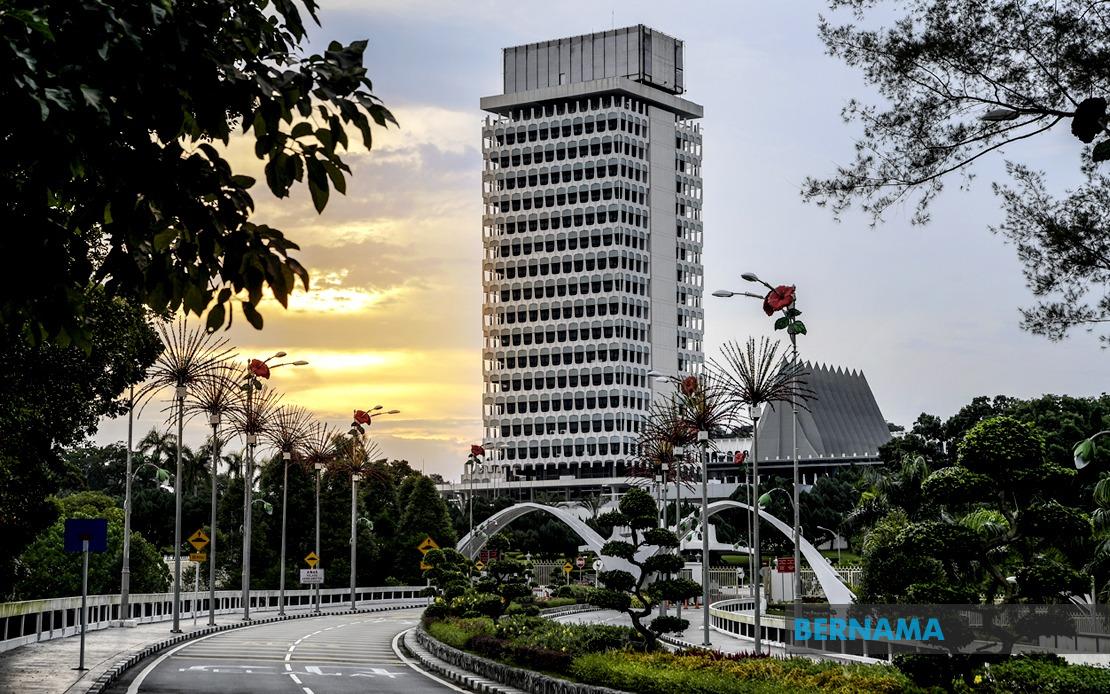
Parliament reconvenes today with lawmakers primed to press the government on three interconnected social protection issues affecting Malaysian households: the integrity of health insurance systems, the adequacy of retirement savings, and investment in sports infrastructure. The breadth of topics on the Order Paper reflects growing parliamentary concern about gaps in the social safety net as the country navigates rising living costs and demographic shifts that will reshape the nation's dependency ratios within the next five years.
The spotlight on health insurance regulation reflects escalating frustration with insurer practices that leave vulnerable Malaysians exposed. Tan Kok Wai of Cheras will interrogate the Finance Ministry on concrete mechanisms to prevent insurers from cancelling policies or denying claims for critical illnesses such as cancer. His question targets not only the mechanics of policy protection but also the transparency frameworks and dispute resolution pathways available to policyholders when claims are contested or refused. This line of inquiry acknowledges that insurance products, despite being marketed as financial safeguards, sometimes function as barriers to care when companies invoke exclusions or technical grounds to avoid payouts during the moments when coverage matters most.
The insurance question dovetails with concerns about retirement adequacy being raised by Port Dickson member Datuk Seri Aminuddin Harun. His query pushes the Finance Ministry to articulate a coherent national strategy for ensuring that Employees Provident Fund contributors accumulate sufficient capital to sustain themselves beyond working years. The urgency of this question sharpens when contextualised against Malaysia's demographic trajectory, with the nation's population expected to age significantly by 2030. Coupled with the persistent squeeze on household purchasing power, many Malaysians may find themselves entering retirement with balances insufficient to cover basic needs over a 20 or 30-year horizon. The question effectively demands that government acknowledge and address a structural vulnerability in the current savings architecture.
Talent development for volleyball, raised by Kangar's Zakri Hassan, may appear tangential to these weightier fiscal concerns, but it reflects Parliament's interest in ensuring that Malaysia's sporting infrastructure supports emerging athletes across multiple disciplines. The specific focus on both indoor and beach volleyball suggests recognition that different modalities of the sport require distinct developmental pathways and coaching ecosystems. Investment in volleyball talent pipelines represents a longer-term strategic bet on international competitiveness and, by extension, national prestige in sporting competition.
Equally significant is Hassan Saad's question regarding the National Information Dissemination Centres, or NADI, and their effectiveness in bridging rural connectivity and digital capability gaps. Rural Malaysia continues to lag in internet access, digital literacy, and the marketing know-how required for small entrepreneurs to compete in digital commerce. NADI exists to address these deficiencies, yet persistent gaps suggest the centres may not be sufficiently resourced, well-designed, or embedded within local communities to drive transformative outcomes. This question opens space for Parliament to evaluate whether rural development policy has genuinely shifted to prioritise digital inclusion or whether rhetoric outpaces implementation.
The Mobile eCOSS application, rolled out in May 2025, enters today's discussion as a case study in using technology to combat subsidy leakage in the cooking oil supply chain. The system's effectiveness matters because cooking oil subsidies remain a significant fiscal outlay, and leakages undermine the policy's intended beneficiaries. How successfully the application tracks and prevents diversion of subsidised supplies will indicate whether digital monitoring tools can meaningfully shore up subsidy programmes or whether they constitute an inefficient overlay on a fundamentally broken system.
Microfinance and MSME financing schemes also feature in today's questioning, with lawmakers keen to assess whether existing credit programmes adequately support small businesses navigating inflation and working capital constraints. MSMEs represent the backbone of Malaysia's informal and semi-formal economy, generating employment and local economic dynamism. If financing mechanisms fail to reach these enterprises or impose terms that make loans unaffordable, the broader economic growth agenda stalls, and inequality widens.
The parliamentary agenda transitions to substantive legislative business with continuation of committee-stage scrutiny of the Competition (Amendment) Bill 2026 and the second reading of the Competition Commission (Amendment) Bill 2026. These legislative initiatives address the competitive environment governing Malaysian commerce and the powers vested in the competition regulator. Their passage will reshape how monopolistic and anti-competitive conduct is detected, investigated, and penalised, with implications for consumer prices, market entry for new competitors, and the overall efficiency of resource allocation across the economy.
Parliament will also receive a briefing from the Health Select Committee on its report concerning reform of the national organ donation and transplantation system. This technical but consequential briefing may yield recommendations for expanding donor registries, improving organ allocation efficiency, or strengthening consent frameworks. Given waiting lists for organ transplants and the small pool of available organs relative to demand, systemic reforms in this domain can directly improve survival outcomes and quality of life for Malaysians with organ failure.
The parliamentary sitting commenced on July 1 and is scheduled to continue through July 16, offering a 16-day window for debate, scrutiny, and legislative advancement. The concentration of questions on health insurance, retirement, digital inclusion, and subsidy administration suggests that Parliament's focus gravitates toward the practical concerns of ordinary Malaysians grappling with cost-of-living pressures and uncertain futures. Whether government responses move beyond reassurance to genuine policy innovation and resource commitment will shape the credibility of these parliamentary exercises and the lived experience of citizens who depend on functioning social and economic institutions.

