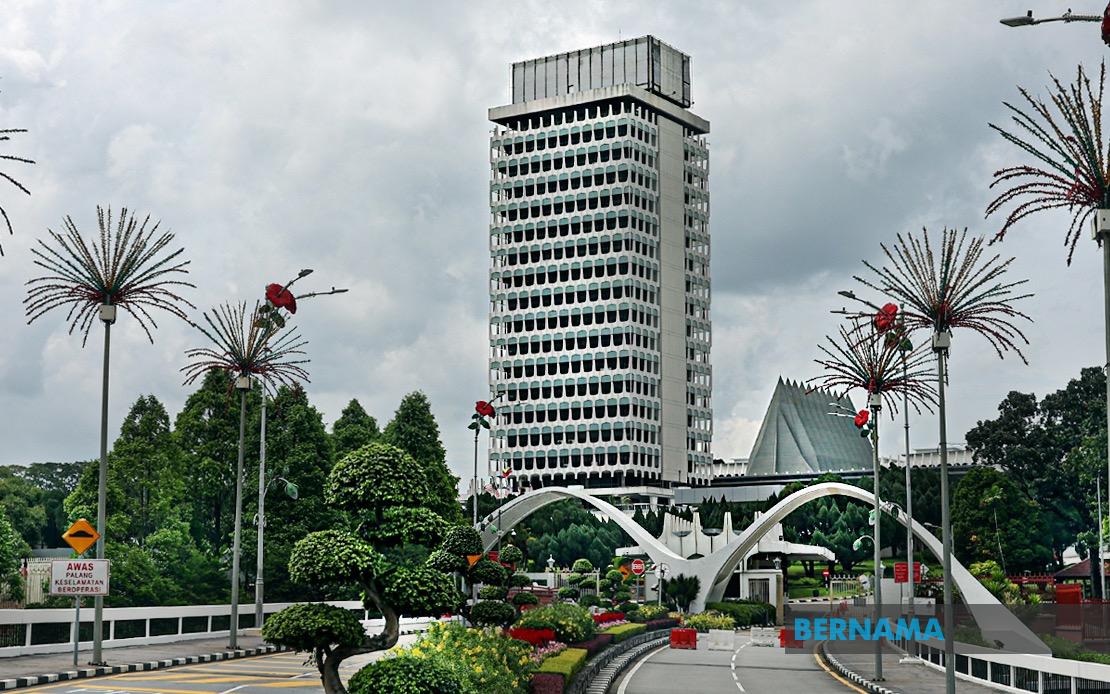
Parliament opens its doors this week for discussions spanning infrastructure security, market competition and digital regulation—three interconnected policy areas that will shape Malaysia's economic and social landscape. The 16-day legislative session, running until July 16, will feature targeted questions from government and opposition members on water capacity in Johor, enforcement capabilities at the Malaysia Competition Commission, and the rollout of age verification mechanisms for online platforms.
Water management in Johor has become increasingly critical for Malaysia's economic heartland. The state, home to major industrial zones and a growing population centred in urban areas like Johor Bahru, faces mounting pressure on existing supplies during dry seasons and peak demand periods. Suhaizan Kaiat, representing the Pulai constituency under Pakatan Harapan, will press the Energy Transition and Water Transformation Minister during Question Time to detail the government's comprehensive long-term blueprint for expanding Johor's water resource infrastructure. The inquiry will probe specific capital projects including new dam construction, modernisation of treatment facilities, and integration of recycled water systems into the supply chain.
The timing of this parliamentary focus reflects broader anxieties across Southeast Asia about water scarcity and climate resilience. Johor's water stress differs markedly from dryer states, yet the underlying challenge mirrors regional dynamics: how governments balance rapid urbanisation with environmental sustainability. Recycled water, once considered a fallback option, increasingly appears as a permanent component of integrated water systems in developed economies. Malaysia's adoption of advanced water recycling could position it as a regional leader in circular economy practices, with applications across the city-states and industrial zones of Southeast Asia.
Separately, the Malaysia Competition Commission's capacity to police the housing sector will come under scrutiny. Datuk Seri Ismail Abd. Muttalib, the Maran member representing Perikatan Nasional, will challenge the Domestic Trade and Cost of Living Minister to articulate specific measures designed to strengthen MyCC's institutional firepower. Housing affordability has become a politically volatile issue across Malaysia, with prices in major urban corridors climbing faster than wage growth. Builders and developers, some argue, have exploited information asymmetries and market concentration to sustain elevated pricing that locks younger buyers out of homeownership.
The parliamentary line of questioning will probe whether MyCC possesses adequate tools, funding and personnel to investigate suspected anti-competitive conduct in property markets. Price-fixing cartels—whether formal or tacit—and market segmentation strategies that artificially restrict supply remain difficult to prove, yet their effects are visible in stalled construction projects and unaffordable new launches. Enhanced MyCC oversight could theoretically deter collusive behaviour, yet true enforcement depends on whistleblowers, forensic economics expertise, and political will to pursue cases against well-connected industry players. This debate signals that housing affordability has transcended local municipal concern to become a national competition policy question.
Digital regulation and child protection converge in the planned age verification framework for social media platforms. Syahredzan Johan, the Bangi legislator from Pakatan Harapan, will interrogate the Communications Minister on implementation objectives and data governance standards. Age gating mechanisms, now mandatory in several jurisdictions including parts of Europe and the United Kingdom, aim to shield minors from harmful content and exploitative contact. However, such systems inevitably collect and process personal information, creating fresh privacy risks even as they address existing harms.
The parliamentary question reveals careful calibration: legislators want to understand not only what age verification will accomplish, but how data extracted from users will be contained and destroyed. Licensed service providers managing these systems must operate under strict data minimisation principles, accessing only information strictly necessary to confirm age, then purging records once verification concludes. This reflects growing sophistication in Malaysian and regional digital policy discourse, moving beyond simple on-off regulatory switches toward granular accountability mechanisms. Young people, already fluent in digital tools, increasingly expect platforms to serve them safely without wholesale surveillance.
The convergence of these three policy domains—water infrastructure, competition enforcement, and digital regulation—reflects how modern governance cuts across traditional sectoral boundaries. Water stress influences where people and businesses locate, shaping urban real estate markets that MyCC must oversee. Digital platforms mediate social interaction and economic exchange, generating data that regulators require to investigate breaches. Parliament's willingness to dissect each policy area separately, yet within the same session, suggests awareness that integrated solutions often prove more effective than siloed approaches.
For Malaysia's position within Southeast Asia, these debates carry broader significance. The region's upper-middle-income economies—including Thailand, the Philippines and Vietnam—grapple with identical challenges: aging infrastructure, rising expectations for consumer protection, and digital disruption outpacing regulatory capacity. Malaysia's parliamentary scrutiny of MyCC's housing market role, its water security strategies, and its digital governance frameworks may offer templates, either positive or cautionary, for neighbouring countries navigating similar transitions. The sitting's 16-day duration suggests Parliament intends substantive examination rather than perfunctory procedure, allowing room for minister responses and follow-up questioning that builds policy momentum.
The questions tabled reveal an important evolution in Malaysian parliamentary practice. Rather than ad-hoc complaints about specific projects or isolated complaints, legislators are now framing inquiries around systemic capacity and institutional design. Suhaizan Kaiat's focus on long-term water resource planning, Ismail's emphasis on MyCC's investigative reach, and Syahredzan's concern with proportionate data handling all presume that government agencies require strengthening, expanded mandates, or recalibrated procedures to serve public interests effectively. This constructive challenge, assuming good faith from ministers willing to articulate concrete improvement plans, can elevate parliamentary discourse beyond blame and accountability toward collaborative problem-solving—a shift that Malaysian governance structures increasingly demand.