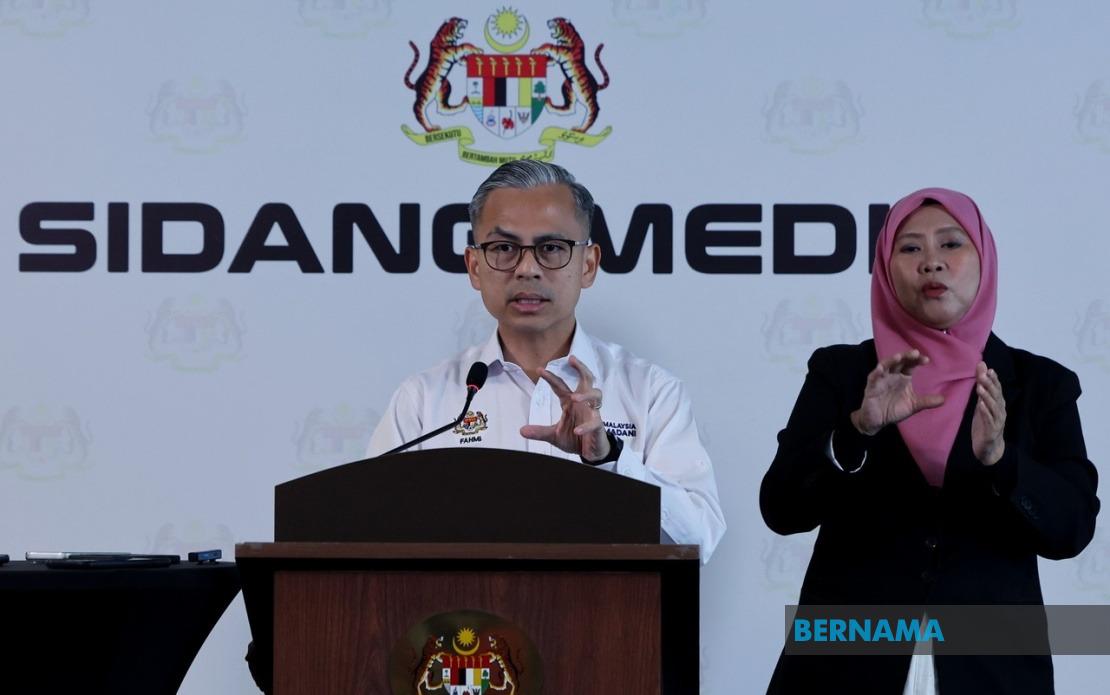
Parliament will hold a special sitting on August 11 to debate the findings of the Royal Commission of Inquiry into Tabung Haji, Malaysia's pilgrimage fund, with between 35 and 40 lawmakers confirming their participation in what is shaping up to be a significant legislative scrutiny of the institution's troubled management. Communications Minister Datuk Seri Fahmi Fadzil disclosed the level of parliamentary interest during a weekly press conference in Putrajaya, underscoring the gravity with which lawmakers are treating the RCI's conclusions about TH's operational and financial failings.
The special session will commence at 10 am and proceed continuously throughout the day without scheduled breaks, according to an arrangement agreed to by Dewan Rakyat Speaker Tan Sri Johari Abdul. This format reflects the importance placed on thorough examination of the RCI's findings and signals the government's willingness to permit extended parliamentary debate on the institution's troubled history. The session will be broadcast live through official Dewan Rakyat channels, ensuring public access to proceedings and enabling Malaysian citizens to follow legislators' responses to the commission's revelations.
The RCI report, released on July 29 through the Department of Islamic Development Malaysia's official portal, presents a comprehensive assessment of Tabung Haji's management and operations spanning the period from 2014 to 2020. The investigation identified numerous problematic investment decisions that substantially eroded the fund's asset base, raising serious questions about governance and financial stewardship during a critical period in the institution's history. These findings have sparked significant public concern given Tabung Haji's role as custodian of savings belonging to millions of Malaysian Muslims preparing for the Hajj pilgrimage.
Among the RCI's key recommendations is the initiation of a forensic audit into the investment decisions that precipitated the sharp decline in Tabung Haji's asset values. This proposal signals the commission's assessment that the deterioration was sufficiently anomalous and substantial to warrant detailed financial investigation beyond the standard audit processes. The recommendation reflects institutional concern about whether conventional oversight mechanisms adequately captured the full extent of problematic financial activity during the period under review.
The commission's investigation uncovered evidence pointing to suspicious transactions and the deliberate concealment of information within Tabung Haji's operations. These findings carry particular weight because they suggest not merely poor judgment or inadequate management systems, but potentially deliberate efforts to obscure the fund's financial reality from stakeholders and regulatory authorities. Such conclusions naturally provoke questions about accountability, regulatory oversight, and institutional safeguards that are likely to feature prominently in parliamentary debate.
The participation of 35 to 40 lawmakers in the scheduled debate reflects broad cross-sectional parliamentary concern about the RCI's findings. For Malaysian legislators, particularly those with constituents among Tabung Haji's account holders, the opportunity to examine and question the circumstances surrounding the fund's deterioration carries both political and constituent significance. The substantial number of confirmed participants suggests this will not be a perfunctory or thinly attended parliamentary proceeding but rather a consequential examination of institutional failure.
Tabung Haji's financial challenges have accumulated over several years, with the institution facing significant pressures from problematic investments and deteriorating asset values. The RCI investigation provides the first comprehensive official accounting of how these problems developed and what management decisions contributed to the fund's present circumstances. For Malaysian Muslims whose retirement and pilgrimage savings are held within Tabung Haji, the parliamentary debate offers a formal institutional forum for addressing the conduct of the institution entrusted with their resources.
The government's decision to facilitate this extended parliamentary debate demonstrates a commitment to transparency regarding Tabung Haji's challenges, though the actual substance of parliamentary responses and any consequent policy actions remain to be seen. The August 11 sitting will reveal not only what questions legislators prioritize but also how the government intends to respond to the RCI's recommendations, particularly regarding the proposed forensic audit and any disciplinary or institutional reform measures.
The involvement of the JAKIM portal in releasing the RCI report signals coordination across government agencies in presenting the findings to the public and to parliament. This institutional approach contrasts with scenarios where such reports might be compartmentalized or their release delayed. The transparent publication and scheduling of parliamentary debate suggests the government views addressing TH's difficulties as a priority requiring formal legislative engagement rather than administrative resolution alone.
The parliamentary debate will likely examine not only what occurred within Tabung Haji but also the adequacy of regulatory oversight by relevant authorities during the period under investigation. Questions about the Bank Negara Malaysia's supervisory role, the effectiveness of internal governance structures, and the responsibilities of the board and management will probably feature in lawmakers' inquiries. These broader questions about institutional accountability extend the implications of the RCI report beyond Tabung Haji itself to encompass regulatory and governance frameworks across Malaysia's financial sector.

