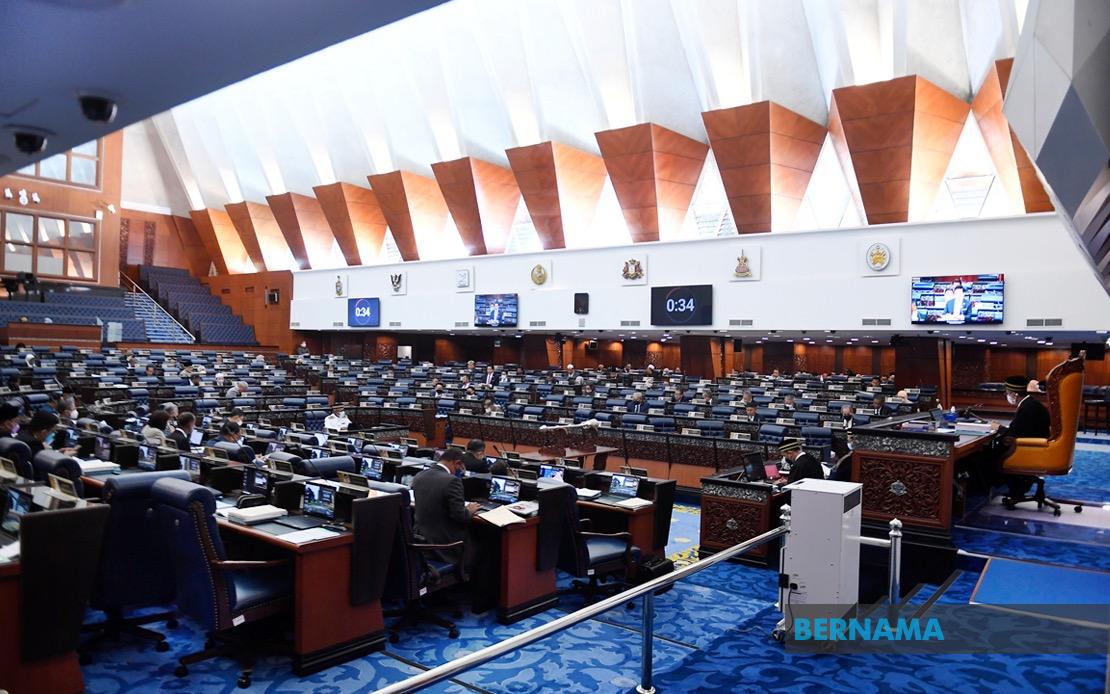
The Dewan Rakyat is turning its attention to a pair of governance matters likely to resonate across Malaysia's federal and state systems: the perceived inequity in how the Federal Government distributes funds to state governments, and the status of restrictions on announcing development projects during election periods. These topics will dominate parliamentary proceedings today, with several backbenchers and opposition members pressing the executive for clarity and accountability on both fronts.
Doris Sophia Brodi from GPS representing Sri Aman will lead questioning on the allocation dispute, pressing Prime Minister Anwar Ibrahim to address grievances that state governments receive funding streams that are disproportionate to the revenue they generate for federal coffers. This complaint reflects longstanding tensions between Kuala Lumpur and the states over fiscal federalism—a structural issue that has simmered beneath Malaysian politics for decades. Brodi will also seek details on how the MADANI administration plans to overhaul the allocation mechanism to make distribution more transparent and defensible. The framing of this question signals that even government coalition partners sense public frustration over resource distribution.
Parallel to the allocation debate, PN's Shahidan Kassim will seek confirmation that the prohibition on announcing government projects after nomination closes remains an active rule. This enquiry carries immediate relevance as Malaysia prepares for state elections in Johor, Melaka and Negeri Sembilan. The question of whether outgoing administrations can continue announcing development projects or allocations during election campaigns has long been contested terrain, with opposition parties regularly accusing ruling coalitions of deploying such announcements to influence voters. Shahidan's query will push the Prime Minister to specify what enforcement mechanisms exist to prevent such tactical announcements and whether election bodies have the tools to monitor compliance.
The parliamentary agenda extends well beyond electoral governance. Ismail Sabri Yaakob, the former Prime Minister now sitting as a BN backbencher from Bera, will redirect focus toward digital threats by asking Communications Minister Fahmi Fadzil about government strategies to combat the spread of artificial intelligence-generated manipulated content, particularly deepfake videos. This reflects growing concern across Malaysian society and regulatory circles about the potential for synthetic media to destabilize public discourse. Sabri will probe both verification mechanisms and labelling protocols to stamp out visual manipulation on social platforms—a regulatory frontier that Malaysia, like many nations, is still navigating.
Park Zhemin representing Kampar under PH will shift the conversation toward energy infrastructure, querying whether Malaysia's electricity supply can sustain the explosive growth in demand from data centres and artificial intelligence operations. This question touches on a critical economic competitiveness issue for Malaysia, which is attempting to position itself as a regional AI and digital hub. The adequacy of power supply—both in aggregate capacity and in regional distribution—will significantly determine whether Malaysian data centres and tech companies can attract investment and operate efficiently against regional competitors.
The parliamentary sitting will also feature inquiries into social safety nets and economic relief measures. Awang Hashim will examine how effectively the mySalam health insurance scheme serves the B40 lowest-income bracket, a crucial gauge of whether the scheme is reaching its intended beneficiaries. Syahredzan Johan will pose questions about redemption rates for MADANI Book Vouchers in 2024 and 2025, testing whether this literacy initiative translates into actual engagement by readers. Both queries implicitly challenge the government to demonstrate tangible impact from its welfare and social programs.
Women's workforce participation emerges as another focus area, with Mumtaz Md Nawi asking the Human Resources Minister about the effectiveness of TalentCorp schemes, particularly the Career Comeback Programme designed to facilitate women's re-entry into employment after career breaks. This reflects Malaysia's ongoing struggle to boost female labour force participation, which remains constrained by cultural norms and inadequate childcare infrastructure. The Career Comeback Programme represents a targeted attempt to address that gap, and parliamentary scrutiny of its results will help determine whether the approach warrants expansion or redesign.
Iskandar Dzulkarnain will probe the implementation of Program Jualan Rahmah MADANI, the government's initiative to offer subsidized essential goods across state constituencies. His question will seek updated figures on rollout progress and test whether the Domestic Trade and Cost of Living Ministry is prepared to increase the programme's frequency—effectively asking whether the government has the budget and logistics capacity to intensify this cost-of-living relief measure. This line of inquiry reflects persistent public anxiety about inflation and household purchasing power.
Beyond Question Time, the Dewan Rakyat will resume winding-up debate on the Sexual Offences Against Children (Amendment) Bill 2026, signalling parliamentary commitment to strengthening legal protections for vulnerable children. The chamber will also consider amendments from the Dewan Negara to the Employment Insurance System (Amendment) Bill 2025 and the Cyber Crime Bill 2026. The employment insurance modifications will likely address gaps in worker protections and benefit structures, while the cyber crime legislation responds to Malaysia's exposure to digital threats ranging from fraud to data breaches.
Collectively, today's parliamentary agenda illuminates the spectrum of contemporary governance challenges facing Malaysia: equitable resource distribution between federal and state actors, electoral integrity safeguards, digital security and misinformation, energy infrastructure adequacy for economic transformation, social safety nets and their reach, workforce development particularly for women, cost-of-living relief, and cybercriminal threats. The cumulative weight of these issues underscores a government confronting multiple dimensions of public dissatisfaction—from fiscal fairness to digital governance to household economics.

