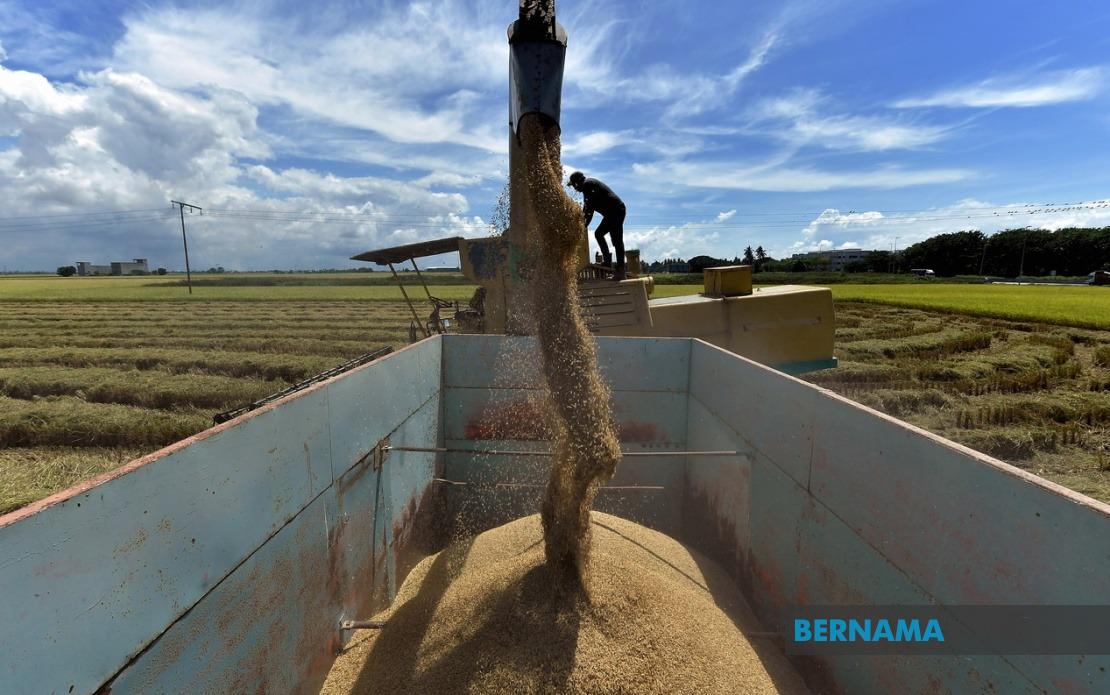
Malaysia's parliament has moved to crack down on misconduct in the domestic rice sector by overwhelmingly approving the Control of Padi and Rice (Amendment) Bill 2026, signalling heightened concern about food security vulnerabilities and illicit trading practices that have undermined farmer livelihoods. The legislation, which received backing from both government and opposition lawmakers, represents a significant overhaul of regulatory penalties that have remained static for three decades, addressing what authorities describe as a widening enforcement gap in one of the country's strategically vital agricultural industries.
The centrepiece of the amendments involves substantially higher criminal penalties designed to deter large-scale violations. Under the revised Section 22 of Act 522, individual offenders now face fines reaching RM250,000, while corporate entities and business organisations confront potential penalties of up to RM1 million. These thresholds represent a quantum leap from the previous penalty structure, which has never been formally adjusted since the principal legislation took effect in 1994—a gap that deputy minister Datuk Chan Foong Hin characterised as leaving enforcement capacity dangerously misaligned with the economic stakes involved in the multi-billion-ringgit rice and paddy sector.
The urgency behind the bill becomes clear when examining the scale of illicit activity documented by authorities. Enforcement agencies have recorded substantial seizures linked to rice smuggling operations and the diversion of domestically produced white rice into unauthorised channels, yet historical sentencing has failed to impose consequences proportionate to the profits extracted by unscrupulous operators. Chan acknowledged that the old penalty ceilings had effectively licensed criminality by failing to create sufficient financial deterrent, allowing offenders to weigh relatively minor fines against the substantial margins available through smuggling and market manipulation.
For Malaysia's padi farming community, the legislative reform addresses a persistent vulnerability to market distortions that erode farmgate prices and destabilise production decisions. Farmers cultivating rice across the major growing regions have experienced repeated episodes where illegal imports and hoarded supplies suddenly flood markets, collapsing prices precisely when harvest seasons create oversupply conditions. By increasing penalties and signalling stronger enforcement intent, the amendment aims to create protective boundaries around the domestic market that allow legitimate producers to receive stable returns and justifiable incentives for continued production.
During parliamentary debate, Datuk Idris Ahmad from Bagan Serai pressed for complementary institutional reforms, arguing that stiffer penalties alone would prove insufficient without accompanying improvements in prosecution capability. He advocated for the development of explicit prosecution guidelines calibrated to the seriousness of supply-chain offences, alongside specialised training programmes enabling prosecutors to seek sentences genuinely reflecting the gravity of violations. This observation highlights a persistent challenge in Malaysian enforcement: legislative penalties often exceed actual sentencing imposed in courts, particularly when prosecutors lack specialised knowledge or when judges lack contextual understanding of sectoral harms.
Tan Hong Pin, representing Bakri, adopted a more critical stance by recommending a comprehensive review of the proposed penalty structure itself. His intervention suggested that broad legislative increases might not adequately target particular problem areas, and he proposed establishing an independent committee mechanism to periodically evaluate the performance of Padiberas Nasional Berhad (BERNAS), the state-controlled monopoly purchasing and distributing domestically produced rice. This proposal reflects broader concerns within parliament that systemic vulnerabilities involving cartel behaviour or anti-competitive practises may require institutional restructuring beyond penalty enhancement.
The debate also surfaced technological approaches to supply-chain integrity. Azli Yusof advocated for a comprehensive digital traceability infrastructure spanning the entire padi and rice value chain, enabling authorities and industry participants to detect leakages and pinpoint disruption nodes with precision. His contribution reflects international best practices increasingly adopted across Southeast Asia, where blockchain-based and digital tracking systems have proven effective in managing complex agricultural supply chains and preventing adulteration or diversion.
Manndzri Nasib's proposal to equip every rice bag with QR codes represents a practical extension of the traceability concept, creating consumer-level access to movement data and enabling enforcement authorities to rapidly identify mislabelling and hoarding activities. Such granular tracking would establish an audit trail documenting stock movements from milling facilities through wholesale distribution to retail shelves, significantly complicating efforts by traffickers or hoarders to obscure product origins or manipulate inventory representations. The suggestion gained implicit support from the broad parliamentary consensus backing the overall bill, suggesting openness to technological integration within regulatory frameworks.
From a regional perspective, Malaysia's legislative action reflects broader Southeast Asian anxieties about food-system resilience amid climate uncertainty, supply-chain disruptions, and cross-border trafficking. Vietnam, Thailand, and other major rice producers have implemented comparable enforcement enhancements recognising that domestic price stability depends fundamentally on constraining illegal trade and protecting farmer income. Malaysia's move therefore aligns with regional trends toward stricter penalties, though implementation capacity—often a constraining factor in developing markets—will determine whether legislative intent translates into sustained enforcement.
The approval of the amendment bill also signals political consensus around food security as a non-partisan concern transcending normal government-opposition divisions. Both the ruling coalition and opposition blocs supported the measure, suggesting agreement that rice-system vulnerabilities pose risks sufficiently serious to warrant bipartisan legislative response. This alignment proves important given that sustainable food security requires multi-year commitment and consistent implementation regardless of electoral cycles.
Implementation will test whether the legislative framework translates into operational effectiveness. Success requires not only the penalty increases themselves but also the prosecution guidelines, training programmes, and digital infrastructure systems advocated during debate. The independent committee proposed to monitor BERNAS performance could institutionalise ongoing scrutiny of whether the regulatory amendments achieve their intended protective effects for domestic rice producers and whether unintended consequences emerge requiring mid-course adjustment.
For Malaysian consumers, the enforcement enhancements promise downstream benefits through more stable rice prices reflecting genuine supply-demand equilibrium rather than artificial disruptions created by smuggling or hoarding. The bill implicitly acknowledges that food security ultimately depends on maintaining a functioning domestic rice economy capable of supplying the domestic market at prices reflecting production costs plus reasonable returns—a principle increasingly recognised as foundational to social stability across the region.

