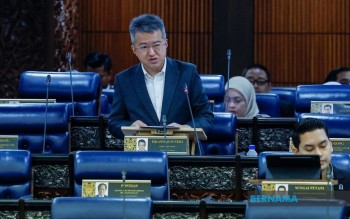
Parliament has endorsed the National Trust Fund (KWAN) Bill 2026, a significant piece of fiscal legislation designed to place the country's long-term savings mechanism on a firmer legal footing. Deputy Finance Minister Liew Chin Tong guided the bill through the Dewan Rakyat on July 16, securing majority support after substantive debate involving 15 lawmakers. The measure addresses structural vulnerabilities that have plagued the fund since its inception nearly four decades ago, introducing statutory obligations where previously only voluntary participation existed.
The genesis of this reform lies partly in the fund's chequered operational history. The KWAN reserve, established in 1988 as a vehicle for intergenerational wealth preservation, has accumulated RM22.43 billion in assets by the close of 2024. Yet this growth obscures a troubling reality: Petronas alone has bankrolled the scheme to the tune of RM13.5 billion, representing the overwhelming majority of contributions. The oil and gas giant's dominance reflects a fundamental weakness in the previous framework, which relied entirely on discretionary pledges from state-owned enterprises and other entities rather than binding legal requirements.
Public concern crystallised around the 2021 withdrawal episode, when RM5 billion was drawn from the fund without robust safeguards or clear parliamentary oversight. That episode exposed the absence of meaningful discipline governing fund usage, transforming what should have been a dedicated savings repository into an instrument potentially subject to short-term fiscal pressures. The absence of withdrawal caps, combined with deliberately vague stipulations about permissible uses, created a governance vacuum that successive administrations could exploit. Legislative reform thus became imperative to restore public confidence and insulate the fund from opportunistic depletion.
The reformed framework introduces three pillars of strengthening: consistent inflows, controlled outflows, and transparent stewardship. The contribution rate has been set at a minimum floor of 0.1 per cent, converting what was previously discretionary charity into a statutory obligation embedded in law. This seemingly modest percentage represents a philosophical shift of considerable importance, grounding the fund's funding model in compulsion rather than goodwill. Critically, Liew emphasised that only Parliament itself may alter the contribution threshold, requiring a full legislative amendment rather than ministerial decree. This constitutional protection is designed to bind successive governments to the framework's core principle: that intergenerational savings must transcend individual electoral cycles and political preferences.
The bill's passage reflects growing appreciation among Malaysian policymakers for the mechanics of sovereign wealth management. Countries across the region and globally have discovered that dedicated national funds, when properly structured, serve multiple objectives simultaneously. They provide a countercyclical buffer during economic downturns, offer a mechanism for sterilising commodity windfalls, and create institutional discipline around long-term fiscal planning. Malaysia's experience, by contrast, has often seen such reserves treated as piggy banks for immediate needs, undermining their fundamental purpose. The KWAN legislation attempts to reverse this pattern through legal mechanisms that make withdrawal and contribution changes procedurally cumbersome.
The debate itself, involving representatives from across the political spectrum, underscores recognition that fiscal prudence transcends partisan divides. Fifteen members contributed substantively to discussion, suggesting that concerns about the fund's management and potential reforms enjoy cross-party legitimacy. This consensus is strategically valuable, as it complicates any future government's ability to dismantle protective features by framing them as partisan impositions. A legislature that collectively endorses intergenerational savings becomes invested in their preservation.
For Malaysian taxpayers and citizens, the implications extend beyond technical governance. A properly functioning national trust fund serves as a hedge against resource curse dynamics that have afflicted other commodity-dependent economies. By systematically setting aside a portion of current revenues, Malaysia creates financial buffers for future generations while resisting the temptation to consume resource windfalls entirely in the present. This approach aligns with international best practices articulated by institutions like the International Monetary Fund and reflected in countries such as Norway and Singapore.
The regional context amplifies the significance of this reform. Neighbouring economies grapple with similar challenges around sovereign wealth management and fiscal discipline. Thailand's State Enterprises Policy Office, Indonesia's Sovereign Wealth Fund, and Brunei's sovereign wealth mechanisms all navigate the tension between accessing reserves for immediate priorities and preserving them for future security. Malaysia's statutory approach may influence how regional peers calibrate their own governance frameworks, potentially establishing a demonstration effect for strengthened protections elsewhere in Southeast Asia.
Looking forward, the KWAN Bill represents an experiment in institutional design aimed at constraining political discretion around fiscal resources. Whether this experiment succeeds depends partly on execution by future administrations and partly on whether parliamentary culture shifts to treat the statutory framework with genuine reverence. The bill's passage is a necessary but not sufficient condition for long-term success; it establishes the legal scaffolding, but implementation and political commitment remain crucial variables. Nonetheless, embedding intergenerational savings within statutory structures rather than relying on voluntary contributions or bureaucratic custom represents meaningful progress toward sustainable fiscal stewardship.

