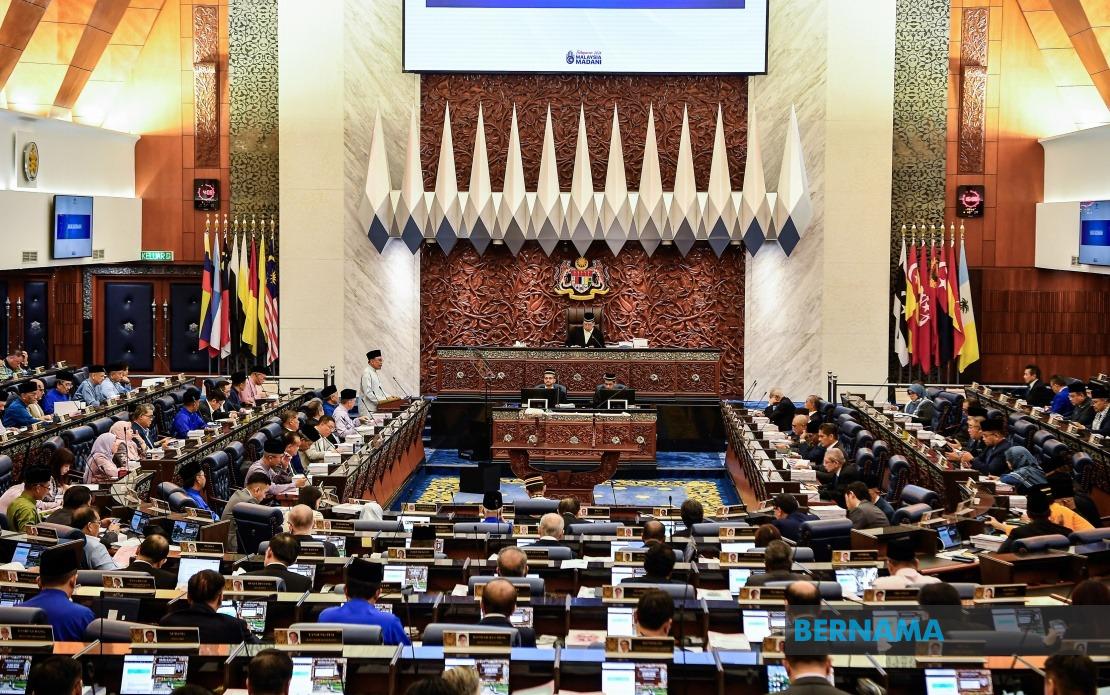
Malaysia's legislative response to evolving digital threats moved forward on 1 July when the Dewan Rakyat approved the Cybercrimes Bill 2026 through majority voice vote. The legislation, comprising 61 clauses designed to address contemporary cybercrime challenges, represents a comprehensive attempt to establish legal boundaries around malicious online conduct that has become increasingly sophisticated and damaging across Southeast Asia and globally.
The bill's provisions specifically target the creation and distribution of deepfakes—artificially generated or manipulated digital content that mimics real people—and the non-consensual sharing of intimate images that have been doctored using advanced computing technology. These offences have emerged as serious concerns in the digital age, with victims often experiencing severe psychological harm, reputational damage, and violation of personal dignity. By criminalising such conduct, Malaysia joins other nations grappling with how to protect citizens from these evolving forms of harassment and exploitation while maintaining fundamental freedoms.
Debate on the measure involved 48 Members of Parliament spanning both government and opposition benches, suggesting the bill achieved cross-party consensus on core principles. This level of parliamentary engagement indicates that lawmakers recognised the urgency of addressing cybercrime as a shared concern transcending typical partisan divisions. The breadth of support from diverse political factions strengthens the bill's legitimacy and likely signals public backing for stronger protections against digital misconduct that affects citizens regardless of political affiliation.
Deputy Prime Minister Datuk Seri Dr Ahmad Zahid Hamidi underscored during the debate that the legislation operates within carefully defined boundaries rather than granting authorities sweeping investigative powers. He stressed that the bill does not supersede existing legal frameworks, including the Official Secrets Act 1972, but instead functions alongside established statutes. This approach attempts to balance the need for law enforcement capability with constitutional protections that Malaysians have come to expect from their democratic institutions.
A central concern animating any cybercrime legislation involves the potential for government overreach—the risk that provisions meant to combat criminal behaviour might be weaponised against legitimate speech or political opposition. The Deputy Prime Minister directly addressed this anxiety by emphasising that investigative authority cannot be exercised arbitrarily but must conform to specific procedural requirements established by law. This commitment to procedural regularity represents an attempt to build public confidence that the bill will be applied fairly rather than selectively.
The legislation establishes particular safeguards around data preservation and disclosure. Before authorities may issue orders requiring the preservation of computer data, investigating officers must first satisfy themselves that the information is genuinely necessary for their investigation and that there exists a real risk of deletion, alteration, or destruction. This requirement prevents authorities from routinely demanding data preservation based on mere suspicion or fishing expeditions, instead anchoring the power to concrete investigative necessity and imminent data loss.
Regarding the disclosure of computer data to authorities, the bill mandates that any access must occur through written notice to the person or organisation controlling the data, and only within the context of a lawful investigation meeting specified legal requirements. This procedure provides data holders with transparency about what information is being sought and on what legal basis, creating accountability and enabling challenges to requests that exceed legal authority. For businesses and individuals concerned about their digital privacy, these procedural requirements offer some assurance against unreasonable intrusion.
For Malaysia's technology sector and digital economy participants, the bill carries significant implications. Cybersecurity professionals, platform operators, and online service providers must now comply with preservation and disclosure requirements, and they should familiarise themselves with the specific procedural thresholds that must be met. However, the emphasis on procedural safeguards also offers some protection to these actors, as it prevents law enforcement from imposing unreasonable or burdensome demands that lack legal foundation.
The regional context matters considerably here. Cybercrime, deepfakes, and non-consensual intimate imagery pose transnational challenges that affect all Southeast Asian societies. Singapore, Thailand, and other regional neighbours have grappled with similar legislative questions, and Malaysia's approach will inform broader regional discussions about balancing security with liberty. As digital crime increasingly crosses borders, harmonised approaches to investigation, evidence gathering, and prosecution become increasingly valuable for law enforcement cooperation.
The bill also reflects changing social understanding of what constitutes serious harm in the digital realm. Deepfakes and manipulated intimate images can destroy lives and relationships, yet traditional criminal codes often struggled to address these harms effectively. By creating specific offences tied to these distinctly contemporary forms of misconduct, the legislation acknowledges that digital-age crimes require digital-age legal responses tailored to their unique characteristics and impacts.
Implementation will prove as crucial as legislation itself. The effectiveness of the Cybercrimes Bill 2026 ultimately depends on how authorities interpret and apply its provisions, whether they respect the procedural safeguards established, and whether the judiciary reviews enforcement actions rigorously. Malaysian civil society organisations and legal experts will likely monitor implementation closely to ensure the bill achieves its protective aims without metastasising into an instrument of surveillance or political control.
Moving forward, the bill's success should be measured not merely by prosecutions secured, but by its deterrent effect on potential offenders and by public confidence that digital rights remain protected even as law enforcement gains tools to address genuine criminal conduct. For ordinary Malaysians navigating an increasingly digital world, the legislation ideally offers reassurance that malicious online behaviour will face consequences while their own data and communications remain secure from arbitrary state interference.

