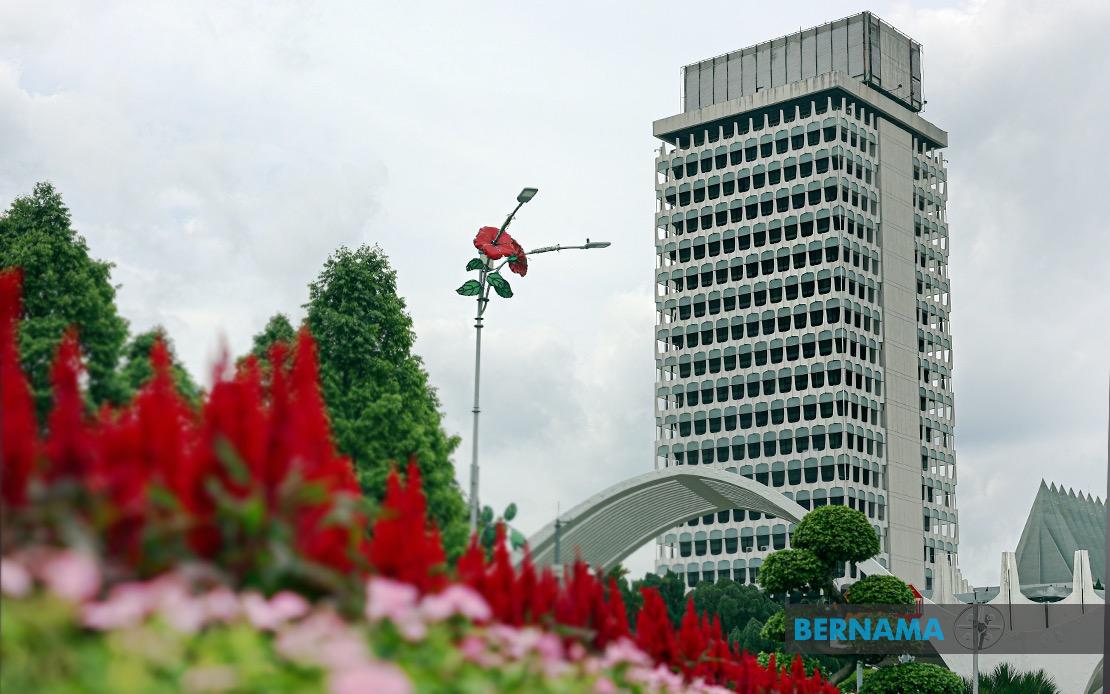
Lawmakers from across Malaysia's political spectrum converged on Parliament on August 11 to demand immediate reforms to the Tabung Haji Act 1995, signalling broad consensus that legislative overhaul is essential to insulate the pilgrimage fund from political interference. The call came during a special Dewan Rakyat sitting dedicated to examining findings from the Royal Commission of Inquiry into TH, which had identified systemic governance failures spanning 2014 to 2020. The parliamentary discourse reflected growing anxiety among both government and opposition benches that without structural legal changes, the institution serving millions of Malaysian Muslims seeking to perform the haj would remain vulnerable to the same pattern of mismanagement that had previously eroded public confidence and financial stability.
Central to the parliamentary push is Section 10 of Act 535, which grants the Minister broad discretionary power to issue general directions to TH's management. Datuk Shahelmey Yahya from Putatan argued passionately that this concentration of ministerial authority had been instrumental in precipitating TH's past crises, creating an environment where institutional interests became subordinate to political considerations. By abolishing or substantially narrowing this section, lawmakers reasoned, TH could operate as a genuine independent financial institution governed by sound economic principles rather than governmental whim. The symbolic significance of this reform extends beyond TH itself: it represents a recognition that Malaysia's regulatory framework must evolve to protect critical financial institutions serving vulnerable populations from politicisation.
The appointment mechanism for TH's Board of Directors emerged as another focal point of legislative concern. Multiple MPs, including Syed Saddiq Syed Abdul Rahman of MUDA and Mohamad Shafizan Kepli of GPS, stressed that board positions should be awarded exclusively on the basis of professional credentials, technical expertise, and demonstrable track records in financial management or Islamic banking. The current system, which has permitted active politicians to hold directorships alongside their parliamentary duties, creates an inherent conflict of interest whereby personal political advancement may override prudent stewardship of depositor funds. Institutionalising merit-based selection, these lawmakers contended, would insulate the TH board from the patronage networks that have historically compromised institutional decision-making and would restore professional standards commensurate with TH's status as a major Islamic financial entity.
Tan Sri Muhyiddin Yassin urged the government to implement the RCI's full suite of recommendations with firmness and consistency, extending beyond legislative amendments to encompass enhanced regulatory oversight by Bank Negara Malaysia. This reflects recognition that legal reform alone, without accompanying changes to supervisory mechanisms and operational discipline, may prove insufficient to prevent recurrence of past failures. The establishment of an independent and integrity-focused investment committee, alongside a restructuring of TH's investment portfolio to ensure compliance with Syariah principles, would create multiple layers of internal and external accountability. The emphasis on Bank Negara's expanded monitoring role signals an understanding that TH requires oversight from Malaysia's monetary authority to ensure alignment with national financial stability objectives and Islamic banking standards.
The geographic and political diversity of the voices amplifying these demands underscores their legitimacy. Contributions from Datuk Azman Nasrudin of Perak, Young Syefura Othman of Selangor, Datuk Seri Hasni Mohammad of Johor, and Datuk Mohd Suhaimi Abdullah of Kedah demonstrated that concern over TH governance transcends the traditional government-opposition divide. Such cross-party alignment is relatively rare in Malaysian parliamentary discourse and signals that the issue has transcended partisan calculation. MPs representing constituencies with substantial Muslim populations, who are disproportionately affected by any TH mismanagement, recognised that allowing further delays in implementing governance reforms would constitute a betrayal of public trust and a failure to protect the savings of ordinary Malaysians who have made regular contributions specifically to fulfil their pilgrimage obligations.
The RCI report, made public on July 29 following the government's decision to release it, had catalogued numerous operational and management deficiencies whilst making 25 specific recommendations for systemic improvement. By the time of the parliamentary debate in August, TH had already begun implementing approximately 75 percent of these recommendations, demonstrating some institutional responsiveness. However, the parliamentary consensus held that this progress, while commendable, would lack permanence and enforceability unless embedded within the statutory framework. Legislative amendments would elevate reforms from administrative measures that could theoretically be reversed by future management into binding legal obligations that constrain ministerial discretion and establish immutable appointment procedures.
For Malaysian depositors, particularly those from lower and middle-income backgrounds who rely on TH as their exclusive mechanism for accumulating funds for the haj, the stakes are existential. Mohamad Shafizan articulated this concern directly, warning that ordinary Malaysians who have disciplinedly saved throughout their working lives must not become casualties of governance failures rooted in institutional weakness and political capture. TH is not merely a financial services provider; it functions as a custodian of religious obligation and a repository of accumulated savings representing years of sacrifice by devout Muslims across Malaysia. When governance lapses imperil these funds, the damage extends beyond financial metrics to encompass questions of institutional trust and state responsibility for protecting citizen assets.
The parliamentary debate also implicitly addressed Malaysia's broader challenge of institutionalising good governance across the public and quasi-public sectors. TH's experience demonstrates how ministerial power, when insufficiently constrained by law and subject to minimal institutional independence, creates pathways for politically-motivated decision-making that undermines efficiency and financial integrity. By reforming TH's statutory framework, Malaysia would establish a precedent that similar institutions must operate with meaningful autonomy and that professional criteria should govern leadership selection. This could influence governance conversations surrounding other Malaysian entities where political influence has similarly compromised institutional performance and public confidence.
The expedited implementation of Act 535 amendments would require coordination between the government, the Ministry responsible for TH, and the parliamentary drafting apparatus to translate substantive parliamentary concerns into precise legislative language. Key amendments would need to define ministerial powers with greater specificity, establish transparent and merit-based processes for board appointments, clarify the independence of TH's investment decision-making, and potentially establish a permanent governance oversight mechanism. The challenge lies in crafting language sufficiently prescriptive to prevent political circumvention whilst retaining sufficient flexibility to permit TH management to respond to changing financial and market conditions.
The international dimension of these reforms merits consideration. Malaysia's Islamic financial sector has aspired to regional and global leadership, and governance weaknesses at a flagship institution like TH can undermine the nation's credibility as a responsible steward of Islamic finance. Foreign investors and international Islamic banking institutions monitor the governance standards of Malaysian financial entities, and demonstrating commitment to institutional independence and professional management through legislative action sends important signals about Malaysia's institutional maturity and commitment to financial integrity.
Moving forward, the parliamentary call for expedited amendment represents not merely a housekeeping legislative exercise but a potential turning point in Malaysian institutional governance. The broad support across party lines, the concrete nature of the proposed reforms, and the public nature of the RCI findings create momentum for substantive change. Whether the government translates this parliamentary consensus into rapid legislative action will indicate whether Malaysia is genuinely committed to insulating critical financial institutions from political capture or whether recent governance crises will be superficially addressed before institutional pressures once again create conditions for failure. The outcome will reverberate across Malaysia's financial sector and signal to citizens whether their savings in critical national institutions are adequately protected by law.

