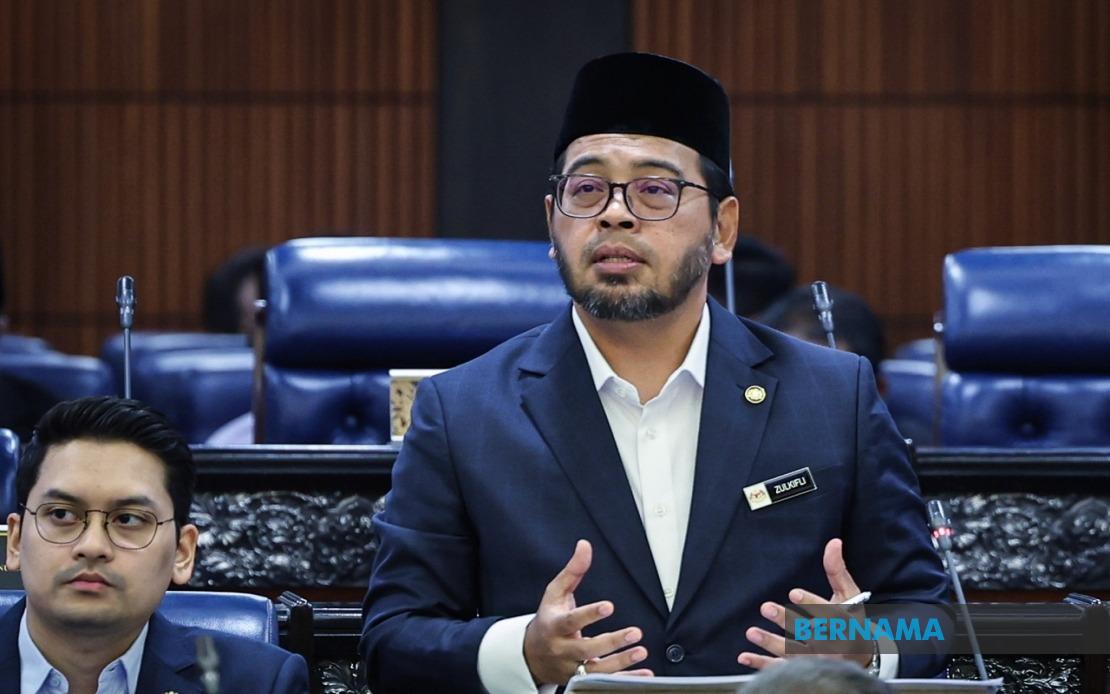
Parliament's special sitting on the Tabung Haji Royal Commission of Inquiry report on August 11 revealed deep frustration among lawmakers over systemic governance failures at the pilgrim fund, with members across political lines calling for sweeping institutional reforms and the pursuit of those responsible for past financial disasters. The marathon debate, stretching more than ten hours without interruption from morning, underscored the severity of management weaknesses that had eroded public trust in an organisation serving over 10 million Malaysian Muslims.
The core concern animating the parliamentary discussion was the staggering scale of financial losses—nearly RM13 billion tied to 14 problematic investments, with seven resulting in total losses. This figure crystallises a decade of mismanagement between 2014 and 2020, the period examined by the Royal Commission. What particularly alarmed lawmakers was the revelation that RM1 billion in losses alone stemmed from a single botched hotel leasing arrangement with Al-Rawda Real Estates Development, where an intermediary had pocketed 1.4 billion Saudi riyals (approximately RM1.5 billion) supposedly to secure accommodation for pilgrims in Madinah and Makkah, yet the party concerned subsequently defaulted on payments. This exemplifies how institutional weakness at TH had created openings for commercial arrangements to go catastrophically wrong.
Among the immediate priorities aired during the sitting was the urgent need to amend the Tabung Haji Act 1995, legislation that many MPs argued had become inadequate for modern governance demands. Lawmakers stressed that legal reform alone would be insufficient; they demanded correspondingly robust oversight mechanisms for investments and financial management. The thrust of their argument was philosophical: individual leaders come and go, but institutional systems and governance structures must be resilient enough to withstand pressure and self-interest. This reasoning aligned with remarks by Dr Zulkifli Hasan, Minister in the Prime Minister's Department (Religious Affairs), who emphasised that strength must inhere in systems rather than personalities, with all decisions anchored in law, policies, checks and balances, and depositor interests.
The financial recovery achieved since 2018 provided some reassurance to lawmakers. Dr Zulkifli detailed how the recovery and reform programme had stabilised TH's financial position while restoring governance standards and improving investment quality. A concrete benefit for Malaysian pilgrims has been the maintenance of haj costs at RM33,300 for three consecutive seasons spanning 2024 to 2026—a stability that would have been impossible without the government's intervention. However, the underlying narrative throughout the debate made clear that taxpayers had borne a heavy burden: the government had absorbed RM10.2 billion through a 2018 rescue measure involving Urusharta Jamaah Sdn Bhd, whilst TH itself had recorded a further RM2.6 billion in impairment losses between 2018 and 2025. This public injection of funds, though necessary to prevent catastrophe, served as a reminder of the scale of original mismanagement.
Crucially, lawmakers demanded that RCI findings trigger thorough and transparent investigations into alleged misconduct. The government responded positively, noting that investigations had already commenced, resulting in the detention of several individuals connected to alleged bribery, abuse of authority, and governance violations. Additionally, the administration welcomed a proposal for a multi-agency task force dedicated to scrutinising investments at immediate risk of losses—a preventive mechanism designed to catch problems before they metastasize. The government's framing of its approach centred on four pillars: investigation, enforcement action, asset recovery, and strengthening law and governance frameworks.
Parliament's engagement with the RCI report's 25 recommendations revealed broad alignment on the direction of reform, though the depth of implementation remained contested. As of July 30, TH had progressed 75 per cent of recommended measures, suggesting neither complacency nor crisis. Yet the parliamentary debate indicated that legislative will alone would not suffice; ministers underscored that genuine protection of depositor interests required cultural change within TH, depoliticisation of leadership appointments, and a transparent commitment to professional management divorced from political patronage networks. Finance Minister II Datuk Seri Amir Hamzah Azizan's detailed accounting of losses during the debate served partly to satisfy parliamentary scrutiny and partly to signal that accountability processes were underway.
The political dimensions of the debate merit examination for Malaysian and regional observers. Several opposition MPs boycotted the sitting, and this absence drew sharp criticism from government members who characterised the walkout as a failure of parliamentary duty toward 10 million TH depositors. This accusation reflects broader tensions within Malaysian politics regarding opposition participation in national causes, though it also highlights the bipartisan consensus that institutional reform at TH is essential. The RCI report itself, withheld from public release until July 29 to allow TH time for preparatory reforms, suggested a deliberate government strategy to avoid perception that the institution faced imminent collapse while simultaneously signalling commitment to accountability.
Looking forward, the pressure on TH's leadership to demonstrate tangible change is now formidable. The institution must execute remaining RCI recommendations expeditiously, submit to robust multi-agency oversight, and prove that its investment decision-making processes have genuinely transformed. For Malaysian Muslims contemplating the haj journey, the parliamentary debate ought to have provided some reassurance that serious scrutiny of TH's operations is now embedded in political oversight. For the broader Southeast Asian context, the TH saga illustrates vulnerabilities that can emerge when large institutional funds managing collective assets fall prey to governance capture, inadequate checks and balances, and misaligned incentives—challenges not unique to Malaysia.
The government's position, articulated with clarity by Dr Zulkifli and Minister Amir Hamzah, rests on the conviction that systemic reform, combined with discrete accountability measures against individuals, offers the pathway to restored confidence. Whether this proves sufficient will depend on sustained political will to see investigations through to credible conclusions, unwavering implementation of governance reforms, and a demonstrated commitment to keeping TH insulated from political interference in operational decisions. The August 11 parliamentary sitting has set expectations high: both the authorities and TH leadership now operate under intense scrutiny to deliver on their accountability promises.

