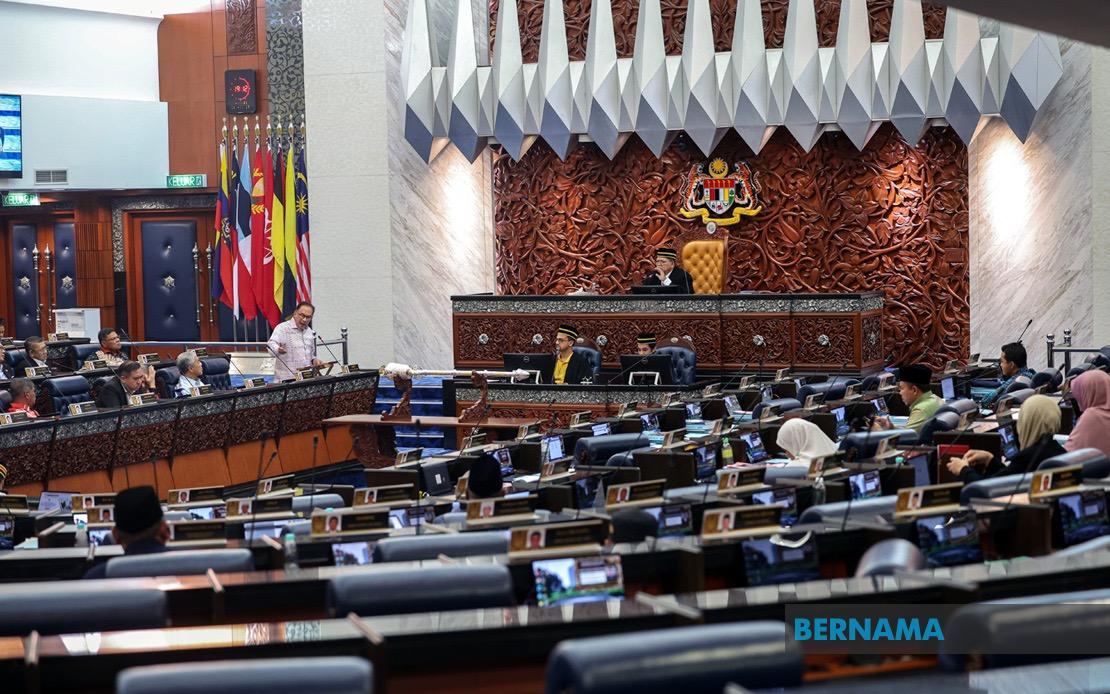
Malaysia's parliament has given the green light to channel RM14.5 billion in remaining proceeds from Malaysian Government Investment Issues (MGII) into the Development Fund, securing resources for ongoing infrastructure and capital projects. The Dewan Rakyat passed the motion through a voice vote following parliamentary discussion, marking another step in the government's careful orchestration of its borrowing and spending priorities for 2026.
The backdrop to this approval involves the government's total MGII issuance programme, which is projected to raise RM95 billion in the current fiscal year. Deputy Finance Minister Liew Chin Tong outlined the allocation breakdown when presenting the technical resolution: RM55 billion is earmarked to refinance maturing MGII securities that are reaching their repayment dates, a routine operation that prevents debt maturity cliffs. An additional RM2 billion will partially cover the redemption of Malaysian Islamic Treasury Bills (MITB), the government's shariah-compliant short-term debt instruments. The remaining RM38 billion addresses the fiscal deficit expected during 2026, reflecting the gap between government revenues and total expenditure.
The RM14.5 billion now approved for the Development Fund represents net proceeds after accounting for refinancing needs. Between January and May 2026, the government issued RM40 billion in new MGII, but after deducting RM25.5 billion required to refinance maturing securities, the net surplus available for new development investment stands at RM14.5 billion. This net-proceeds approach is crucial to understanding Malaysia's actual incremental borrowing—a distinction often blurred in public discussions about government debt accumulation.
The Development Fund itself operates through multiple revenue channels beyond MGII proceeds. Deputy Finance Minister Liew clarified that the fund receives transfers from the Consolidated Revenue Account (general government income), the Consolidated Loan Account (proceeds from all borrowing instruments including Malaysian Government Securities and external loans), loan repayments from past projects, and various receipts directly tied to development activities. This diversified funding model means that development expenditure does not depend solely on new borrowing; it incorporates various financial flows and recoveries from earlier investments.
Under Malaysia's existing legal and financial framework, the government faces a fundamental constraint: borrowing is restricted exclusively to financing development expenditure, which encompasses capital projects such as infrastructure, equipment, and long-term assets. Operating expenditure—covering salaries, subsidies, pensions, and routine administrative costs—must be funded entirely through tax revenue and non-debt government income. This distinction, which Liew emphasized during the parliamentary debate, forces hard choices about resource allocation and constrains the government's ability to borrow its way out of revenue shortfalls.
The parliamentary debate itself involved substantive questioning from two members. Datuk Seri Ismail Abd Muttalib raised technical questions about the MGII breakdown and the overall size of the 2026 issuance programme, while Datuk Zulkafperi Hanapi raised a more sophisticated concern about potential "crowding out" effects in Malaysia's domestic financial markets. This crowding-out dynamic occurs when large government borrowing absorbs the lending capacity of institutional investors such as the Employees Provident Fund (EPF) and the Retirement Fund Incorporated (KWAP), potentially pushing up interest rates and squeezing credit availability for private businesses and consumers.
Liew's response to the crowding-out concern reflected the government's broader strategic position. He pointed to evidence that the government has been reducing the volume of new borrowing year on year over the past several years, suggesting a commitment to fiscal consolidation rather than accelerating debt accumulation. Simultaneously, he reframed government securities issuance as beneficial rather than distortionary: by offering investment opportunities in Malaysian government instruments, the government enables domestic financial institutions to deploy their capital domestically while earning competitive returns. Without such opportunities, he argued, these large institutional investors might redirect capital overseas in search of returns, potentially weakening Malaysia's currency and capital account position.
This point carries weight for Malaysian policymakers concerned about capital outflows and currency stability. The EPF and KWAP collectively manage hundreds of billions of ringgit in assets; if domestic investment opportunities prove unattractive, their tendency to increase overseas allocations could exert sustained depreciation pressure on the ringgit. Government securities thus serve a dual purpose: they fund public investment while providing domestically-based institutional investors with yields comparable to international alternatives, theoretically anchoring capital within Malaysia's financial system.
The parliamentary motion also previewed future government borrowing decisions. Liew indicated that the government intends to seek approval for transferring the remaining MGII proceeds from June through December 2026 at the next parliamentary sitting, likely in the final months of the year. This sequential approach to parliamentary approval allows flexibility as economic conditions evolve while maintaining oversight and accountability; rather than blanket approval for the entire year's borrowing programme in advance, parliament reviews major transfers periodically, enabling course corrections if needed.
For Malaysian business and investors, this approval signals continuity in infrastructure financing and broader development expenditure throughout 2026. The predictability and scale of development spending influences demand for construction materials, engineering services, and related inputs. Additionally, the government's careful management of its MGII issuance—balancing refinancing, redemptions, and new borrowing—sends a signal that policymakers are monitoring debt sustainability rather than pursuing unlimited expansion of government liabilities.
The regional context matters as well. Malaysia's debt-management approach—distinguishing between development and operating expenditure, constraining borrowing to capital projects, and maintaining parliamentary oversight of major issuances—contrasts with less disciplined fiscal regimes in some neighbouring economies. Investors and credit-rating agencies monitor whether emerging-market governments maintain such frameworks or gradually erode them; Malaysia's adherence suggests relatively low near-term sovereign risk despite elevated absolute debt levels.
Looking ahead, the real test of this framework lies in whether the government can maintain the pace of development expenditure while gradually reducing overall borrowing needs. If revenues grow faster than spending, the share of development investment funded through borrowing could shrink, easing fiscal pressures. Conversely, if revenue growth disappoints or expenditure pressures mount, the constraint on operating-expenditure borrowing will force increasingly difficult political choices about subsidies, civil-service compensation, and pension obligations—choices that cannot be deferred through resort to further debt accumulation.

