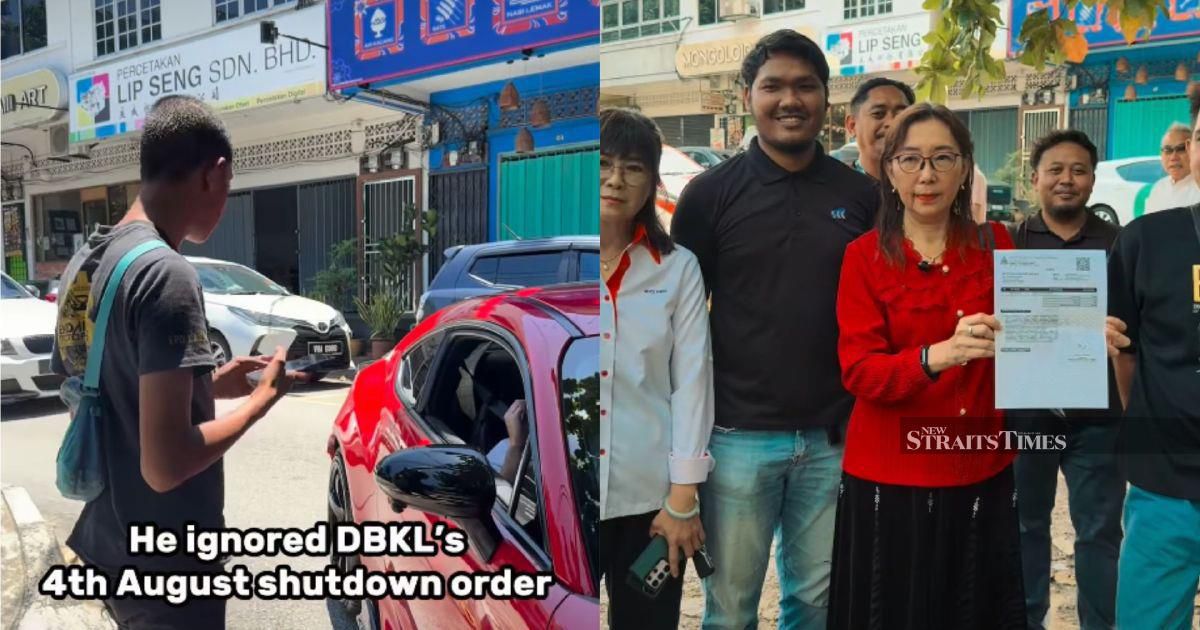
An enforcement operation in Kuala Lumpur's residential Taman OUG district resulted in the arrest of a man suspected of running an illegal parking collection racket. The arrest came after a tense confrontation along Jalan Hujan, where the suspect allegedly turned violent when challenged by an enforcement officer attempting to carry out his duties.
The operation reflects ongoing challenges faced by local authorities in managing informal and illegal parking collection schemes that operate across metropolitan Kuala Lumpur. These unofficial operators frequently position themselves in residential areas and commercial districts, collecting fees from motorists without legal authorization. Such activities not only deprive municipal authorities of legitimate parking revenue but also create uncertainty for drivers unsure whether they are paying sanctioned fees or falling victim to extortion.
The arrest underscores a pattern of non-compliance that had characterized this particular collector's activities. Despite receiving multiple enforcement notices directing him to cease operations, the suspect continued his illegal activities in the area. This disregard for formal warnings represents a deliberate flouting of municipal regulations and reflects the persistence of underground economic activity in urban Malaysia.
The alleged assault during apprehension adds a concerning dimension to the incident. Enforcement officers working in the field face physical risks when confronting individuals engaged in informal or illegal economic activities, particularly when those individuals resist intervention. The incident highlights the occupational hazards faced by municipal enforcement staff and underscores the need for adequate protection protocols during field operations.
Taman OUG, located in central Kuala Lumpur, is a mixed-use residential and commercial area that has experienced significant traffic and parking challenges in recent years. The proliferation of informal parking collection schemes in such neighborhoods suggests that legitimate parking management may be insufficient to meet demand or that illegal operators have identified opportunities to exploit gaps in enforcement coverage.
The case also reflects broader questions about how municipal authorities can effectively suppress informal economic activities that, while technically illegal, remain prevalent in urban areas across Southeast Asia. Traditional enforcement approaches—issuing notices and conducting arrest operations—address symptoms rather than underlying incentives that attract individuals to such activities.
For Malaysian drivers, incidents like this underscore the importance of verifying legitimacy before paying parking fees to unknown collectors. Many motorists inadvertently support illegal schemes by paying individuals without checking whether they represent authorized parking operators. Public awareness campaigns about legitimate parking payment methods could help reduce demand for services provided by unauthorized collectors.
The detention of the suspect will likely lead to further investigation into the scope of his operations, including how much revenue he may have collected and how long he had been conducting the scheme. Such information helps authorities assess the financial impact of illegal parking collection operations and identify whether organized networks are involved.
Local authorities in Kuala Lumpur have increased efforts to tackle illegal parking practices across the metropolitan area. These initiatives typically combine enforcement operations with community education about legitimate parking procedures and payment methods. However, the persistence of such schemes suggests that enforcement capacity remains insufficient to completely eliminate the problem.
The incident also raises questions about resource allocation within municipal enforcement divisions. Deploying officers to confront individuals engaged in street-level illegal activities requires significant personnel investment. Whether enforcement resources might be more effectively deployed through technology solutions, such as enhanced monitoring systems or mobile payment infrastructure, remains an ongoing policy question for city administrators.
Moving forward, the case may prompt broader conversations about comprehensive approaches to managing informal parking collection. This could include improved signage in problematic areas, enhanced legitimate parking availability, better officer safety training, and more effective coordination between law enforcement and municipal authorities to address organized informal schemes.

