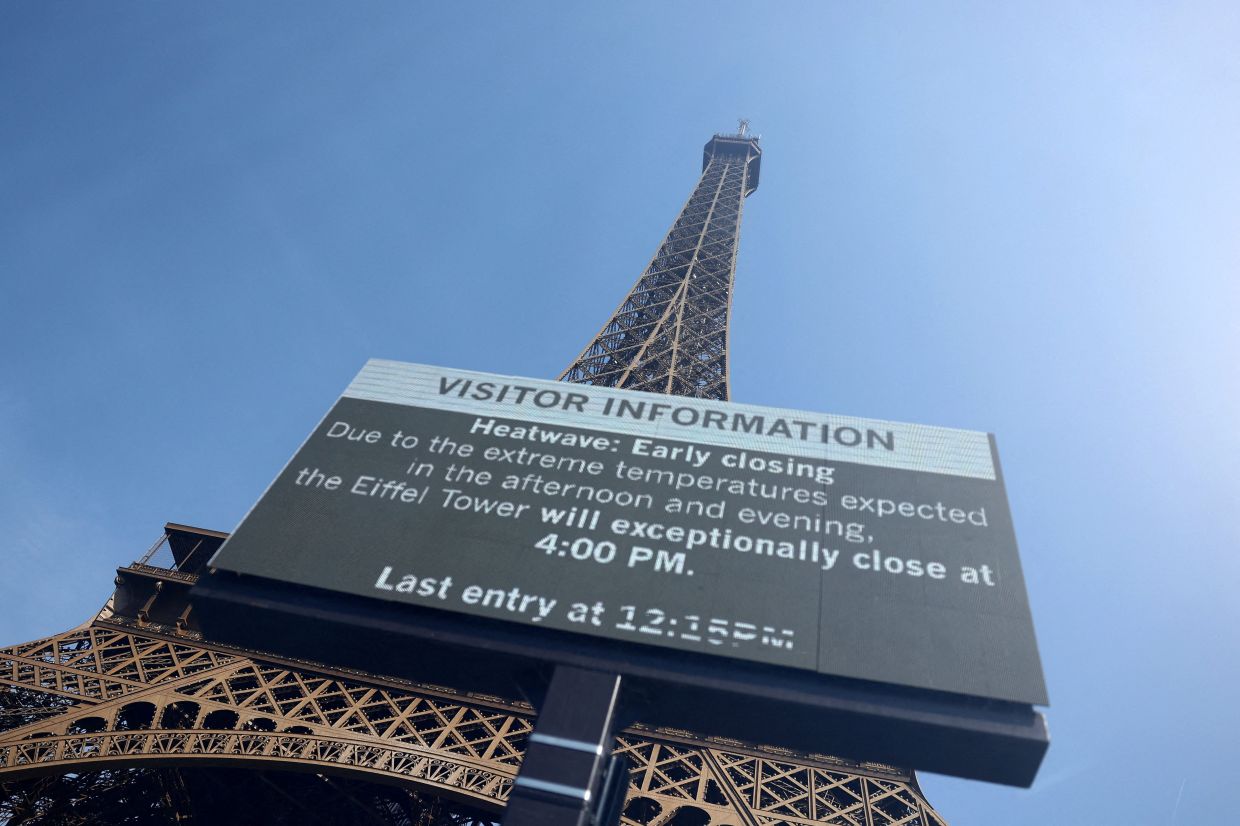
France's scorching temperatures this week have upended the Paris tourism experience, with iconic monuments forced to shut their doors early as visitors contend with oppressive heat that has shattered decades-old records. The closure of major attractions including the Eiffel Tower and Louvre Museum represents a significant disruption to one of the world's most visited destinations, affecting thousands of travellers who have saved for and planned visits to these world-renowned sites.
On June 23, France recorded its hottest day since temperature records began in 1947, triggering unprecedented measures across the capital. The Eiffel Tower, which typically welcomes more than seven million visitors annually and remains open well past midnight during peak season, announced it would "exceptionally close" at 4pm that day, with operators warning that shortened operating hours were "very likely" to continue. For a monument that has stood as a symbol of Paris for over a century, such operational constraints reflect the severity of climate pressures now facing major European infrastructure.
The human cost of these closures became starkly apparent through the experiences of disappointed visitors. Maite Blazques, a 35-year-old Spanish nurse, had spent months accumulating savings to bring her six-year-old son to Paris. The record heat forced her to completely reorganise their carefully planned itinerary, eliminating guided tours of the historic Marais district, a scenic river cruise, and the much-anticipated ascent to the Eiffel Tower's summit. Such disruptions highlight how climate extremes are no longer abstract environmental concerns but tangible obstacles affecting family holidays and personal milestones.
American tourist Tamara Dancer experienced similar disappointment when her scheduled guided tour was cancelled on Tuesday afternoon, describing the impact as having "hurt our vacation". The cancellation rippled through her plans, leaving her with limited options for experiencing Paris's cultural offerings as temperatures soared across the city.
Beyond institutional closures, the overwhelming heat forced tourists to fundamentally alter how they navigated the capital. American engineer John Beeler, aged 45, equipped himself and his wife with umbrellas, hats, and portable fans in an attempt to tolerate pavements that literally radiated heat back onto pedestrians. Yet despite these precautions, both he and his wife reported feeling suffocated not only on the streets but also in the subway system and even within their rented accommodation, eventually forcing them to relocate to an air-conditioned hotel. Such experiences underscore how extreme heat compromises the basic functionality of urban spaces, from public transportation to temporary lodging.
British retiree Drake Winners, 66, articulated a poignant reality facing visitors: Paris's distinctive character depends fundamentally on pedestrian exploration and street-level discovery. The punishing heat rendered this approach impossible, forcing him to abandon walking routes entirely and retreat instead to museums and churches where climate control offered refuge. His adaptation—seeking coolness in the Louvre rather than experiencing Paris organically—represents a diminished version of the cultural immersion most tourists seek when visiting the French capital.
The Louvre Museum, which attracts approximately nine million visitors annually and houses treasures including Leonardo da Vinci's masterpieces, has itself become compromised by climatic pressures. Museum management openly acknowledged that the vast palace, constructed and expanded across centuries by successive French monarchs and presidents, is "not sufficiently adapted to climate change". This candid assessment from one of the world's premier cultural institutions suggests that infrastructure built for historical conditions now faces existential challenges from rapidly shifting climate patterns.
The Louvre's acknowledgment of its climate vulnerability arrives amid a troubling recent history. Beyond the current heat crisis, the institution has battled a brazen US$100 million jewellery heist, experienced significant water leaks, and faced numerous other maintenance complications. These cascading challenges paint a picture of a world-class cultural repository struggling to cope with multiple pressures simultaneously, with climate extremes now ranking among the most serious operational threats.
The heat emergency extends well beyond Paris's boundaries. More than half of mainland France remains under the national weather service's highest alert level, prompting widespread precautionary measures across the tourism sector. Mont Saint-Michel, the spectacular island fortress in Normandy that ranks among France's most visited attractions outside the capital region, issued explicit warnings advising visitors to postpone their trips during the red alert period. Such coordinated closures and advisories demonstrate how extreme weather now necessitates nationwide tourism management strategies.
For Southeast Asian travellers particularly, these developments carry important implications. Malaysia's consistent equatorial heat and humidity have conditioned its residents to endure tropical temperatures, yet European cities lack the infrastructure, cultural practices, and architectural designs optimised for sustained extreme heat. Malaysians planning European trips during summer months may increasingly encounter attractions operating at reduced capacity or closed entirely. The Paris experience suggests that climate change poses not merely environmental or economic challenges, but direct threats to the tourism industry's ability to deliver the experiences visitors expect when paying premium prices for iconic destinations.
Moreover, the Louvre's and Eiffel Tower's climate vulnerabilities raise uncomfortable questions about the long-term viability of European tourism infrastructure. If structures and institutions at the pinnacle of global cultural significance struggle to accommodate current temperature extremes, the implications for smaller attractions, regional destinations, and everyday urban functionality become concerning. Southeast Asian nations, already experiencing climate pressures, may witness accelerated disruption of traditional tourism routes as European destinations become increasingly unreliable during peak seasons.
The Paris heatwave ultimately illustrates how climate change is no longer a distant future problem but an immediate operational crisis affecting major institutions and everyday visitor experiences. As extreme temperatures become more frequent and intense, tourism destinations worldwide will face difficult choices between enhancing infrastructure resilience—often at enormous cost—and accepting reduced accessibility and enjoyment for visitors. For now, tourists arriving in Paris during heat waves face the unsettling reality that some of humanity's most treasured cultural monuments may simply be inaccessible, forces of nature temporarily overriding centuries of human ambition and achievement.

