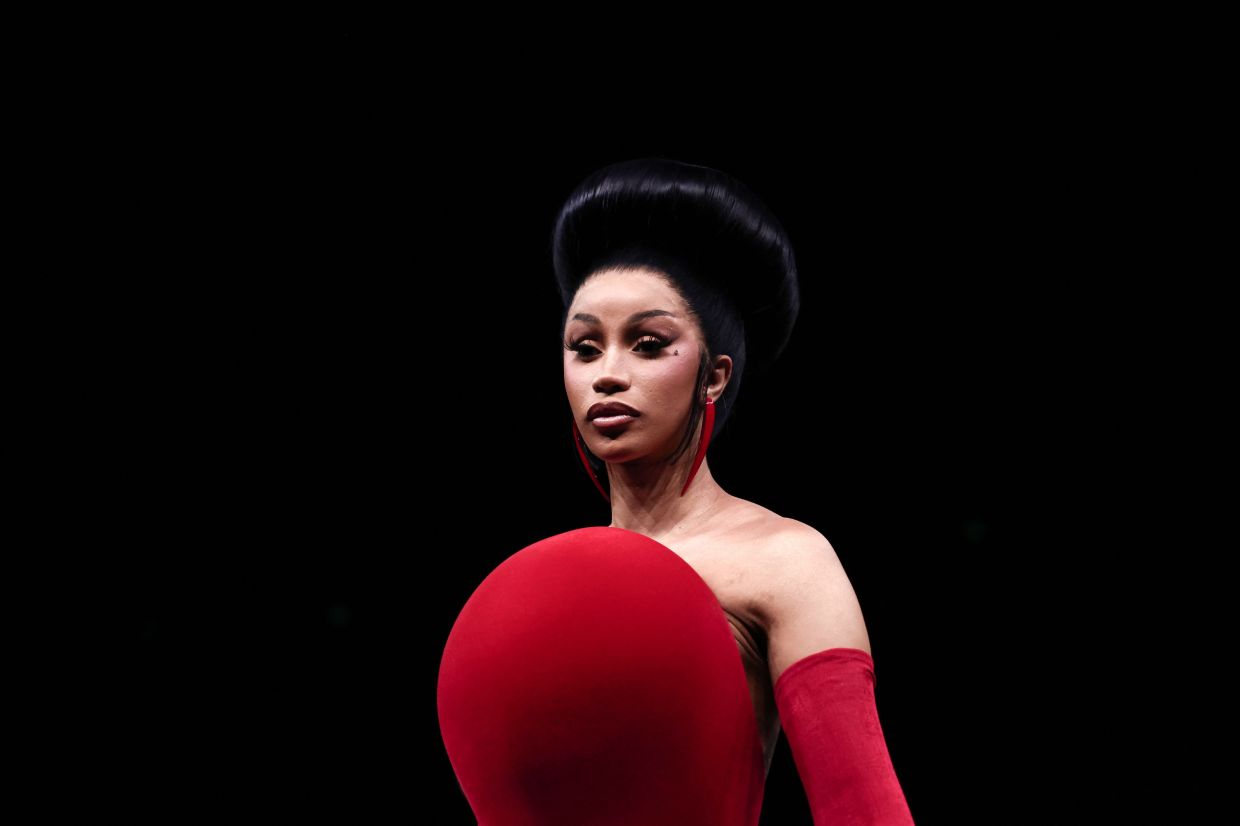
The autumn couture calendar in Paris this season presented attendees with an unexpected challenge: performing high-fashion spectacle beneath relentless heat that gripped the French capital. Celebrity guests arriving for the week's most prestigious shows confronted a genuine wardrobe puzzle—how to honour the exacting dress codes of couture presentations whilst navigating temperatures that seemed determined to derail even the most carefully curated looks. The tension between sartorial expectation and meteorological reality produced an instructive masterclass in how fashion's elite adapt when convention meets climate.
Preceding couture week, Paris menswear fashion week had already tested the mettle of style-conscious attendees under similarly oppressive conditions. By the time the couture calendar commenced, temperatures showed no sign of moderating, establishing a week-long climate that would fundamentally influence the aesthetics visible across the front rows. The persistence of the heatwave meant that celebrity stylists could not rely on their usual late-autumn playbook of layering, structured tailoring, and heavier fabrics that normally dominate this season.
The solutions that emerged revealed how contemporary fashion prioritises intelligent adaptation over rigid adherence to seasonal tradition. Rather than abandoning elegance for pure comfort, celebrities and their teams engineered looks that honoured both demands. Loose and comfortable silhouettes became the baseline for many attendees, allowing air circulation whilst maintaining the sophisticated proportions expected at haute couture presentations. The shift represented a quiet revolution in how luxury fashion functions when environmental conditions demand flexibility.
Menswear choices demonstrated this principle vividly. Artists including Bad Bunny and Hudson Williams appeared in oversized suiting that embraced relaxed tailoring conventions typically reserved for more casual occasions. The styling frequently omitted shirts entirely, leaving the jacket to function as a standalone piece, whilst lighter colour palettes—creams, soft greys, and pale neutrals—actively worked against heat absorption. This approach preserved the essential silhouette of menswear whilst acknowledging that traditional construction simply cannot function during extreme temperatures without compromising the wearer's comfort and, consequently, their on-camera presence.
Womenswear solutions took a distinctly different trajectory, with exposed shoulders emerging as perhaps the week's defining aesthetic principle. Yet this prevalence reflected pragmatism rather than calculated sex appeal. Figures including Malaysian acting legend Tan Sri Michelle Yeoh exemplified this approach, arriving in elegantly restrained black designs that exposed the shoulder line—a modification that reduced fabric coverage without sacrificing the overall sophistication the occasion demanded. The exposed shoulder effectively became fashion's compromise with the weather, a minor adjustment that yielded substantial practical benefits.
The resurgence of sundress silhouettes and their haute couture equivalents provided another window into how established house codes adapted to circumstance. Priyanka Chopra's scalloped gown captured this energy, offering the breathability and visual lightness of holiday dressing whilst maintaining the construction and presentation values associated with runway collections. These pieces succeeded because they preserved couture's essential vocabulary—tailoring precision, luxurious execution, careful draping—whilst acknowledging that full-coverage evening wear simply performs poorly in thirty-degree heat.
Fabric selection emerged as the invisible hero of the week's most successful looks. Silk and its derivatives dominated, offering the crucial combination of luxury perception, temperature regulation, and visual sophistication that other materials struggle to achieve simultaneously. Lightweight constructions throughout the week's presentations demonstrated how technical advancement in textile engineering allows designers to maintain the hand-feel and drape associated with premium materials whilst reducing thermal load. The prevalence of these choices among well-dressed attendees indicated a collective understanding that fabric intelligence represents the primary tool for reconciling competing demands.
Hemline adjustments, whilst subtler than silhouette shifts, contributed meaningfully to the week's overall aesthetic direction. Shorter lengths became noticeably common, departing from autumn couture's traditional emphasis on floor-length formality. These adjustments offered both ventilation and visual lightness, allowing movement and generating the impression of ease that overly structured, ankle-length constructions cannot achieve when worn in extreme heat. The cumulative effect suggested that couture itself might benefit from reconsidering its relationship with hemline conventions as climate change makes extreme temperature events increasingly routine.
Townspeople and accessories played supporting roles in the week's warm-weather strategy. Singer-songwriter Ejae's understated black folding fan exemplified how practical items can integrate into high-fashion aesthetics without appearing out of place or breaking the visual coherence of carefully coordinated looks. The fan functioned as both functional tool and visual accent, suggesting that couture's gatekeepers might expand their thinking around what constitutes appropriate accessorisation when environmental conditions demand it.
Cardi B's approach stood in deliberate contrast to these accommodations, her sculptural and exceptionally fitted silhouette prioritising fashion statement over physiological comfort. Her appearance underscored an important reality: couture still contains space for uncompromising aesthetic vision, even when circumstances encourage moderation. Her look functioned as a calculated challenge to the week's prevailing pragmatism, a reminder that high fashion's purpose includes pushing boundaries rather than merely executing comfort.
The week ultimately illustrated how contemporary fashion responds to pressure through evolution rather than revolution. Rather than abandoning couture's essential values, the attending celebrities and their stylists engineered modifications that preserved luxury's core whilst acknowledging external constraints. For Malaysian and Southeast Asian observers accustomed to warm-weather fashion challenges throughout the year, the Paris week offered instructive examples of how global luxury standards might adapt to climatic realities that persist well beyond summer seasons.

