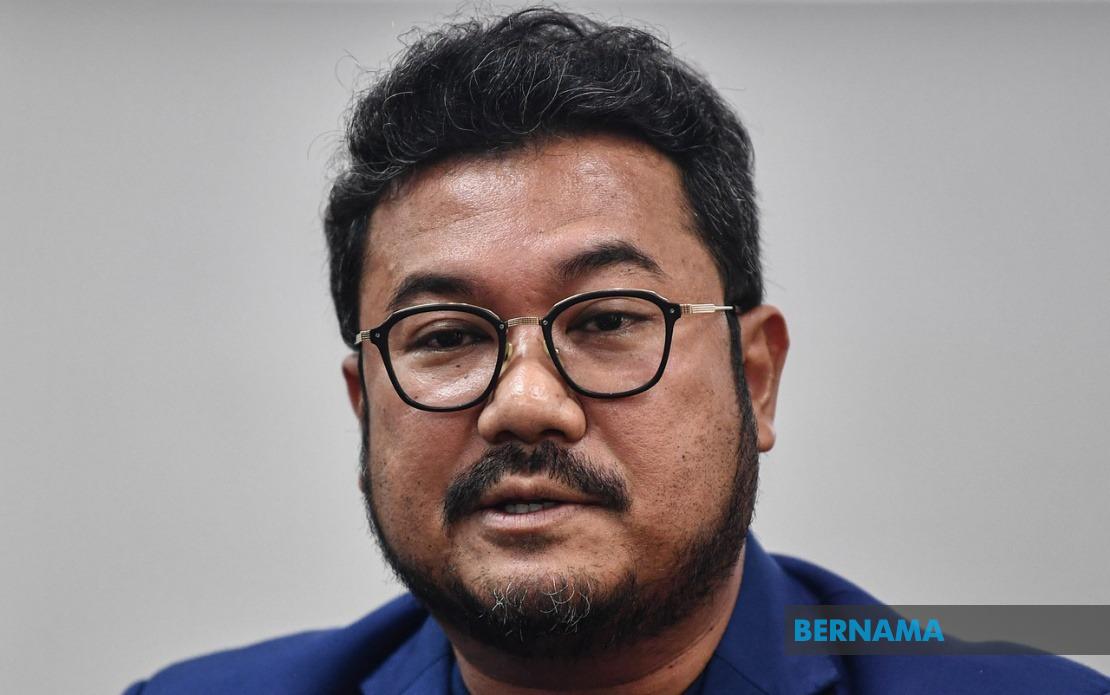
The Malaysian Paralympics Council president, Datuk Seri Megat D Shahriman Zaharudin, has entered electoral politics for the upcoming Negeri Sembilan state election. Announced at a candidate unveiling ceremony in Nilai on Wednesday, he will represent Parti Peribumi Bersatu Malaysia (Bersatu) for the Seri Menanti seat—one of 24 party candidates fielded in the 16th state assembly polls.
Bersatu president Tan Sri Muhyiddin Yassin revealed the slate at the formal candidate announcement event held at Dewan Aminah Hamid. The party has committed significant resources to its Negeri Sembilan campaign, positioning the race as a major test of its electoral strength outside federal politics. Zaharudin's candidacy represents an attempt by Bersatu to diversify its candidate base by drawing on figures with established profiles in non-political spheres, particularly sports administration.
Beyond his role leading the Malaysian Paralympics Council, Zaharudin also serves as president of the Negeri Sembilan Canoe Association (NESCA), underscoring his deep community involvement in the state. His background in managing national disability sports programmes and regional water sports development could appeal to voters seeking candidates with demonstrable administrative experience outside traditional political circles. The decision to nominate him reflects Bersatu's strategy of leveraging accomplished individuals to strengthen its credentials in state-level contests.
The Negeri Sembilan election timeline is now firmly established. The Election Commission has designated the following Saturday as nomination day, when all candidates must formally submit their papers. Early voting will take place on July 28, allowing essential workers, security personnel, and others eligible under election rules to cast their ballots ahead of the general public. The formal polling day is set for August 1, giving voters a single day to determine the composition of the 36-seat state assembly.
This electoral schedule compresses the campaign period to approximately two weeks between nomination and election day, intensifying the competition among parties vying for control of the state government. For candidates like Zaharudin, this rapid timeline requires swift mobilisation of campaign machinery and ground-level organisation. Seri Menanti, his assigned constituency, will be one of multiple battlegrounds where Bersatu seeks to consolidate or expand its representation.
Negeri Sembilan has historically been a significant political battleground in peninsular Malaysia, with competition between major coalitions determining not only state governance but also shifting factional balance within national politics. The 16th state election carries particular weight given the fluid political environment following recent federal developments. Bersatu's performance in the state will offer insights into the party's organisational capacity and electoral appeal beyond its federal alliance commitments.
For the disabled community and Paralympic athletes in Negeri Sembilan specifically, Zaharudin's candidacy may signal increased attention to disability sports funding and inclusion policies—traditionally under-resourced areas in state-level development planning. His track record managing national paralympic programmes positions him as a potential advocate within the state assembly for disabled persons' rights and sports development. This intersecting profile of sports administrator and political aspirant represents an evolving trend in Malaysian politics, where expertise-driven candidates increasingly challenge traditional party stalwarts.
The broader Bersatu slate reveals the party's competitive positioning across different demographic segments and geographic constituencies. With 24 candidates in a 36-seat assembly, Bersatu aims to secure a plurality or potential majority, though the actual distribution of seats will depend on vote splits, boundary demographics, and performance relative to rivals fielding their own slates. The party's ability to attract candidates with established community credentials like Zaharudin may prove decisive in closely contested marginal seats.
Meanwhile, the compressed campaign window—roughly 15 days between nomination and voting—reflects the Election Commission's operational approach and potentially influences campaign strategy. Parties must maximise the early voting period to secure supporters unable to vote on polling day, while simultaneously sustaining momentum through the intensive final campaign push. For individual candidates, this acceleration rewards those with pre-existing visibility and organisational networks, potentially advantaging experienced administrators like Zaharudin who carry established credibility in their professions.
The Seri Menanti constituency outcome will be watched closely as a barometer of Bersatu's electoral prospects heading into any future national polling. The party's performance in state elections directly influences its bargaining power within federal coalitions and its capacity to deliver votes in subsequent national contests. Should Zaharudin and other Bersatu candidates perform strongly, the party gains momentum and validation for its organisational model; conversely, weakness would prompt questions about internal discipline and electoral viability.
For Malaysian readers following Negeri Sembilan politics, the election represents a chance to assess how different parties are adapting candidate selection strategies in response to changing voter preferences and demographic shifts. The inclusion of accomplished non-politicians like Zaharudin alongside conventional party members suggests an emerging pragmatism in electoral competition, where technical expertise and administrative track records increasingly feature alongside party loyalty as selection criteria.

