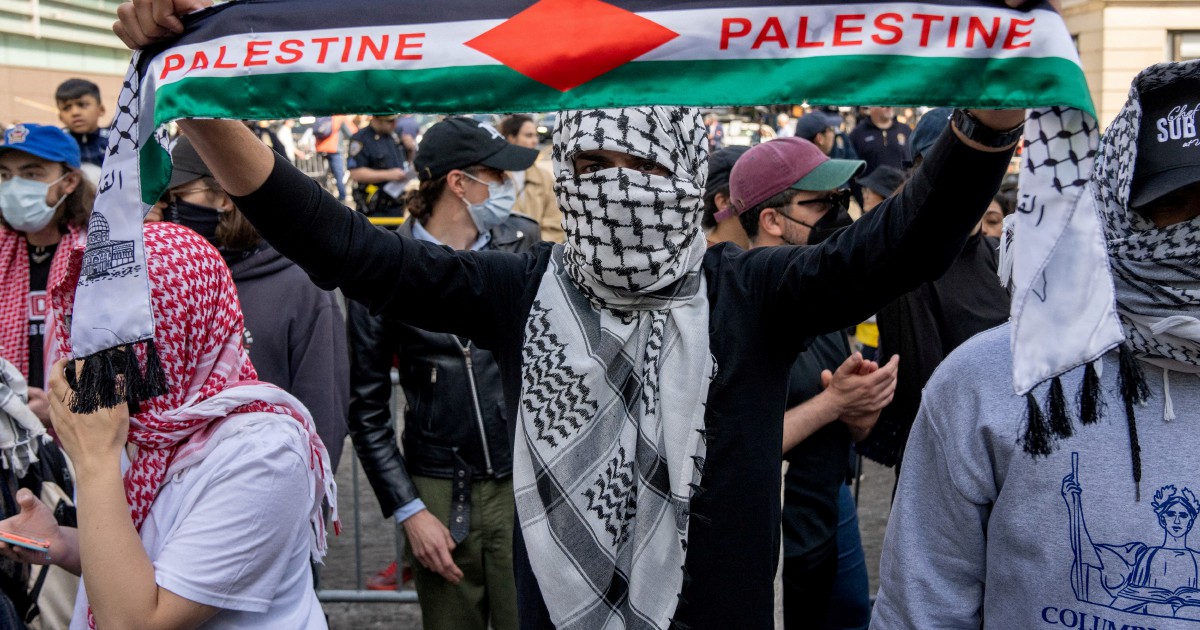
A consortium of current and former Palestinian students and staff members have initiated legal action against Columbia University in New York federal court, accusing the prestigious Ivy League institution of subjecting its Palestinian community to systematic discriminatory treatment beginning in the latter months of 2023. The lawsuit signals an escalating conflict between university administrations and communities supporting Palestinian causes amid ongoing geopolitical tensions.
The timing of the allegations coincides with the intensification of the Israeli-Palestinian conflict following October 2023, when the dispute between Hamas and Israel transformed into a large-scale military confrontation in Gaza. During this period, Columbia University emerged as a flashpoint for campus activism, with numerous demonstrations and encampments organised by pro-Palestinian student groups drawing international media attention and prompting vigorous responses from university leadership.
Palestinian and Arab communities across the United States have reported heightened scrutiny and hostile treatment at educational and commercial institutions in the months following the conflict's escalation. This lawsuit represents one of the more formal legal challenges seeking redress, alleging that Columbia University failed to protect its Palestinian students and employees from harassment whilst simultaneously targeting them through disciplinary actions disproportionate to those imposed on other groups.
The complainants argue that the university's handling of pro-Palestinian speech and activities violated established principles of academic freedom and non-discrimination enshrined in American civil rights law. Their legal team contends that Columbia maintained disparate standards when addressing campus demonstrations, applying stricter enforcement mechanisms to Palestinian-affiliated student organisations whilst permitting other groups considerably greater latitude to express their viewpoints.
Universities across North America and Europe have grappled with balancing free expression protections against concerns about harassment and antisemitism during this period. The competing claims highlight the genuine difficulty institutions face when navigating deeply polarised geopolitical disputes on campus. Administrators must accommodate diverse student populations holding passionate views whilst preventing environments where any group feels systematically excluded or intimidated.
For Malaysian readers and the broader Southeast Asian context, this litigation offers insight into how international universities handle minority community rights and institutional accountability. Malaysia's own diverse student population includes Palestinians and Palestinians in diaspora, many of whom attend North American and European universities. The outcome of such cases carries implications for how international educational institutions treat politically vulnerable student communities, setting precedents that potentially affect Asian students abroad as well.
The lawsuit filing also reflects broader patterns of litigation emerging at American universities during this period. Students and staff at multiple institutions have initiated legal action alleging discriminatory practices, creating a new legal landscape surrounding campus speech, institutional responsibility, and equal treatment protections. These cases remain largely unresolved, with courts still developing jurisprudence around discrimination claims related to geopolitically sensitive student speech.
Columbia University's response to accusations has historically emphasised its commitment to supporting all students whilst maintaining institutional safety standards. The university has defended its disciplinary actions as responses to conduct that disrupted campus operations and violated codes of conduct applicable to all students regardless of background. However, complainants argue these justifications mask selective enforcement reflecting institutional bias rather than neutral policy implementation.
The broader educational landscape reveals how universities across the United States continue confronting questions about institutional obligations toward minority communities. These institutions manage competing pressures from donors, external political actors, and internal constituencies all holding strong positions regarding the Israeli-Palestinian conflict. Legal challenges like Columbia's lawsuit force explicit examination of whether institutional responses remain consistent with stated commitments to equality and non-discrimination.
The case proceeds amid continuing scholarly and policy discussion about defining discrimination in university contexts. Unlike employment or housing discrimination claims built on decades of established precedent, discrimination allegations rooted in political speech and campus activism remain legally unsettled territory. Courts must determine whether targeting students based on Palestinian identity or support for Palestinian causes constitutes prohibited discrimination, or whether universities retain discretion to manage disruptions without regard to demographic identity.
For Southeast Asian observers, particularly those from Malaysia where Palestinian solidarity carries significant social and political weight, this litigation demonstrates how Western institutions navigate minority rights claims when geopolitical sensitivities intersect with institutional governance. The outcome may influence how international universities globally approach similar disputes, potentially establishing precedents affecting students from various backgrounds and political affiliations.
The lawsuit's ultimate resolution remains uncertain, but its filing already signals that American universities face sustained legal pressure to justify their responses to student activism during the Israel-Gaza conflict. Whether courts will recognize the discrimination alleged by Palestinian students and staff, or uphold institutional authority to manage campus conduct, will substantially influence how universities balance competing values and constituencies in subsequent years.

