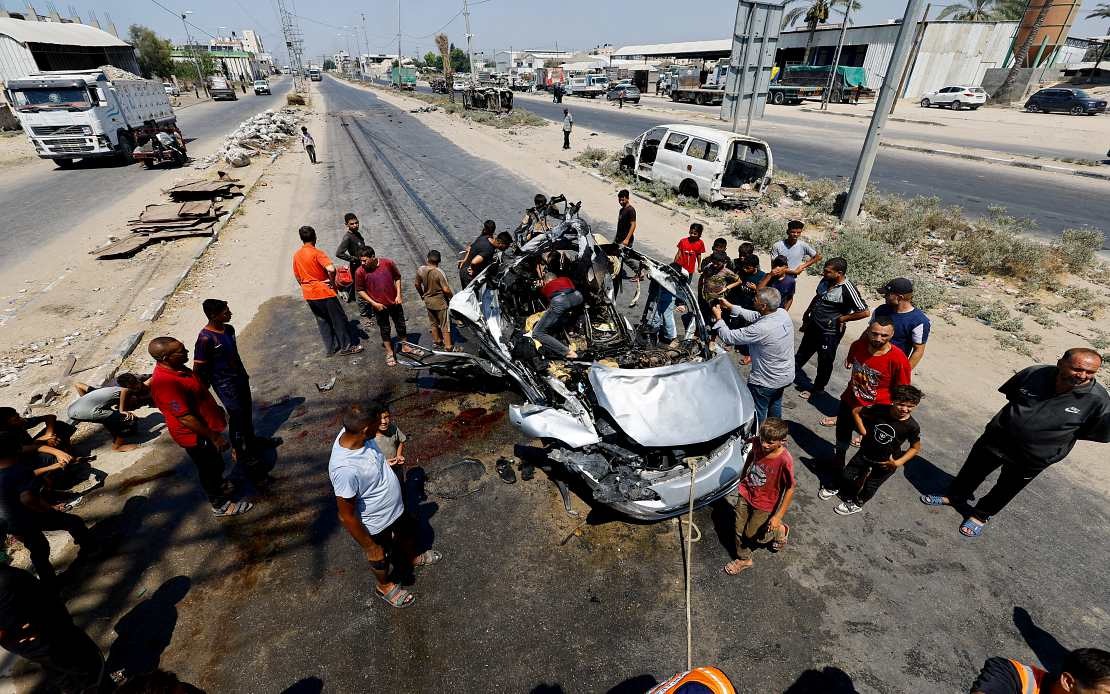
Palestinian officials intensified their criticism of Israel's military conduct on Monday, asserting that Israeli forces have continued offensive operations even as both parties ostensibly agreed to implement the second phase of a ceasefire accord. According to statements from the Palestine News and Information Agency (WAFA), Palestinian presidential spokesperson Nabil Abu Rudeineh characterized the situation as one where an agreement existed on paper while death continued on the ground, reflecting a deepening divide between the announced terms and ground realities.
Abdeineh's remarks underscore a fundamental dispute over implementation and compliance. The Palestinian leadership contends that the ceasefire arrangement has failed to achieve either a comprehensive halt to hostilities or meaningful protection for Palestinian civilians. This assertion carries significant implications for regional stability, as it suggests that the diplomatic framework, however carefully negotiated, has proven insufficient to command full adherence from all parties involved. The disconnect between signed agreements and actual military activities remains a persistent challenge in Middle East peace efforts.
The Palestinian spokesperson specifically highlighted ongoing strikes against refugee camps and populated villages, which he characterized as systematic efforts to dismantle Palestinian infrastructure and resolve the refugee question through demographic pressure rather than negotiation. This pattern of accusations reflects broader Palestinian concerns that military operations continue to target civilian areas and infrastructure essential to Palestinian life, undermining the stated purpose of any ceasefire arrangement.
From a regional perspective, the Palestinian allegations carry weight that extends beyond immediate Gaza dynamics. For observers across Southeast Asia and globally, the situation demonstrates how ceasefire agreements can collapse when underlying political disputes remain unresolved. Malaysia and other Muslim-majority nations in the region have consistently monitored developments in the Israeli-Palestinian conflict, viewing them through both humanitarian and strategic lenses concerning regional solidarity and international law principles.
The Palestinian leadership has escalated its appeals to international institutions, particularly directing pressure toward the UN Security Council. Abu Rudeineh called for the international body to exercise its responsibilities by imposing concrete measures on Israeli authorities to enforce the second phase agreement, terminate military operations across Gaza and the West Bank including East Jerusalem, and provide protective mechanisms for Palestinian civilians. Such appeals reflect Palestinian frustration with what they perceive as inadequate international enforcement mechanisms.
The spokesperson's emphasis on continued impunity carries particular significance within international law discourse. By arguing that Israel's freedom from consequences encourages further breaches of international humanitarian law, Palestinian officials are attempting to frame the issue as one of accountability and deterrence. This argument has resonated within various UN forums and among nations that prioritize international legal frameworks, though it remains contentious among parties with different perspectives on the conflict.
Palestinian officials have consistently linked immediate ceasefire compliance to broader peace architecture. Abu Rudeineh reiterated that sustainable regional stability remains impossible without ending Israeli occupation, ceasing military aggression, and establishing pathways toward a negotiated settlement. The Palestinian position explicitly references the Arab Peace Initiative and envisions an independent Palestinian state with East Jerusalem as its capital, framing immediate compliance issues within this longer-term political framework.
For Malaysian policymakers and observers, the Palestinian statements illustrate the tension between tactical agreements and strategic resolution. The failure of phased ceasefire implementations to achieve either immediate or sustained peace highlights the complexity of mediated settlements where fundamental political disagreements persist. Malaysia's consistent advocacy for Palestinian rights and its participation in various UN mechanisms means developments here remain strategically relevant to domestic foreign policy positioning.
The continued allegations of ceasefire violations by both sides suggest that diplomatic momentum, even when producing signed agreements, cannot substitute for genuine political compromise on underlying issues. The international community's capacity to enforce such agreements remains severely constrained, particularly when permanent Security Council members hold divergent positions on the conflict's resolution. This structural limitation affects not only Gaza but also broader UN effectiveness in other regional conflicts.
Palestinian efforts to mobilize international pressure reflect recognition that military outcomes alone cannot achieve Palestinian objectives. The emphasis on UN Security Council action and international protection mechanisms indicates a strategic pivot toward international law and institutional mechanisms. However, the persistence of allegations despite announced agreements suggests that such institutional approaches may require significant strengthening or alternative enforcement mechanisms to prove effective.
The broader implications for regional peace architecture remain troubling. When ceasefire agreements prove ineffective at halting hostilities, they can actually undermine confidence in negotiated settlements, making future agreements harder to achieve. This dynamic affects not only immediate parties but also mediators and the international community's credibility in facilitating conflict resolution elsewhere. For a region like Southeast Asia with its own transnational disputes, the lessons from failed ceasefire implementation carry cautionary weight regarding the necessity of comprehensive political settlements.

