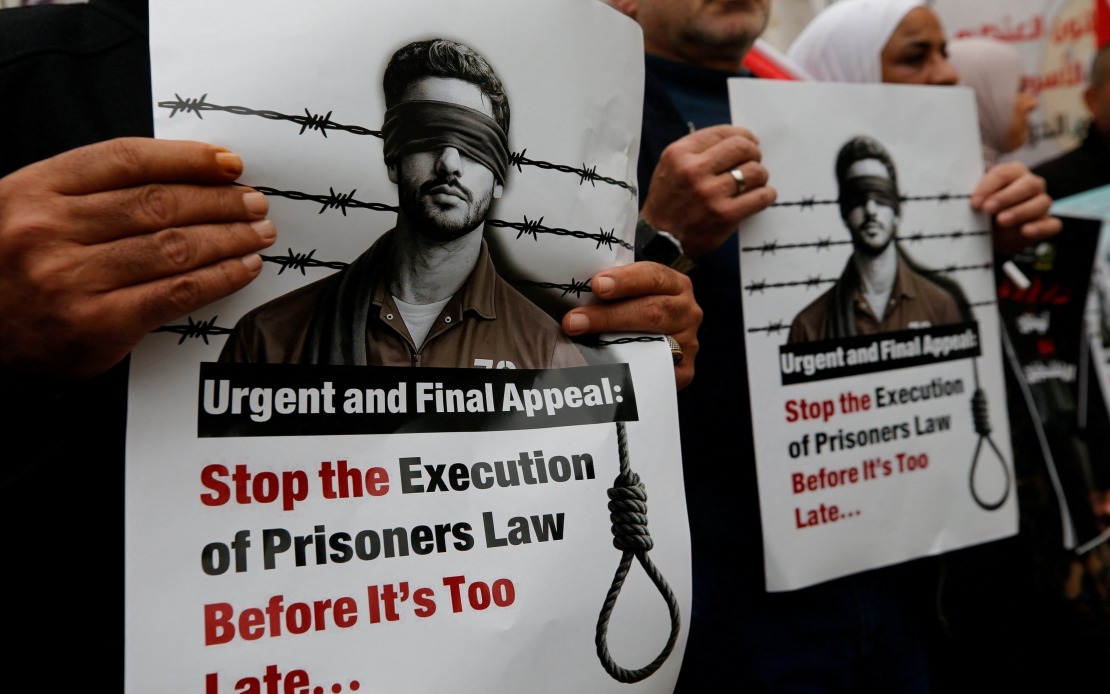
The Palestinian government has released a comprehensive situation report documenting what it describes as widespread and systematic human rights violations perpetrated against Palestinian detainees held in Israeli custody. In its latest Situation Report #92 covering late June, the Prime Minister's Office presented allegations spanning detention practices, prison conditions, and broader casualties from ongoing conflicts affecting Palestinian territories. The report underscores mounting concerns within Palestinian governance about the treatment of prisoners and detainees in what it characterises as an occupied territory under Israeli administration.
According to the Palestinian documentation, more than 3,376 Palestinian administrative detainees remain incarcerated without formal charges or trial proceedings. This figure represents a significant portion of the broader Palestinian detention population, which the report indicates exceeds 9,500 individuals across the West Bank and occupied Jerusalem. The administrative detention system allows authorities to hold individuals without conventional criminal charges, a practice that human rights organisations have long scrutinised. Additionally, the Palestinian government notes that 360 Palestinian children are among those currently detained, raising particular concerns about juvenile detention standards and procedures.
The report details allegations of torture and inhumane treatment within detention facilities. Palestinian prisoners' institutions have documented what they characterise as systematic abuse, including beatings, prolonged stress positions, electrocution, sleep deprivation, and starvation. The allegations extend to sexual violence against detainees. These claims, if substantiated, would represent serious violations of international humanitarian law and the Geneva Conventions, which establish baseline protections for detainees regardless of the conflict context. The gravity of such allegations carries implications for international oversight and accountability mechanisms examining the Israeli-Palestinian conflict.
Beyond direct physical abuse, the Palestinian report emphasises conditions within detention facilities themselves. According to the documentation, prisoners face inadequate food and water provisions, deliberate disease transmission, and systemic denial of medical care. Three pregnant Palestinian women currently detained reportedly experience particularly harsh circumstances, including starvation, humiliation, intensive interrogation, strip searches, and inadequate prenatal healthcare access. These allegations concerning pregnant detainees have particular resonance in discussions about vulnerable populations and their protection under international law, which establishes heightened protections for expectant mothers in custody.
The psychological and physical aftermath of detention extends beyond prison walls. The Palestinian government reports that hundreds of released detainees carry severe physical and psychological trauma from their incarceration. Some former detainees reportedly died shortly after release, with the Palestinian authorities attributing these deaths to abuse sustained while in custody. This pattern of post-release deterioration raises questions about rehabilitation services, medical assessment protocols, and the long-term health consequences of detention practices. Such outcomes have broader implications for Palestinian society's capacity to reintegrate returning detainees and address trauma at a population level.
The casualty figures presented in the Palestinian situation report extend beyond detained individuals to encompass the broader humanitarian impact of the conflict. The documentation indicates that since early October 2023, at least 73,054 Palestinians have been killed in Gaza, including more than 21,638 children, with an additional 173,480 injured. In the West Bank and occupied Jerusalem, the report records 1,175 Palestinians killed, including 246 children, with 12,919 others injured as of late June. These figures, if accurate, indicate a sustained humanitarian crisis affecting civilian populations across Palestinian territories, with particular severity among children and other vulnerable groups.
Beyond casualty counts, the Palestinian report documents collateral losses affecting professional and informational infrastructure. More than 1,700 health workers have been killed, compromising medical capacity across Palestinian territories and affecting civilian access to healthcare. Additionally, 262 journalists and media workers have been killed, raising concerns about press freedom and information dissemination. The Palestinian government also reports 11,200 Palestinians remain missing, suggesting ongoing uncertainty affecting families and communities. These figures collectively illustrate the multifaceted humanitarian toll extending into institutional and professional sectors critical to civil society functioning.
During the same period covered by the situation report, the Palestinian government documented significant security incidents within the West Bank and occupied Jerusalem. Between June 22 and 28, Palestinian authorities recorded 362 military operations by the Israeli army, 47 shooting incidents excluding airstrikes, and 114 incidents characterised as settler terror attacks. This pattern of sustained military and armed activity underscores the ongoing security tensions and periodic violence affecting Palestinian civilian areas. Such operational tempo suggests persistent instability and civilian vulnerability across Palestinian territories, with implications for economic activity, service delivery, and general public safety.
Parallel to documenting conflict-related concerns, the Palestinian Cabinet has pursued domestic governance reforms aimed at institutional strengthening and modernisation. President Mahmoud Abbas approved amendments to the Value Added Tax law as part of a comprehensive institutional development initiative centred on the Ministry of Finance. The reforms include establishing a Higher Council for Public Revenues and modernising financial administration systems. These measures reflect Palestinian efforts to align domestic financial systems with international standards while combating tax evasion and smuggling that undermine revenue collection and public service delivery. Such administrative reforms address structural governance challenges while the territory simultaneously manages humanitarian crises and security concerns.
The Palestinian government has also prioritised digital transformation across sectors. The Cabinet approved a General Policy for the Telecommunications and Information Technology Sector spanning 2026 to 2028, targeting acceleration of digital governance, enhancement of government digital services, and improved citizen accessibility. Within healthcare, Palestinian authorities endorsed replacing paper health insurance cards with digital smart cards as part of broader healthcare modernisation. These initiatives reflect recognition that institutional effectiveness and service delivery increasingly depend on digital infrastructure and data management systems. However, implementing such programmes amid ongoing conflict, humanitarian challenges, and detention crises presents substantial practical and resource allocation complexities that Palestinian institutions must navigate simultaneously.
The juxtaposition of detention and human rights allegations with domestic reform initiatives reflects the Palestinian government's multi-front governance challenges. While pursuing long-term institutional development and modernisation, Palestinian authorities simultaneously document and respond to immediate humanitarian emergencies and alleged human rights violations. This dynamic underscores the complexity facing Palestinian governance structures, which must balance advocacy regarding international humanitarian concerns with internal institutional capacity-building. For regional observers including Malaysian audiences, the Palestinian situation illustrates broader tensions between conflict management, accountability mechanisms, and state-building efforts in territories experiencing sustained political instability and humanitarian stress.

