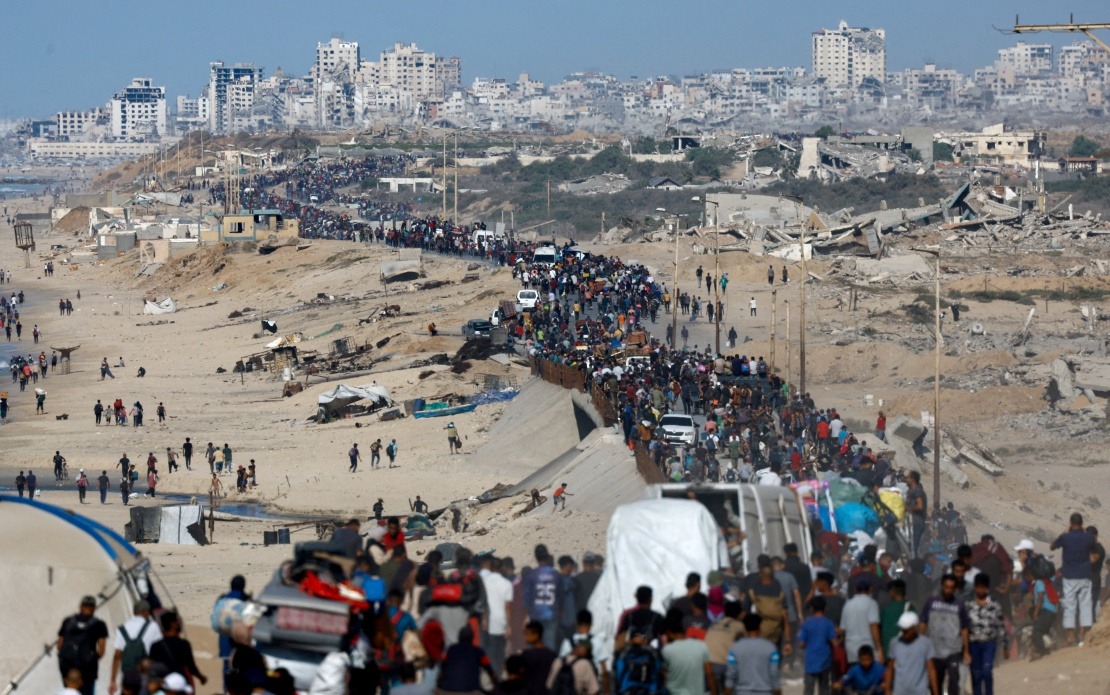
The Palestinian Foreign Ministry has issued a forceful statement defending the United Nations Relief and Works Agency for Palestine Refugees in the Near East (UNRWA), rejecting what it characterises as coordinated attempts to erode the organisation's operational authority at a moment when humanitarian needs in Gaza remain catastrophic. The ministry's position reflects escalating tension between regional and international actors over UNRWA's future role, particularly following public statements questioning the agency's place in post-conflict reconstruction efforts.
UNRWA operates as a lifeline delivering essential services across multiple dimensions of Palestinian society. The agency runs health clinics providing primary care to populations otherwise without access to functional medical infrastructure, operates schools educating hundreds of thousands of children, distributes emergency food assistance, and maintains social protection programmes. Its reach extends across the Gaza Strip, the West Bank including East Jerusalem, and into refugee camps across neighbouring countries where Palestinian displacement populations have resided for decades. For many Palestinians, UNRWA represents the only accessible pathway to education and healthcare, making its institutional continuity a question of human survival rather than mere administrative preference.
The Palestinian response underscores the agency's status as anchored in international legal frameworks rather than temporary crisis response. UNRWA operates under explicit UN mandate and international law protections, a distinction the ministry emphasises to counter suggestions that the agency might be replaced by other mechanisms. This legal foundation matters significantly because it places UNRWA beyond unilateral restructuring by individual states, though the statement's defensive tone suggests Palestinian officials perceive real pressure against the agency's privileges and immunities under international convention.
Fundamentally, the Palestinian position rejects the underlying logic of proposals to wind down UNRWA operations. The ministry argues that humanitarian assistance, however generously provided, cannot substitute for addressing root causes of Palestinian displacement and statelessness. By framing UNRWA's work as addressing symptoms rather than causes, the statement reasserts Palestinian claims to refugee rights enshrined in United Nations General Assembly Resolution 194, which affirms the right of return for Palestinians displaced during 1948 and subsequent conflicts. This historical reference signals that accepting UNRWA's dissolution would implicitly abandon legal positions Palestinians have maintained across generations.
The timing of Palestine's statement reflects concrete pressure from influential quarters. The Trump administration's Board of Peace, established in January to advance negotiations toward Gaza settlement, publicly declared that UNRWA "has no place in the new Gaza," framing the agency's potential removal as part of transcending what it characterises as perpetual aid dependency. This rhetoric, combined with references to turning a "page" on conflict dynamics, suggests a vision of post-war governance fundamentally different from current arrangements. For Palestinians, such language implies not reconstruction under existing frameworks but wholesale replacement of institutions they have invested with survival functions.
Understanding the stakes requires grasping UNRWA's scale within Palestinian territories. The agency operates hundreds of schools serving over half a million students, runs more than 150 health centres, and manages housing assistance for populations living in refugee camps. In Gaza specifically, where infrastructure has been devastated by military operations claiming over 73,000 lives according to Palestinian counts, UNRWA's institutional capacity becomes almost irreplaceable. No regional or international actor has demonstrated ability to rapidly substitute for services UNRWA currently delivers, suggesting that elimination without functional alternatives would create humanitarian catastrophe.
The Palestinian ministry's insistence that Gaza remains an integral part of occupied Palestine, rejecting terminology fragmenting Palestinian geography, addresses another dimension of the UNRWA debate. Proposals to restructure international assistance sometimes implicitly treat Gaza as separate from West Bank governance structures, a linguistic shift Palestinians view as politically charged. By reaffirming Palestinian unity across dispersed territories, the statement resists institutional arrangements that might formalise territorial separation or diminish claims to territorial integrity and self-determination.
For Southeast Asian observers, the UNRWA controversy illuminates broader questions about international humanitarian architecture and state sovereignty in conflict resolution. UNRWA represents a specific model where international institutions embed themselves within civilian populations over decades, becoming integral to societal functioning. When powerful states signal intent to restructure or eliminate such agencies, it raises questions about whether humanitarian systems can maintain independence or inevitably become subject to political recalibration. Malaysia, hosting significant Palestinian diaspora communities and maintaining consistent support for Palestinian causes within international forums, likely views this debate through lenses shaped by post-colonial sensitivity to external intervention in regional affairs.
The Palestinian argument that humanitarian assistance cannot substitute for political rights reflects a principled position increasingly tested by global practice. Numerous conflict zones have seen humanitarian organisations tasked with functions that properly belong to states, creating dependencies that later complicate political settlement. Yet the Palestinian case involves not simply aid provision but institutional infrastructure sustaining populations denied basic state services, a distinction Palestinians emphasise. Whether international community will respect UNRWA's existing mandate or permit its restructuring remains unresolved, but the stakes for Palestinian populations' immediate welfare are undeniably substantial and warrant sustained regional attention.

