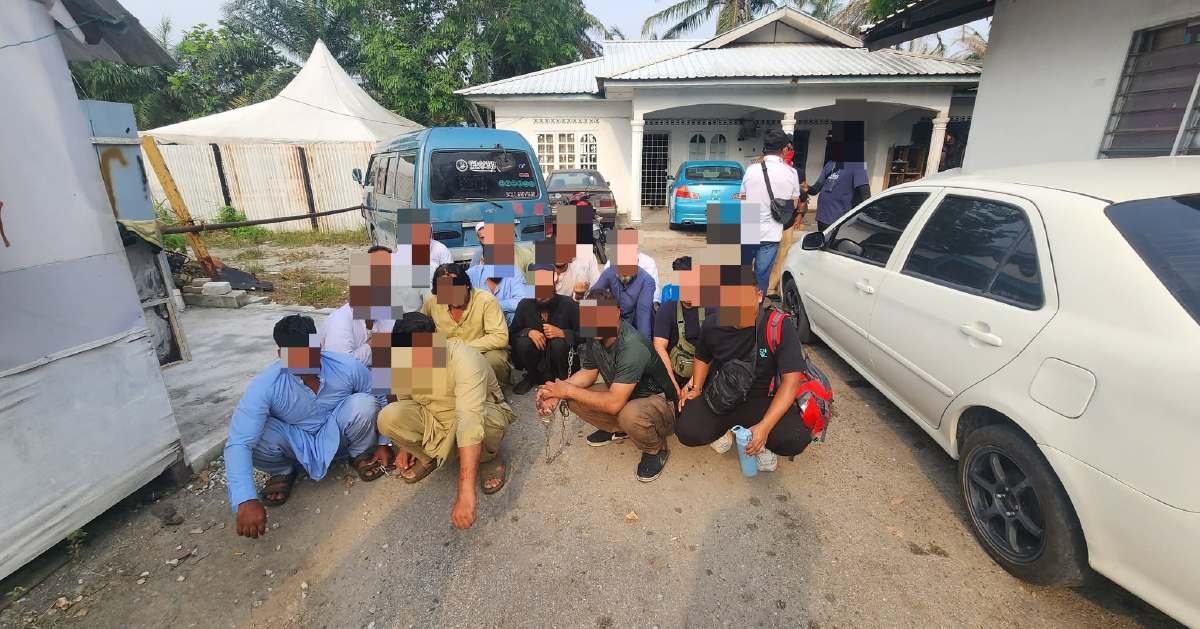
Immigration Department officers have achieved a major breakthrough in combating organized vehicle crime in the Klang Valley, shutting down what authorities describe as a sophisticated parts dismantling and distribution network. The operation, conducted at premises along Jalan Kapar in Klang, resulted in the arrest of 20 individuals suspected of involvement in the systematic theft and resale of automobile components. Among those detained is a Pakistani national believed to have orchestrated the entire enterprise, marking the authority's success in targeting foreign-led criminal networks operating within Malaysia's borders.
The syndicate's operating model appears to have centered on acquiring vehicles—through means authorities are still investigating—before systematically dismantling them into saleable components. The Jalan Kapar location appears to have served as a processing and distribution hub, where stolen parts would be prepared for sale in the secondary market. Such operations exploit Malaysia's position as a regional automotive hub and the continued demand for replacement parts from independent workshops and individual mechanics across the country.
The involvement of a Pakistani national as the alleged mastermind reflects a broader trend of foreign-led criminal organizations establishing roots in Malaysia's underworld. Intelligence suggests that such networks leverage international connections to facilitate the movement of high-value stolen goods across borders, potentially linking Malaysian thefts to export markets in South Asia and the Middle East. The hierarchical structure, with a foreign coordinator directing local operatives, is characteristic of organized crime syndicates that compartmentalize operations to minimize individual legal exposure.
For Malaysian motorists and vehicle owners, the implications of this bust extend beyond the immediate arrests. Organized parts theft directly impacts the cost of vehicle maintenance and repair across the country. When legitimate replacement parts become scarce due to systematic theft, workshop operators face pressure to source components through questionable channels, inadvertently supporting criminal networks. This dynamic creates a vicious cycle where theft feeds demand for stolen parts, which in turn generates profits that fund further criminal activities.
The vehicle parts market represents a particularly vulnerable sector within Malaysia's economy because it operates with limited traceability for individual components. Unlike vehicles themselves, which carry identification numbers and registration documentation, a stolen car door, engine block, or transmission can be installed in multiple different vehicles without obvious evidence of its illicit origin. This fungibility makes parts theft significantly harder to detect and prosecute compared to vehicle theft, allowing syndicates to operate with reduced detection risk.
The Klang location is strategically significant in this context. The industrial corridor running through Klang and adjacent areas of Selangor hosts numerous legitimate automotive workshops, parts dealers, and manufacturing facilities. This concentration of industry-related infrastructure provides excellent cover for criminal operations—a chop shop on Jalan Kapar might appear indistinguishable from a dozen legitimate automotive businesses operating in the same vicinity. The area's accessibility via major highways and ports also facilitates rapid movement of stolen components out of the region.
Authorities have indicated that the dismantling operation was sophisticated enough to suggest this was not a small-time enterprise. The presence of 20 suspects and the apparent operational scale suggests the syndicate may have been processing multiple vehicles weekly. The total value of stolen parts recovered, the duration of the operation, and the geographic spread of its customer base will likely emerge as investigation details become public. Such figures would help quantify the true impact of this single criminal network on Malaysia's automotive ecosystem.
The timing of this operation arrives amid growing regional concern about organized vehicle crime. Throughout Southeast Asia, stolen vehicle parts represent a significant transnational smuggling commodity, with evidence suggesting coordination between criminal groups across Thailand, Malaysia, and Indonesia. By neutralizing the Pakistani-led operation in Klang, Malaysian authorities may have disrupted not just a domestic criminal enterprise but potentially a regional supply chain that extended beyond national borders.
The immigration authorities' lead role in this operation rather than traditional police agencies underscores the foreign involvement angle. This suggests that immigration and enforcement agencies have been developing intelligence on transnational criminal networks and their local operatives. The successful coordination and scale of the raid implies sophisticated surveillance and investigative groundwork preceded the arrests—investigators likely spent weeks or months mapping the organization's structure, identifying key players, and gathering evidence before moving to apprehend suspects.
For the automotive industry and law enforcement, the bust represents both success and warning. Success because the rapid dismantling of a substantial operation demonstrates growing investigative capacity and inter-agency coordination. Warning because the existence of such a well-established syndicate suggests gaps in supply chain security and vehicle documentation that criminals continue to exploit. Industry analysts expect pressure will now increase on the legitimate sector to implement stronger authentication protocols for parts and stricter documentation requirements.
The investigation into the 20 arrested individuals will likely reveal additional details about sourcing, distribution networks, and customer relationships. Cooperation agreements or plea deals with lower-level operatives could provide authorities with intelligence about other similar operations potentially active in the Klang Valley and wider Selangor region. The focus on the Pakistani mastermind suggests he may have maintained communications with international counterparts, potentially exposing regional smuggling routes and networks.
Government agencies have indicated that dismantling foreign-led criminal operations remains a priority as Malaysia works to improve investor confidence and public safety. The message sent by this bust—that organizing major theft syndicates, particularly from outside the country, carries substantial enforcement risk—may deter similar operations. However, the underlying economics that make vehicle parts theft attractive to criminal entrepreneurs will persist until demand management, supply chain security, and market traceability improve across the automotive sector.

