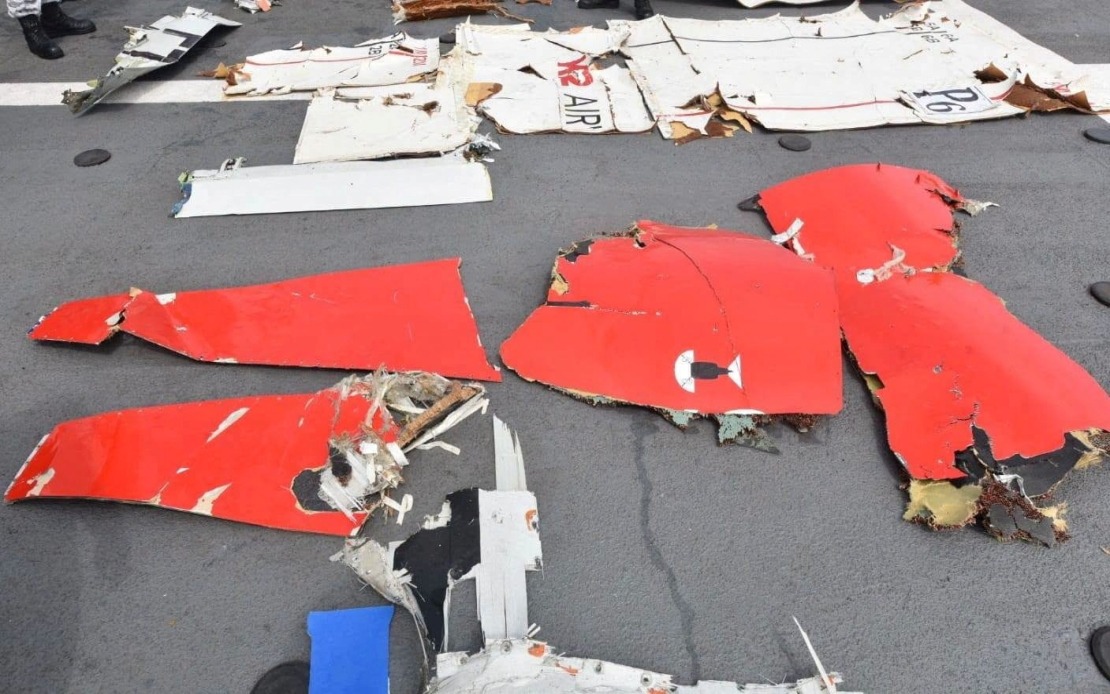
The Pakistani Navy has located wreckage fragments from a K2 Airways cargo plane that vanished over the Arabian Sea, but efforts to locate the five crew members have so far proved unsuccessful. Naval personnel discovered debris from the Boeing 737 near Amara, positioned west of Karachi, concluding an intensive 12-hour search operation that commenced after contact with the aircraft was lost late on Tuesday evening. Pakistan's airport authority confirmed the discovery through a statement posted on social media platform X, though the announcement underscores the grim reality that no sign of the aircrew has emerged.
The aircraft, which was operating a cargo service from Sharjah in the United Arab Emirates to Karachi, experienced navigation difficulties immediately before contact was lost. According to the airport authority's investigation so far, the flight crew reported technical complications with their navigation systems, after which the plane rapidly descended and disappeared from air traffic control radar. The sequence of events suggests the crew faced serious challenges that may have prevented effective communication or corrective action during the critical final moments of flight.
Monsoon weather conditions have significantly impeded recovery and search efforts across the Arabian Sea. The onset of seasonal rains has generated rough seas that not only complicate the physical recovery operation but also restrict the ability of naval vessels to conduct thorough searches over the affected waters. These environmental factors create additional uncertainty regarding the potential discovery of crew members or additional wreckage that may be dispersed across a wide marine area.
K2 Airways, the private Pakistani airline operating the aircraft, has identified the five crew members as two pilots, two flight engineers, and one loadmaster. The airline published their names through a Facebook announcement and stated that the company is extending full cooperation to Pakistan's Civil Aviation Authority alongside other relevant government agencies. The airline's statement emphasised ongoing prayers for the safety of its colleagues, reflecting the profound uncertainty that persists despite the discovery of physical wreckage.
Pakistan's Prime Minister Shehbaz Sharif acknowledged the tragedy on Wednesday, expressing personal sorrow regarding the incident and extending condolences to the families of the missing crew members. The statement from the nation's highest office underscores the significance of the event and demonstrates official recognition of the gravity facing the families awaiting news of their relatives.
K2 Airways commenced operations in 2018, establishing itself as a relatively recent addition to Pakistan's aviation sector. The Boeing 737 involved in the incident had originally entered service in 1999 as a passenger aircraft before undergoing conversion to cargo configuration in subsequent years. This retrofitting has become standard practice within the global aviation industry as aging passenger fleets are repurposed for freight operations, which generally involve less stringent scheduling pressures than passenger services.
The disappearance of the aircraft carries broader implications for aviation safety discussions across South Asia. Pakistan's aviation sector has experienced multiple high-profile incidents in recent years, and this occurrence will likely prompt renewed scrutiny of maintenance protocols, crew training standards, and navigational equipment reliability. For Malaysian and Southeast Asian carriers operating in similar regions with comparable weather patterns and infrastructure, the incident serves as a reminder of the particular challenges posed by monsoon-season operations and the critical importance of robust safety management systems.
The investigation into the aircraft's loss will necessarily focus on the navigation system failures that the crew reported before contact was lost. Understanding whether these were genuine technical malfunctions, human error in system operation, or some combination of factors will be central to determining causation. Such investigations typically extend over many months and require cooperation between Pakistani authorities and potentially international aviation safety organisations, depending on the complexity of findings.
For families of the missing crew and the broader K2 Airways organisation, the current phase represents a period of profound uncertainty. While discovery of wreckage confirms the fate of the aircraft itself, the continued absence of the crew members leaves open slim possibilities that require exploration through exhaustive search procedures. However, given the severity of the incident and the environmental conditions involved, official and public expectations regarding crew survival are necessarily constrained by the realities of the circumstances.
The incident highlights the vulnerability of aviation operations in regions where advanced weather systems intersect with complex maritime geography. The Arabian Sea's seasonal monsoon patterns present navigational and meteorological challenges that demand heightened preparedness from both aircraft operators and air traffic control authorities. As air cargo operations continue expanding throughout Asia in response to e-commerce growth, ensuring safety standards remain paramount becomes increasingly critical for all stakeholders involved.

