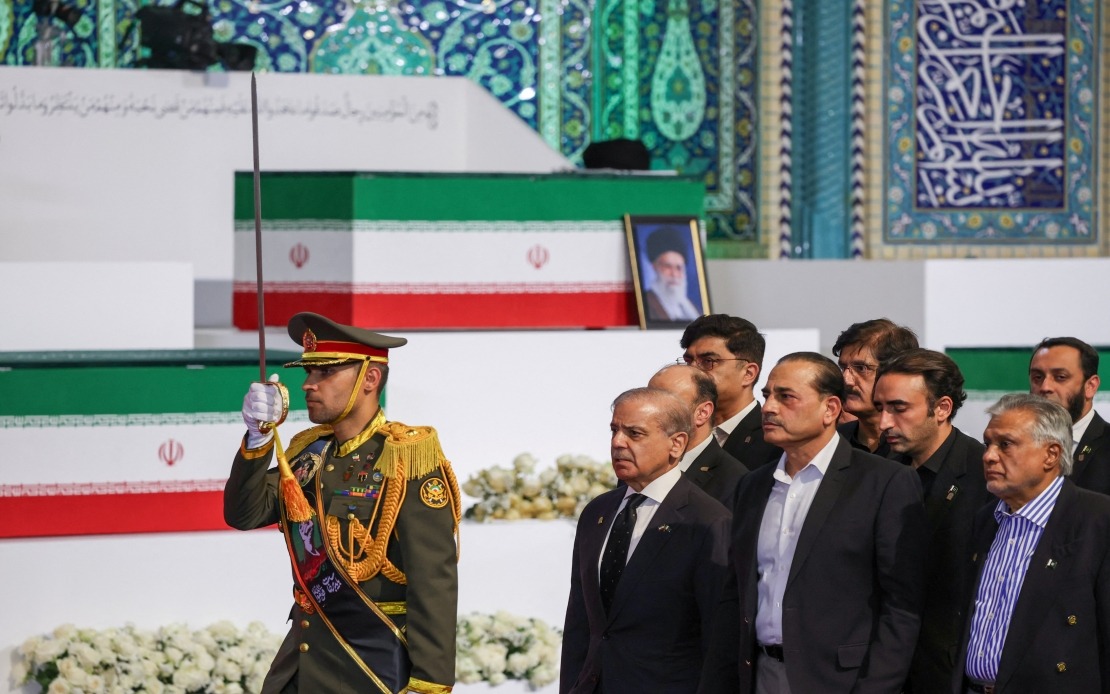
Pakistan demonstrated its commitment to strengthening ties with Iran by deploying one of the largest and most senior delegations to attend the state funeral of Supreme Leader Ayatollah Ali Khamenei, drawing expressions of deep appreciation from Iranian officials. The funeral ceremony, held in Tehran on Friday, brought together dignitaries from approximately 100 nations, including Malaysia, Bangladesh, Saudi Arabia, Turkiye, Qatar, Oman, Egypt, Russia, Iraq, China and India, all gathered to pay their final respects to Khamenei and his family members, who died in what Iran described as a United States and Israeli attack on his compound in the Iranian capital on February 28.
Prime Minister Shehbaz Sharif headed the Pakistani contingent, signalling the highest level of official representation and reflecting Islamabad's assessment of the funeral's diplomatic significance. The delegation's composition underscored Pakistan's intention to send a message of solidarity and respect. Accompanying the Prime Minister were several pivotal figures in Pakistan's government and military establishment, including Deputy Prime Minister and Foreign Minister Ishaq Dar, Chief of Army Staff Field Marshal Syed Asim Munir, National Assembly Speaker Sardar Ayaz Sadiq, Interior Minister Mohsin Naqvi, and Information Minister Attaullah Tarar. Additionally, Bilawal Bhutto Zardari, chairman of the Pakistan People's Party, attended the ceremony, representing one of Pakistan's major political parties and demonstrating broad-based national consensus on the gesture.
Iranian Ambassador to Islamabad Reza Amiri Moghadam expressed profound satisfaction with Pakistan's participation, taking to social media to emphasize that his country viewed the delegation as testimony to the bonds binding the two Islamic republics. In his statement, Moghadam highlighted that Pakistan fielded not merely a distinguished contingent but the single largest delegation from any nation at the funeral, a fact he underscored as particularly significant. The ambassador articulated that such a substantial and elevated presence demonstrated "enduring friendship, mutual respect, and fraternal bonds between our two brotherly nations," language that reflected Iran's gratification and suggested the event carried weight beyond ceremonial courtesy.
The Iranian official further elaborated that Pakistan's gesture represented a "meaningful and historical" moment reflecting the depth of connections and shared values that have anchored Iran-Pakistan relations across decades of regional turbulence. This characterization suggests that Tehran interprets Pakistan's diplomatic move as confirmation of a strategic partnership transcending temporary disagreements or regional complications. For Pakistan, positioning itself prominently at this funeral carries implications beyond immediate bilateral relations, signalling to the broader Islamic world and neighbouring states its alignment with Iran at a moment when the country faces succession questions following Khamenei's death.
Khamenei's death at age 86 marks the end of an era in Iranian politics spanning more than three decades. The Supreme Leader had commanded Iran's political and spiritual life since 1989, exercising influence far beyond Iran's borders across the Middle East and among Shia communities throughout the region. His passing creates a significant institutional transition, with implications for Iran's regional posture and its relationships with neighbouring states. Pakistan, sharing a lengthy border with Iran and maintaining complex ties shaped by shared religious identity, sectarian considerations, and occasional security tensions, clearly sought through this gesture to position itself as a reliable partner during this transitional period.
Prime Minister Shehbaz Sharif personally paid homage to Khamenei during the funeral proceedings, offering remarks that emphasized the deceased leader's "wisdom, leadership and profound influence on Iran and the wider region," qualities he suggested would endure in historical memory. This characterization, delivered at the funeral itself, constitutes more than perfunctory respect; it represents Pakistan's official assessment of Khamenei's significance and impact, affirmed at a solemn moment before international observers.
Iran's funeral arrangements reflected the Supreme Leader's stature within the Islamic republic. The ceremony commenced publicly on Saturday following the Friday initial observances, with arrangements made for a final burial in Mashhad, Khamenei's birthplace, scheduled for July 9. The location selection emphasizes Khamenei's deep connections to Iran's Shia religious and cultural heartland, as Mashhad houses the shrine of Imam Reza, one of Shia Islam's holiest sites. Pakistan's participation in these multi-day funeral proceedings, rather than dispatching representatives for only the primary ceremony, underscores the comprehensive nature of Islamabad's engagement.
For Malaysian and broader Southeast Asian observers, Pakistan's approach to this funeral illuminates how major Islamic nations navigate leadership transitions and diplomatic opportunities within Islamic blocs. The decision to deploy not only civilian leadership but also top military brass, including the Chief of Army Staff, suggests that Pakistan views the funeral as a moment requiring demonstration of state unity and institutional commitment. This calculation likely reflects assessments that Iran's succession arrangements and the composition of new leadership could reshape regional alignments, making early diplomatic positioning valuable.
The attendance of representatives from 100 nations underscores how funerals of major political figures in the Islamic world serve as convening moments for international diplomacy. The breadth of participation, spanning rival regional powers like Saudi Arabia and Russia alongside traditional Iranian allies, indicates the global significance accorded to the Iranian Supreme Leader's death. Pakistan's decision to lead rather than follow among participating nations, achieving recognition as fielding the largest delegation, suggests diplomatic calculations aimed at securing advantageous positioning as Iran's political system navigates succession and readjustment.
The diplomatic messaging from Iran's ambassador carries particular significance because it was publicly articulated and widely disseminated, suggesting Tehran sought to ensure the international community recognized Pakistan's distinct contribution. By explicitly stating that Pakistan sent the largest delegation and characterizing this as evidence of fraternal bonds, Moghadam signalled that Iran viewed the gesture as exceptional and deserving of recognition. Such public recognition, in turn, validates Pakistan's investment in the funeral attendance and provides domestic political benefits for Islamabad's leadership.
As Iran enters this transitional period, Pakistan has positioned itself through this funeral diplomacy as a steadfast neighbor and committed partner. The extent to which this positioning translates into concrete bilateral cooperation, whether through enhanced security arrangements, trade initiatives, or coordinated regional strategies, will emerge in coming months. However, the immediate effect remains clear: Pakistan has publicly affirmed its alignment with Iran and signalled to the international community that it views the relationship as deserving of the highest levels of official engagement.

