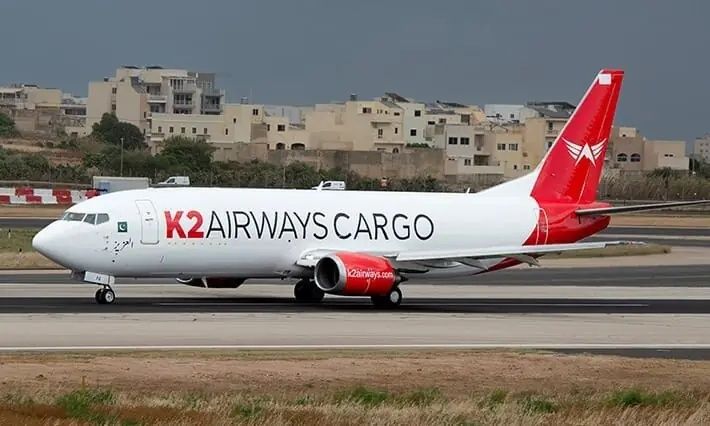
Pakistan's maritime and aviation authorities mounted a comprehensive search operation Wednesday for a K2 Airways cargo aircraft that vanished during its descent into Karachi, with Prime Minister Shehbaz Sharif declaring the Boeing 737-400 had plummeted into the Arabian Sea with five people aboard. The aircraft had been in flight from Sharjah in the United Arab Emirates when it encountered what aviation authorities described as a navigational system malfunction, leading to its dramatic and ultimately fatal disappearance from radar.
The Pakistan Airports Authority provided crucial details about the final moments before contact was lost. At approximately 9:21 pm local time on Tuesday, radar operators detected the aircraft engaging in rapid descent while simultaneously changing its heading significantly, behaviour consistent with loss of control or severe technical failure. The aircraft's last known position placed it roughly 155 nautical miles west of Karachi when communication ceased entirely, leaving a substantial search area for rescue teams to cover.
Flightradar24, the international flight-tracking service that monitors global aviation, released preliminary data indicating an alarming flight profile in the plane's final minutes. The aircraft first experienced a loss of altitude, followed by what appeared to be a brief climb—potentially indicating pilot attempts to recover from the initial descent—before suffering a second, catastrophic drop that terminated all tracking data. This pattern suggested either an uncontrollable mechanical failure or a sequence of events that overwhelmed the flight crew's ability to stabilize the aircraft.
Prime Minister Shehbaz Sharif's office released a formal statement expressing profound sorrow over what the government characterised as a tragic incident, with the Prime Minister himself directing all relevant state agencies to mobilise their full capabilities. The navy, airforce, and civil aviation authorities received explicit orders to intensify search and rescue efforts, utilising every available asset and resource. Intelligence sources confirmed that both military and merchant vessels were participating in the coordinated operation, supplemented by military aircraft conducting aerial reconnaissance over the crash zone.
K2 Airways operates as a private cargo carrier within Pakistan's domestic and international aviation network, providing scheduled freight services alongside charter operations. The airline had been entrusted with this particular commercial flight operating under international standards, making the incident's circumstances all the more significant for Pakistan's aviation sector and its reputation among international operators.
The aircraft itself carried considerable history across multiple aviation jurisdictions. Originally manufactured in 1999, the plane had spent its initial operational years serving passengers for two major international carriers—Aeroflot and Garuda Indonesia—before undergoing conversion to freight configuration in 2012. This conversion from passenger to cargo operations is a common practice in aviation economics, allowing aging airframes to extend their commercial viability through structural and systems modifications.
Pakistan's aviation industry has faced persistent challenges regarding safety standards and regulatory oversight, a reality that weighs heavily on the nation's international standing within the aviation community. The past decade has witnessed multiple catastrophic crashes within Pakistani airspace, including major incidents centred on Karachi itself, shaping external perceptions of the country's flight safety record. These accumulated incidents have raised systematic questions about maintenance protocols, crew training standards, and airspace management procedures.
The European Union's previous sanctions against Pakistan International Airlines underscored the international community's concerns about safety and certification practices. That four-year ban, which encompassed restrictions on flights to European airspace, reflected serious deficiencies identified by EU aviation safety authorities. However, the EU's decision to lift these restrictions in 2024 suggested that Pakistan had implemented substantive reforms addressing those original concerns, potentially improving oversight mechanisms and bringing practices into greater alignment with international standards.
This latest incident will inevitably trigger fresh scrutiny of Pakistan's aviation regulatory framework and the effectiveness of those recent improvements. The circumstances surrounding the K2 Airways flight—the navigational system failure, the rapid and uncontrollable descent, and the apparent inability of the crew to recover the aircraft—raise immediate questions about aircraft maintenance standards, particularly for aging cargo planes operating in the region. For Malaysia and other Southeast Asian nations relying on Pakistan's airspace for flights transiting to Europe and the Middle East, the incident underscores the importance of rigorous multilateral aviation safety protocols and international cooperation in maintaining standards across the broader region.

