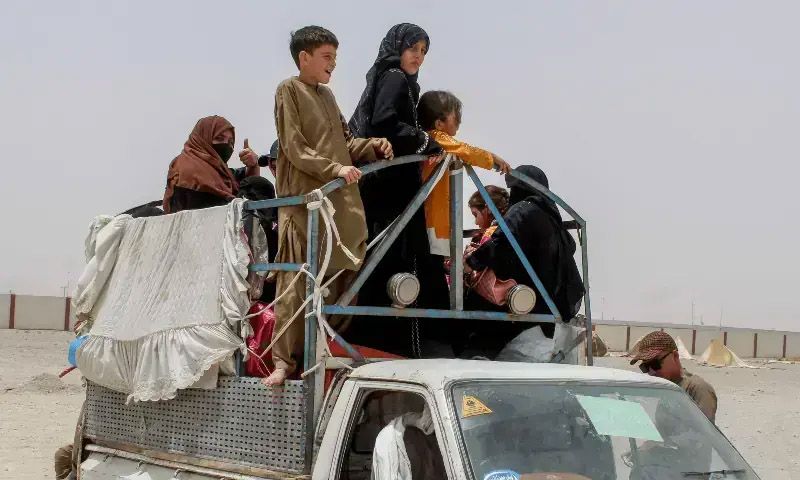
Pakistan has removed approximately 2.59 million Afghan nationals lacking valid residence documentation from its territory since 2023, marking one of the largest demographic shifts in the region in recent years. The coordinated effort between federal authorities and provincial governments, particularly Punjab, reflects Islamabad's hardening stance on illegal immigration at a time of significant economic strain and security concerns. The scale of the operation underscores the enormous challenge posed by undocumented foreign populations in the country, while simultaneously raising humanitarian questions about processing capacities and conditions during the deportation process.
Punjab province has emerged as the epicentre of enforcement operations, with the provincial government's foreign national security cell managing what amounts to a systematic identification and removal programme across the province's urban and rural areas. The Punjab administration has detained 138,342 Afghan nationals in 36 operational holding centres spread across the province, completing documentary procedures before arranging their transportation back across the border. This massive logistical undertaking requires coordination between multiple government agencies, border authorities, and international cooperation with the Afghan authorities on the receiving end.
At present, approximately 53 undocumented Afghan nationals remain in Punjab's holding facilities pending final deportation arrangements. The foreign national security cell continues active operations across the province, identifying individuals in markets, residential neighbourhoods, and commercial districts where undocumented populations typically congregate. The holding centres serve as processing hubs where arrested individuals undergo registration, documentation, and preparation for departure through the Torkham border crossing, which has become the primary transit point for this mass movement of people.
Pakistani government officials have articulated a clear and unambiguous immigration policy position: individuals without valid visas cannot legally remain in the country and face mandatory deportation. A spokesman from the home department emphasised that this framework represents established federal policy, not a new or temporary measure. The assertion underlines Islamabad's intention to enforce long-standing regulations more rigorously, suggesting that previous enforcement gaps or inconsistencies have now been addressed through institutional capacity-building and renewed political commitment.
The government has completed extensive survey operations targeting both commercial and residential areas, representing a comprehensive rather than reactive approach to illegal immigration enforcement. Rather than relying solely on border controls or random checks, authorities have conducted systematic examinations of populated areas to identify undocumented residents. This methodical strategy suggests institutional planning and resource allocation specifically dedicated to the enforcement mission, contrasting with the sporadic enforcement that characterised earlier periods.
The Torkham border crossing has become a critical infrastructure point in managing the mass movement, with arrangements established to facilitate orderly processing and transit. The coordination required to move hundreds of thousands of individuals across an international border involves not merely logistical competence but also negotiated agreements with Afghan authorities, international humanitarian organisations, and border management agencies. The successful operation of this system at scale reflects operational capacity that extends well beyond the traditional scope of immigration enforcement agencies.
Civilian cooperation mechanisms have been integrated into the enforcement framework, with authorities requesting public assistance through an emergency telephone line. The home department has appealed to Punjab residents to report undocumented Afghan nationals to the emergency call centre numbered 15, creating a citizen-reporting system alongside official enforcement operations. This public engagement model distributes the identification burden across the population while creating multiple information channels for authorities, though it simultaneously raises concerns about potential misidentification or targeting based on ethnicity or appearance.
The government has provided assurances regarding confidentiality, pledging that individuals reporting suspected illegal residents will have their identities protected from disclosure. This privacy guarantee appears designed to encourage public participation without fear of retaliation or social ostracism, a consideration relevant in Pakistani communities where ethnic and religious affiliations often intersect with social networks. The mechanism reflects understanding that citizen cooperation depends partly on trust that information will not create complications for the reporting individual.
The deportation operation reflects broader pressures on Pakistan's economy and public resources. With the country facing fiscal constraints, unemployment, and housing shortages, the undocumented Afghan population has become a politically salient issue. Public sentiment regarding competition for jobs and services, though not uniformly hostile, has created political space for stricter enforcement. The government's visible action on immigration appeals to constituencies concerned about resource allocation and employment opportunities.
For the wider region, particularly Malaysia and other Southeast Asian nations managing undocumented populations, Pakistan's experience demonstrates both the feasibility and complexity of large-scale deportation operations. The logistics of processing and transporting hundreds of thousands of individuals, the international diplomatic requirements, and the humanitarian considerations involved all present challenges that transcend simple policy declarations. Pakistan's operation provides a practical case study of what institutional capacity, political will, and sustained resource commitment can achieve in enforcing immigration restrictions, as well as the practical difficulties encountered even with significant governmental effort.
The implications for Afghan nationals already in Pakistan extend beyond the immediate deportees. The visible enforcement campaign creates uncertainty for undocumented Afghans throughout the country, potentially prompting voluntary departures and influencing migration calculations among populations considering movement into Pakistani territory. The psychological impact of systematic enforcement, complemented by public reporting mechanisms, may prove as significant as the actual deportations in reducing the undocumented population.

